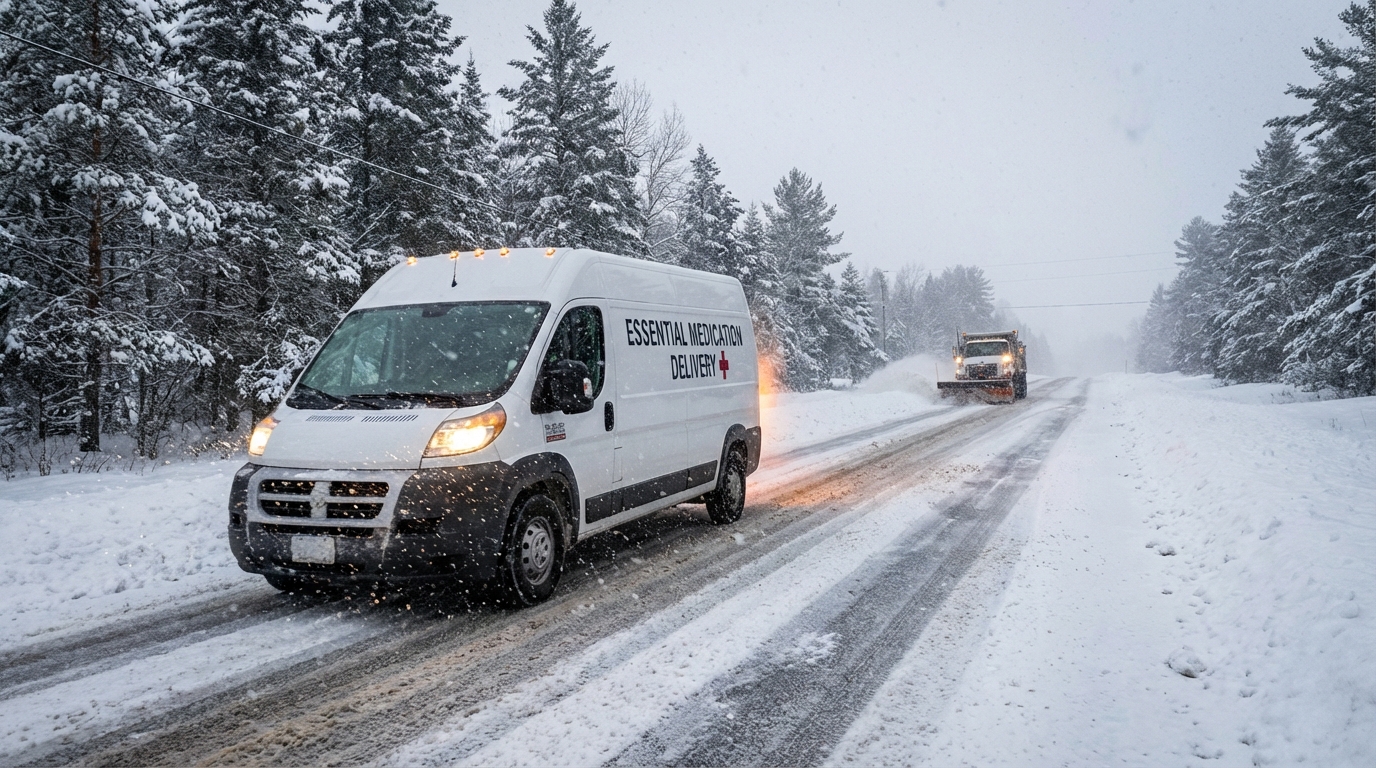
How UVA Health Pharmacy Managed Winter Storm Logistics
Strategic Logistics: How UVA Health Pharmacy Preempted Winter Storm Disruptions
Introduction
In late January, a significant winter storm threatened to disrupt essential services and logistics across the region. With hazardous weather conditions forecasted for the area, delivery networks faced the high probability of delays and interruptions. For healthcare providers, such disruptions pose a critical risk to patients who rely on the consistent arrival of maintenance medications. Recognizing the potential for widespread logistical failure, UVA Health Pharmacy utilized weather forecasts to assess the threat level and determine necessary operational adjustments before the storm made impact.
The primary objective of this operational shift was to safeguard patient access to medication against the disruptions of severe winter weather. By monitoring weather patterns closely, the pharmacy leadership anticipated delivery risks and adjusted fulfillment schedules before road conditions impacted courier services [1].
Leadership and Strategic Planning
At the helm of the logistics operation is Adrienne Cobb, who serves as the director of UVA Central Fulfillment Services. Facing the logistical challenges posed by the incoming storm, Cobb and her team were responsible for maintaining the continuity of medication supplies for the health system’s patients.
According to Cobb, the team decided to “proactively look ahead” to medications on automatic refill lists once the storm’s trajectory became clear. Cobb explained the rationale, stating, “Last week when we knew that there was a storm coming, we decided to proactively look ahead to medications that we might have on automatic refill.” This decision moved the fulfillment strategy from a standard reactive model to a proactive surge in activity [1].
Prioritizing Vulnerable Populations
To mitigate the risk of service interruptions, the pharmacy leadership implemented a proactive distribution strategy ahead of the storm’s arrival. Instead of adhering to standard schedules, the team analyzed their patient database to identify individuals set to receive automatic refills during the projected window of severe weather.
This assessment specifically prioritized patients with complex medical needs, including transplant recipients and those managing multiple prescriptions who could not afford a lapse in adherence. By isolating these specific orders, the team could expedite processing before the weather impacted transportation infrastructure. This approach was designed to secure medication access for patients regardless of subsequent road closures or courier delays [1].
Executing the Operational Surge
Executing this strategy required a significant increase in fulfillment volume over a condensed timeframe. The pharmacy operations shifted to process and dispatch prescriptions a week earlier than originally scheduled. By shifting the fulfillment timeline forward, the pharmacy aimed to clear the delivery queue before road conditions deteriorated.
This operational surge resulted in a massive increase in immediate output. According to Cobb, the team completed “thousands and thousands” of extra deliveries during the week prior to the storm. This volume was necessary to ensure patients physically possessed their required medications before the severe weather impeded courier services. The successful management of this volume validates the department’s capacity to execute mass-expedition plans without overwhelming their internal resources [1].
Outcomes and Impact
The decision to accelerate the supply chain proved effective in minimizing the storm’s impact on patient outcomes. While the winter weather did disrupt general delivery services in the area as predicted, the preemptive distribution meant that critical delays were largely avoided for patients.
Reports following the event indicated that delivery issues were “better than expected” specifically because the team watched the forecast and prepared accordingly. By shifting the bulk of the delivery volume to the week prior, the pharmacy reduced the number of packages in transit during the worst of the storm. This strategy effectively decoupled patient medication access from the immediate unpredictability of the weather conditions [1].
Ultimately, the outcomes from this event suggest that delivery delays can be significantly minimized through foresight rather than just reactive logistics. This response demonstrated the operational capability to surge fulfillment capacity in response to environmental threats [1].
Conclusion
The operational success observed during the January winter storm establishes a logistical framework for UVA Health Pharmacy to mitigate future weather-related service interruptions. The “forecast-first” approach ensures that critical medications are dispatched before delivery routes become compromised.
This targeted acceleration of workflows prevents a backlog of urgent needs during the period of highest risk, serving as a reproducible protocol for future severe weather alerts. By maintaining this proactive stance, the pharmacy aims to safeguard continuity of care against the unpredictability of future winter seasons [1].
Frequently Asked Questions
How does UVA Health Pharmacy handle prescription deliveries during severe weather? The pharmacy utilizes a “forecast-first” approach, integrating meteorological monitoring into their workflow. Instead of reacting to road closures as they occur, the team proactively adjusts distribution schedules to dispatch critical medications before delivery routes are compromised [1].
What proactive steps did UVA take for the recent winter storm? Recognizing the threat of the storm forecasted for late January, the pharmacy analyzed their patient database to identify individuals scheduled for automatic refills during the storm window. They prioritized complex cases, such as transplant recipients, and surged operations to complete “thousands and thousands” of extra deliveries in the week prior to the storm [1].
Who manages fulfillment operations at UVA Health? Adrienne Cobb serves as the director of UVA Central Fulfillment Services. She oversaw the execution of the expedited schedule and the strategic shift from a reactive model to a proactive surge in activity [1].
References [1]: www.cbs19news.com “Weather disrupts deliveries, but UVA Pharmacy prepares ahead”