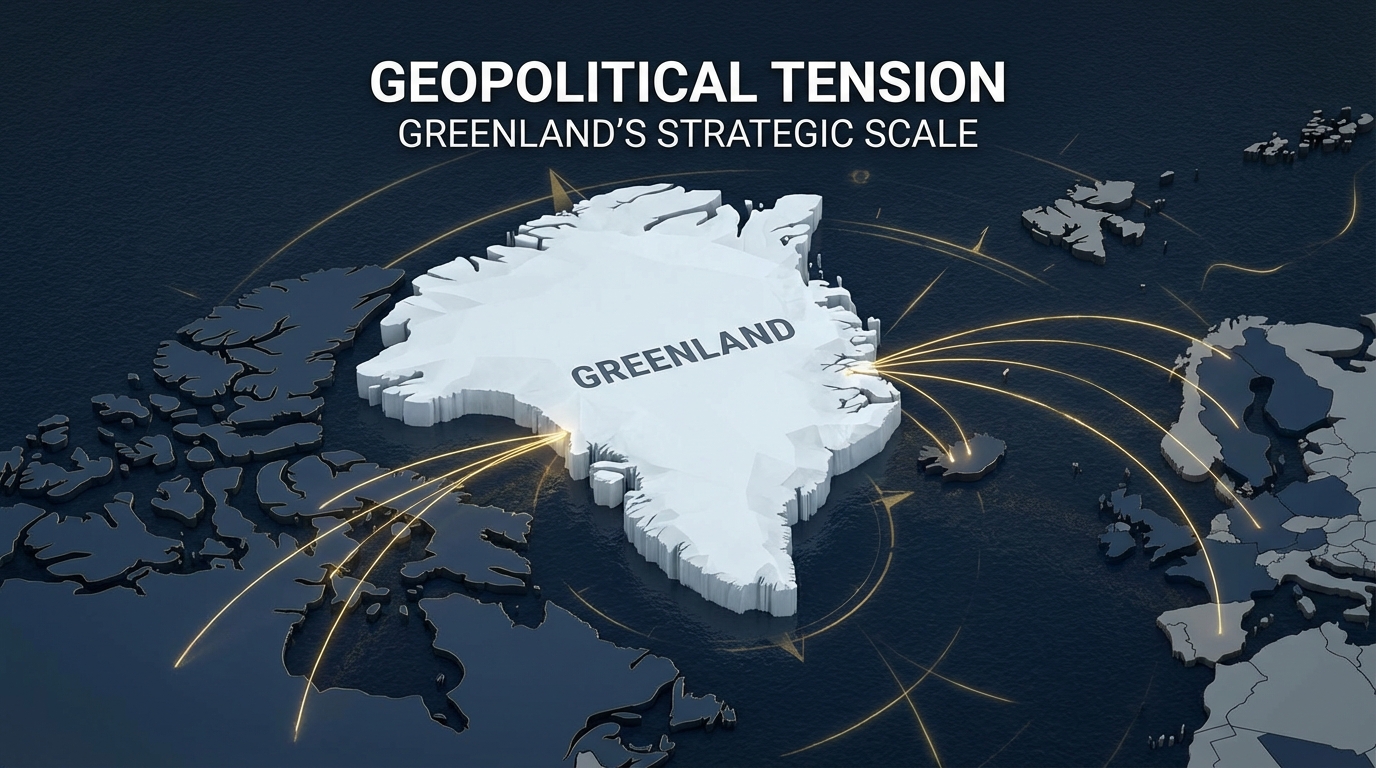
The Greenland Trump Strategy: 2025 Geopolitical Shift
The Greenland Trump Strategy: A New Framework for Arctic Control
In 2025, the geopolitical dynamics of the Arctic took center stage as President Donald Trump escalated his long-standing interest in the territory, unveiling a structured “framework of a future deal.” This move signaled a definitive shift from previous informal rhetoric to a concrete foreign policy objective. The administration’s renewed focus on the Greenland Trump strategy is grounded in specific national security claims rather than simple real estate ambitions. Trump justified this push by citing urgent strategic concerns, specifically asserting that the surrounding waters are “covered with Russian and Chinese ships all over the place” BBC.
This pivot moves the discussion from speculative commentary to a declared objective within the administration’s agenda. By framing the acquisition as a defensive imperative to defend against potential attacks from rival powers, the White House has recontextualized the island as a critical component of American safety. However, this initiative faces significant hurdles, ranging from established treaty limitations to firm resistance from European allies who view the move as a destabilizing “wake-up call” Euronews.
TL;DR
- Strategic Shift: In 2025, President Trump introduced a “framework of a future deal” to acquire control over Greenland, citing the heavy presence of Russian and Chinese ships in the Arctic as a security threat BBC.
- Transactional Diplomacy: The administration argues that the US defends European missile systems without reciprocity, demanding territorial control as compensation for these “unwritten rules” of defense BBC.
- Conflicting Narratives: Vice President JD Vance claims European allies have made private “accommodations,” while Danish and Greenlandic officials publicly refuse to cede sovereignty BBC.
- Existing Access: The US already maintains a permanent base with over 100 personnel and holds treaty rights to operate defense areas on the island, questioning the operational need for a purchase BBC.
The Strategic Rationale: Defense Over Real Estate
The administration’s argument for greater control relies heavily on a transactional view of international alliances and defense commitments. President Trump has framed the potential acquisition not as a territorial expansion for its own sake, but as a correction to perceived imbalances in alliance burdens. He views direct control over the island as a necessity to defend against potential attacks, explicitly characterizing the region as a contested military theater where rival powers are encroaching BBC.
Vice President JD Vance has played a central role in articulating this logic, characterizing the US defense of critical missile systems as an “unwritten rule” that benefits European nations without providing reciprocal gains for the United States. He noted that if adversaries targeted these systems, the US would defend them, yet lamented, “we’re not getting anything for it” BBC. This perspective underpins the demand for territorial or administrative control over Greenland as compensation for American military protection.
Diplomatic Friction and “Secret” Concessions
A central point of friction involves the status of negotiations between Washington and its European allies. While the administration insists that diplomatic progress has occurred behind closed doors, these claims contrast sharply with public denials from European officials. Vice President Vance explicitly claimed that European allies have provided “accommodations or concessions” to the United States that they are unwilling to admit publicly to their own populations. In an interview, he stated, “We definitely have gotten much more than we initially had,” suggesting a divergence between public European rejections and private diplomatic realities BBC.
However, the disconnect between the Trump administration’s claims of success and the stance of the governing authorities remains unresolved. Both Denmark and Greenland have publicly maintained that they will not agree to cede sovereignty to the United States. Consequently, the status of the “future deal” remains contested, hovering between unilateral US assertions and firm European denials. On January 30, 2025, the Dutch Prime Minister-elect characterized these ambitions as a “wake-up call” for Europe, reflecting growing anxiety regarding the stability of transatlantic relations Euronews.
The Military Reality: Ownership vs. Access
The push for full sovereignty occurs despite the fact that the United States already possesses significant military latitude in the region under current treaties. Existing agreements with Denmark permit the US to maintain and operate military facilities within designated defense areas in Greenland, ensuring robust operational capacity without a change in sovereignty BBC. Furthermore, the US maintains a permanent military presence at a base on the island’s north-western tip, staffed by more than 100 personnel.
These facts complicate the narrative that a transfer of ownership is required for strategic defense purposes. It remains unclear how the proposed framework would enhance security beyond the access already authorized by current defense pacts. While the administration seeks to formalize these advantages into a transactional victory, the operational advantage gained by purchasing the territoryas opposed to utilizing these existing, flexible permissionsremains a subject of debate BBC.
Comparison Table
The following table outlines the differences between the current military arrangement and the administration’s proposed framework.
| Option | Best for | Pros | Cons | Pricing/Cost |
|---|---|---|---|---|
| Current Treaty Status | Maintaining diplomatic stability while ensuring military access. | Allows substantial US military access and base operations; permanent base with 100+ personnel established BBC. | US administration feels it provides defense without “getting anything for it” BBC. | Rent-free usage under 1951 treaty (Operational costs only). |
| Proposed “Future Deal” | Maximizing US control and countering Russian/Chinese presence. | Addresses US concerns about “unwritten rules” of defense; secures strategic northern flank BBC. | High diplomatic friction; explicitly rejected by Denmark/Greenland; viewed as a “wake-up call” by Europe Euronews. | Unknown (Details of framework undisclosed). |
Pros and Cons
Pros (from the perspective of the US Administration):
- Strategic Security: Counters the presence of Russian and Chinese ships which are reportedly “all over the place” in the surrounding waters BBC.
- Alliance Equity: Corrects a perceived imbalance where the US defends European missile systems without receiving tangible assets in return BBC.
- Diplomatic Leverage: According to JD Vance, the pressure has already yielded private “accommodations or concessions” from allies BBC.
Cons (from the perspective of European Allies):
- Sovereignty Violation: Denmark and Greenland have explicitly refused to entertain a sale or cession of sovereignty BBC.
- Geopolitical Instability: The Dutch Prime Minister-elect views the move as a “wake-up call,” signaling a widening gap between Washington and European allies Euronews.
- Redundancy: The US already has the right to operate defense facilities and maintain a base, making the purchase potentially unnecessary for operational purposes BBC.
Conclusion
The 2025 push for Greenland represents a collision between a transactional American foreign policy and traditional European concepts of sovereignty. While President Trump and Vice President Vance insist that a “framework” is in place and that private concessions have been secured to counter rival powers, the public rejection from Copenhagen and Nuuk suggests a volatile path ahead. The administration argues that the Greenland Trump proposal is a necessary evolution of alliance burdens, yet the existence of robust current treaties raises questions about the practical necessity of such a deal. As the US seeks to convert its security guarantees into tangible territorial assets, the true extent of any “undisclosed agreements” remains the defining variable in this Arctic standoff.
FAQ
What is the ‘framework of a future deal’ regarding Greenland? In 2025, President Donald Trump unveiled this framework as a structured attempt to secure control over the territory. While specific details remain vague, it moves the discussion from informal rhetoric to a declared foreign policy objective aimed at formalizing US control BBC.
Why does the Trump administration view Greenland as a strategic necessity? The administration cites urgent security concerns, specifically claiming that the waters around the island are “covered with Russian and Chinese ships.” The acquisition is framed as a defensive imperative to protect against potential attacks from these rival powers BBC.
Have European allies actually agreed to sell Greenland to the US? There are conflicting reports. Vice President JD Vance claims allies have made private “accommodations or concessions” they will not admit publicly. However, officials from Denmark and Greenland have consistently stated they will not agree to cede sovereignty BBC.