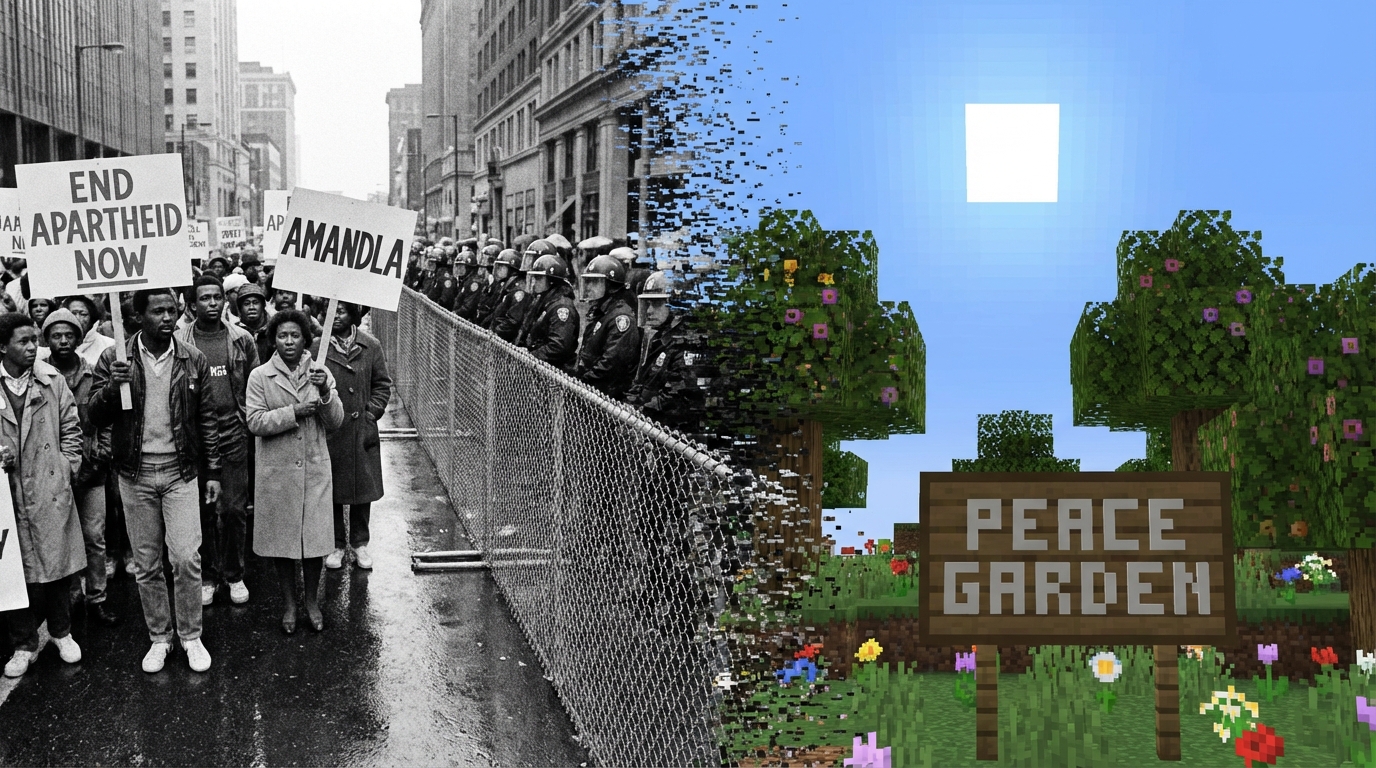
Nelson Mandela's Legacy: From Oral History to Minecraft
In the quiet corners of history textbooks, the visceral reality of the struggle against Apartheid often fades into dry dates and static black-and-white photographs. However, a profound shift is occurring in how the world remembers its icons. The legacy of Nelson Mandela, once preserved primarily through the solemn testimony of those who knew him and the dusty archives of political struggle, is finding a new, vibrant life in the digital realm. This transition marks a critical juncture in historical preservation: the move from living memory to interactive education.
As we navigate the complexities of the 21st century, the methods we use to teach human rights and civil disobedience are evolving. We are witnessing a fascinating dichotomy. On one side, we have the raw, unpolished power of oral history delivered by those who stood shoulder-to-shoulder with the Madiba. On the other, we see the pixelated, infinite landscapes of the metaverse, where the principles of “Good Trouble” are being codified into gameplay. This column investigates this intersection, exploring whether the digital age can sustain the moral weight of Mandela’s life or if we risk gamifying a struggle that demanded the ultimate price.
The Living Shadow: Oral History in the Classroom
There is no substitute for the spoken word when it comes to conveying the emotional toll of history. While technology advances, the impact of a witness standing before a room of children remains a cornerstone of empathetic education. Recently, this dynamic was vividly illustrated at the Crestwood Community School in Eastleigh, where students were brought face-to-face with the realities of Apartheid through the eyes of Chris Lubbe.
Lubbe is not merely a historian; he is a survivor and a protector. As a former bodyguard to Nelson Mandela, he possesses a perspective that no textbook can replicate. His recent visit to Eastleigh provided pupils with a harrowing yet inspiring account of life under a regime that codified racism. According to the Daily Echo, Lubbe shared his personal journey from a segregated childhood to standing beside one of the world’s greatest statesmen. He recounted the visceral details of his own imprisonment and torture, experiences that mirrored the suffering of millions of black South Africans.
The power of Lubbe’s testimony lies in its ability to humanize the legend. To these students, Mandela ceased to be just a statue in Parliament Square or a name on a test paper; he became a flesh-and-blood man viewed through the eyes of someone who protected him. Lubbe’s narrative wove together the grand political narrative with the intimate details of forgiveness and reconciliation. He emphasized Mandela’s extraordinary capacity to forgive his captors, a lesson that resonates deeply in our currently polarized society.
However, the clock is ticking on these interactions. The generation that fought Apartheid is aging. As we lose these direct links to the past, the question arises: how do we preserve the essence of this testimony? The emotional resonance felt by the Eastleigh pupils is difficult to scale and impossible to automate. This urgency is driving educators and technologists to seek new vessels for these old truths.
Pixelated Protest: The Minecraft Revolution
If Chris Lubbe represents the traditional, deeply human transmission of history, then the latest initiatives by Mojang Studios represent the future. In a move that might have seemed incongruous a decade ago, the video game phenomenon Minecraft has become a pivotal tool in teaching Black History. The game, known for its open-ended creativity, has launched a new educational world titled “Good Trouble,” inspired by the late US Congressman John Lewis, but extending its reach to global civil rights figures, including Nelson Mandela.
This digital initiative is not merely a superficial skinning of a game; it is a structured educational experience designed to engage students where they spend their time. According to TubeFilter, the “Good Trouble” world allows players to navigate historical scenarios, engaging with the concepts of peaceful protest and systemic change. By interacting with non-player characters (NPCs) representing historical figures, students can explore the philosophy of resistance in a safe, controlled environment.
The inclusion of Mandela in this digital pantheon is significant. It suggests a recognition that for the story of Apartheid to survive in the collective consciousness of Generation Alpha, it must be translated into their native language: interactivity. The “Good Trouble” content creates a space where the abstract concepts of freedom and oppression are visualized. Players can potentially “build” a better world, metaphorically and literally, using the tools provided by the game.
Critics might argue that reducing the struggle against Apartheid to blocks and pixels risks trivializing the suffering involved. Can a game truly convey the despair of 27 years in prison? Likely not. However, the goal of these educational worlds is not to simulate suffering, but to stimulate curiosity. If a Minecraft session leads a student to the library to read Long Walk to Freedom, the initiative has succeeded. It serves as a digital bridge, connecting the entertainment ecosystem with serious historical inquiry.
The Global Resonance of the Madiba
The necessity of these diverse educational approachesboth the intimate and the digitalis underscored by the continuing global relevance of Mandela’s ideals. His influence extends far beyond the borders of South Africa and the classrooms of the UK or US. As reported by the News of Bahrain, the international community continues to look toward Mandela’s philosophy when addressing contemporary conflicts. The principles of dialogue over violence and reconciliation over revenge are cited frequently in diplomatic circles, reminding us that his legacy is a living diplomatic framework.
This global reverence presents a unique challenge for educators and writers. Mandela has, in many ways, become a secular saint, a figure so revered that his complexity is often smoothed over. The “Disney-fication” of history is a real danger. When we teach Mandela, are we teaching the radical lawyer who founded uMkhonto we Sizwe, or are we teaching the grandfatherly figure of the 1990s?
Both the testimony of Chris Lubbe and the narrative arcs within Minecraft attempt to address this. Lubbe speaks of the danger and the fear, grounding the saint in the reality of the soldier. Similarly, educational games that focus on “Good Trouble” emphasize that change requires disruption. It requires making noise and breaking norms, not just passive waiting. By linking Mandela with figures like John Lewis, educators are creating a continuum of civil rights history that shows the interconnectedness of the struggle for racial justice globally.
The Pedagogy of Empathy
The synthesis of these two worldsthe physical and the digitaloffers the most promising path forward for historical education. We cannot rely solely on the dwindling number of eyewitnesses, nor can we rely entirely on gamified abstractions. The future of history lies in the blend.
Imagine a curriculum where a student begins by exploring a recreation of Robben Island in Minecraft, understanding the spatial confinement and the bleakness of the environment. This digital engagement primes them for the emotional impact of a video testimony or a guest speaker like Lubbe. The game provides the context; the human provides the soul.
This approach is particularly vital during observances like Black History Month. It moves the curriculum beyond the rote memorization of “I Have a Dream” and into a deeper analysis of the strategies of resistance. It forces students to ask difficult questions: What is the cost of freedom? What does it mean to be a “terrorist” in the eyes of the state, only to be vindicated by history?
The “Good Trouble” initiative in Minecraft is particularly astute in this regard. By framing the narrative around the concept of necessary disruption, it empowers students to see themselves as potential agents of change. It transforms history from a static subject to be absorbed into a dynamic playbook to be utilized.
Conclusion: The Unfinished Walk
As we look toward the future of education, the figure of Nelson Mandela stands as a litmus test for how we handle the history of the 20th century. If we fail to translate his life and the brutal reality of Apartheid into formats that resonate with the digital generation, we risk losing the lessons he taught us.
The work being done by individuals like Chris Lubbe ensures that the flame of memory is passed hand-to-hand, retaining its heat and brightness. Simultaneously, the innovations by platforms like Minecraft ensure that this light reaches corners of the globe that traditional methods might miss. It is not a question of choosing one over the other, but of integrating them into a cohesive narrative of human resilience.
Ultimately, the long walk to freedom is not over; it has simply moved onto new terrain. Whether on the gravel of a schoolyard in Eastleigh or the digital bedrock of a generated world, the lesson remains the same: courage is not the absence of fear, but the triumph over it. It is our collective responsibility to ensure that this triumph is understood, honored, and emulated by those who will build the future.
Frequently Asked Questions
Q: Who is Chris Lubbe and why is his testimony important? A: Chris Lubbe is a former bodyguard to Nelson Mandela and an anti-apartheid activist. His testimony is crucial because it provides a first-hand, intimate account of the brutality of Apartheid and the personal character of Mandela, offering a human perspective that textbooks cannot convey.
Q: What is the “Good Trouble” world in Minecraft? A: “Good Trouble” is an educational world within Minecraft Education Edition. Inspired by the late Congressman John Lewis, it features interactive lessons on social justice and civil rights movements, including the legacy of Nelson Mandela, allowing students to learn about history through immersive gameplay.
Q: How does gamification help in teaching sensitive history like Apartheid? A: Gamification can lower the barrier to entry for complex topics, making them more engaging for younger audiences. It allows for the visualization of historical settings and concepts, fostering curiosity that can lead to deeper academic study, though it must be balanced with serious context to avoid trivialization.
Q: Why is Nelson Mandela’s legacy relevant to modern US Black History Month? A: Mandela’s struggle against institutionalized racism in South Africa parallels the Civil Rights movement in the US. His philosophy of reconciliation and “Good Trouble” (civil disobedience) provides a global context to the fight for racial justice, reinforcing that the struggle for equality is a worldwide endeavor.
References
- Daily Echo. (2025). Eastleigh pupils moved by visit from Mandela bodyguard. www.dailyecho.co.uk
- TubeFilter. (2026). Minecraft launches ‘Good Trouble’ education roleplay for Black History Month. www.tubefilter.com
- News of Bahrain. (n.d.). World News Coverage. www.newsofbahrain.com