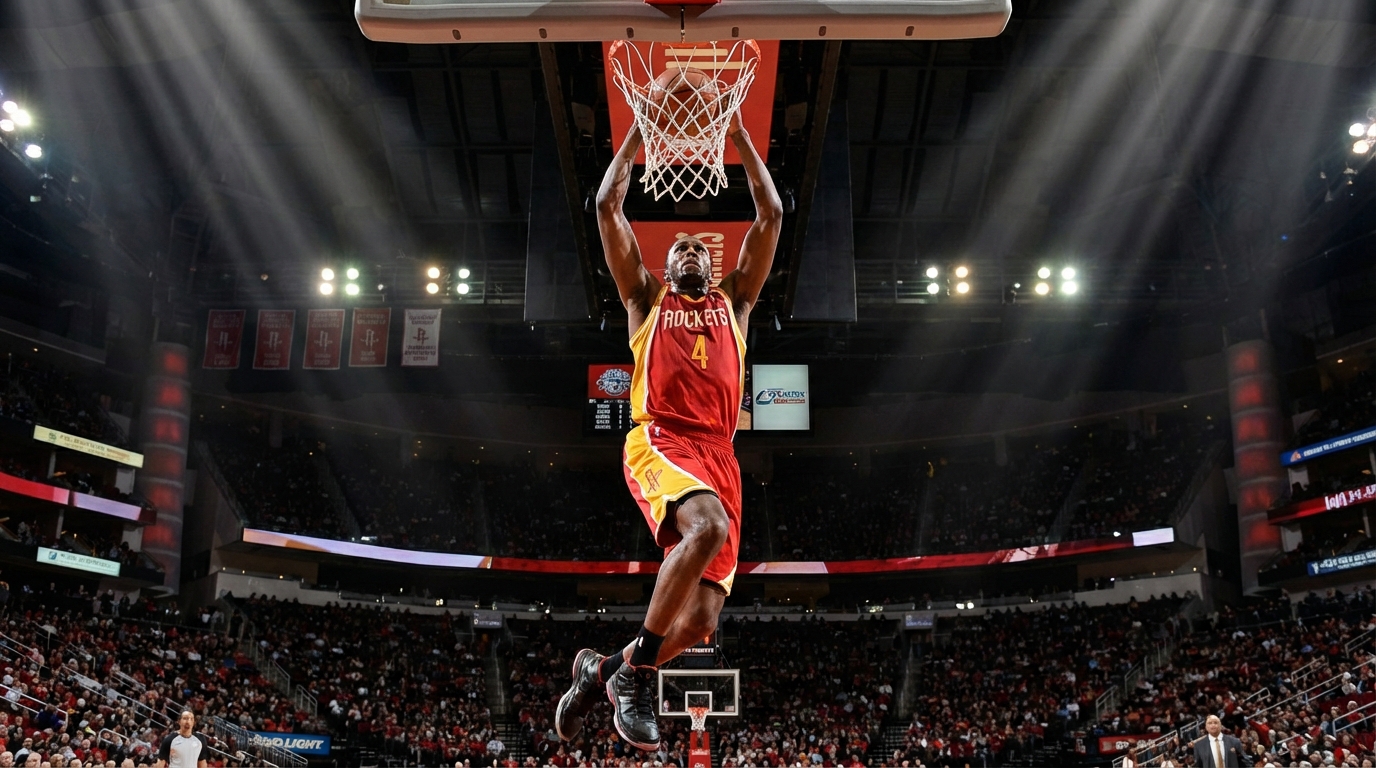
Keshad Johnson Leads the 2026 NBA Slam Dunk Contest Field
Gravity Defied: Why Keshad Johnson is the Spark the Dunk Contest Needs
The modern NBA Slam Dunk Contest has become a battleground of philosophy as much as physics. For years, fans clamored for the league’s top scorers to participate, but the 2026 lineup confirms a permanent shift toward specialized, explosive athleticism regardless of rotation status. At the center of this year’s narrative is Keshad Johnson, the Miami Heat forward whose vertical feats have already become folklore in practice facilities and G-League warmups. As the league prepares for the festivities, Johnson stands as the betting favorite to bring the trophy back to South Beach, representing a hunger that established superstars often lack.
This year’s field is not just a collection of jumpers; it is a curated mix of legacy, power, and height. Alongside Johnson, we see the return of a legendary name in Jase Richardson and a rare big-man entry in Jaxson Hayes. The selection committee has clearly prioritized highlight-reel capability over jersey sales, a strategy that saved the contest in recent years. Johnson, with his rugged physicality and trampoline-like bounce, fits the mold of recent winners who treat the Saturday night event as their personal Super Bowl.
TL;DR
- Keshad Johnson leads the 2026 Dunk Contest field, bringing elite power and verticality from the Miami Heat system.
- Jase Richardson (Pistons) enters the competition, attempting to mirror the back-to-back victories of his father, Jason Richardson.
- Jaxson Hayes (Lakers) looks to defy the “big man stigma” with his selection, offering a unique vertical spacing element.
- The contest continues to trend away from All-Star starters, favoring younger, hungrier athletes with specific dunking skill sets.
The Heat’s High-Flying Enforcer
Keshad Johnson has never been a player who relies on finesse; his game is built on violent, rim-rocking intentions. Since joining the Miami Heat organization, Johnson has been sculpted by their renowned development program, but his leaping ability is purely innate. In a league where “business decisions” often prevent players from attacking the rim with full force, Johnson operates with a reckless abandon that makes for perfect dunk contest theater.
According to recent reports from the Miami Herald, Johnson’s preparation for the event has been meticulous, involving creative input from former dunk champions. The Heat have a history of athletic wings, but Johnson brings a density and power reminiscent of a young Shawn Kemp. His inclusion is a testament to the NBA’s willingness to showcase talent that might not average 20 points per game but can produce moments of absolute magic. For Johnson, this is more than an exhibition; it is a global branding opportunity.
The Legacy of Flight: Richardson Returns
Perhaps the most narratively compelling entry in the 2026 field is Jase Richardson. The connection is immediate and heavy with expectation. His father, Jason Richardson, is widely regarded as one of the greatest dunkers in NBA history, having won back-to-back titles in 2002 and 2003 with dunks that defined a generation. Jase, now carving his own path with the Detroit Pistons, carries that genetic blueprint for flight.
News broke recently via the Detroit News that Richardson had accepted the invite while his teammate, Jalen Duren, opted out. This distinction is crucial. While Duren is a powerful in-game dunker, Richardson possesses the aesthetic grace required for the contest format. The pressure on him will be immense; fans will inevitably compare his windmills and 360s to his father’s. However, this nostalgia factor is exactly what the NBA needs to bridge the gap between older fans and the Gen Z audience.
Breaking the Big Man Curse
The inclusion of a seven-footer is always a gamble for the Dunk Contest producers. Historically, tall players struggle to make their dunks look visually impressive because they don’t appear to defy gravity as long as shorter guards. However, the Los Angeles Lakers’ Jaxson Hayes is an anomaly. Known for his “pogo stick” jumping mechanics, Hayes can take off from distances usually reserved for wings.
As reported by the OC Register, Hayes was selected specifically to add vertical variety to the field. His challenge will be creativity. Big men often rely on props or teammates to add flair, but Hayes has the agility to perform between-the-legs dunks that are typically impossible for players of his stature. If he can execute cleanly, he disrupts the scoring rubric that usually favors the smaller, more acrobatic participants like Johnson and Richardson.
Comparison Table: The 2026 Field
| Option | Best For | Pros | Cons | Projected Style |
|---|---|---|---|---|
| Keshad Johnson | Power & Aggression | Elite vertical leap, massive power on finishes, “underdog” hunger. | Less household name recognition compared to legacy players. | Violent windmills, Tomahawks, Rim-hangs. |
| Jase Richardson | Nostalgia & Grace | Genetic pedigree, smooth mechanics, high fan sentiment. | immense pressure to live up to his father’s historic performances. | 360s, Reverse dunks, Tribute dunks. |
| Jaxson Hayes | Vertical Extension | Incredible catch radius, long-distance takeoffs. | Visuals can look “too easy” due to height; historically low scores for bigs. | Lobs, Free-throw line variants, Power dunks. |
The Evolution of the “Dunk Specialist”
The 2026 roster underscores a wider investigative finding regarding the NBA’s All-Star operations: the era of the “Star Dunker” is effectively over, replaced by the “Specialist.” In the 1990s and 2000s, the contest featured the league’s best players (Jordan, Carter, Bryant). Today, the risk of injury and the brand damage of a missed dunk keep the max-contract players on the bench.
This shift has actually improved the quality of the dunks. Players like Keshad Johnson view this event as a career-altering platform. They practice specific dunks for months, whereas superstars often improvised. The specialized nature of modern dunking involving complex props, 540-degree spins, and behind-the-back transfers requires a level of dedication that fits the schedule of a hungry riser like Johnson better than an exhausted All-Star starter.
Pros and Cons of the 2026 Roster
Pros
- Hunger Factor: Participants like Johnson and Richardson have everything to gain, ensuring maximum effort.
- Stylistic Diversity: We have a power dunker (Johnson), a smooth glider (Richardson), and a vertical spacer (Hayes).
- Narrative Depth: The “Son of a Legend” storyline with Richardson provides a natural media hook.
Cons
- Star Power Void: Casual fans may not recognize Keshad Johnson or Jase Richardson immediately, potentially hurting viewership ratings.
- Big Man Risk: If Jaxson Hayes misses his first attempt, the energy in the arena often evaporates quickly for centers.
- Expectation Management: The shadow of Jason Richardson looms so large that Jase’s performance might be unfairly critiqued.
FAQ
Q: Why is Keshad Johnson considered a favorite? A: Johnson combines extreme power with a vertical leap that tested near the top of his draft class. His style is visually jarring (in a good way), which typically scores well with judges looking for impact over finesse.
Q: Is Jase Richardson related to Jason Richardson? A: Yes, Jase is the son of two-time Slam Dunk Champion Jason Richardson. This lineage is a major selling point for the 2026 contest, as fans anticipate tribute dunks or similar athletic traits.
Q: When is the 2026 Slam Dunk Contest taking place? A: The event is scheduled for All-Star Saturday Night in February 2026, serving as the finale of the evening’s competitions.
Q: Why are there no All-Star starters in the dunk contest? A: High-usage superstars generally avoid the contest to rest during the break and avoid potential injury. The trend has shifted toward younger, athletic players who specialize in dunking mechanics.
Conclusion
The 2026 NBA Slam Dunk Contest may lack the marquee names of the 1988 Jordan-Wilkins duel, but it promises a level of technical proficiency and athletic desperation that recent years have missed. Keshad Johnson enters as the embodiment of the modern dunker: powerful, prepared, and ready to make a name for himself on the global stage. Whether he is battling the nostalgic narrative of Jase Richardson or the vertical extension of Jaxson Hayes, Johnson represents the hungry heart of the league. If the reports from Miami and Detroit are any indication, fans should prepare for a night where gravity is merely a suggestion, not a rule.