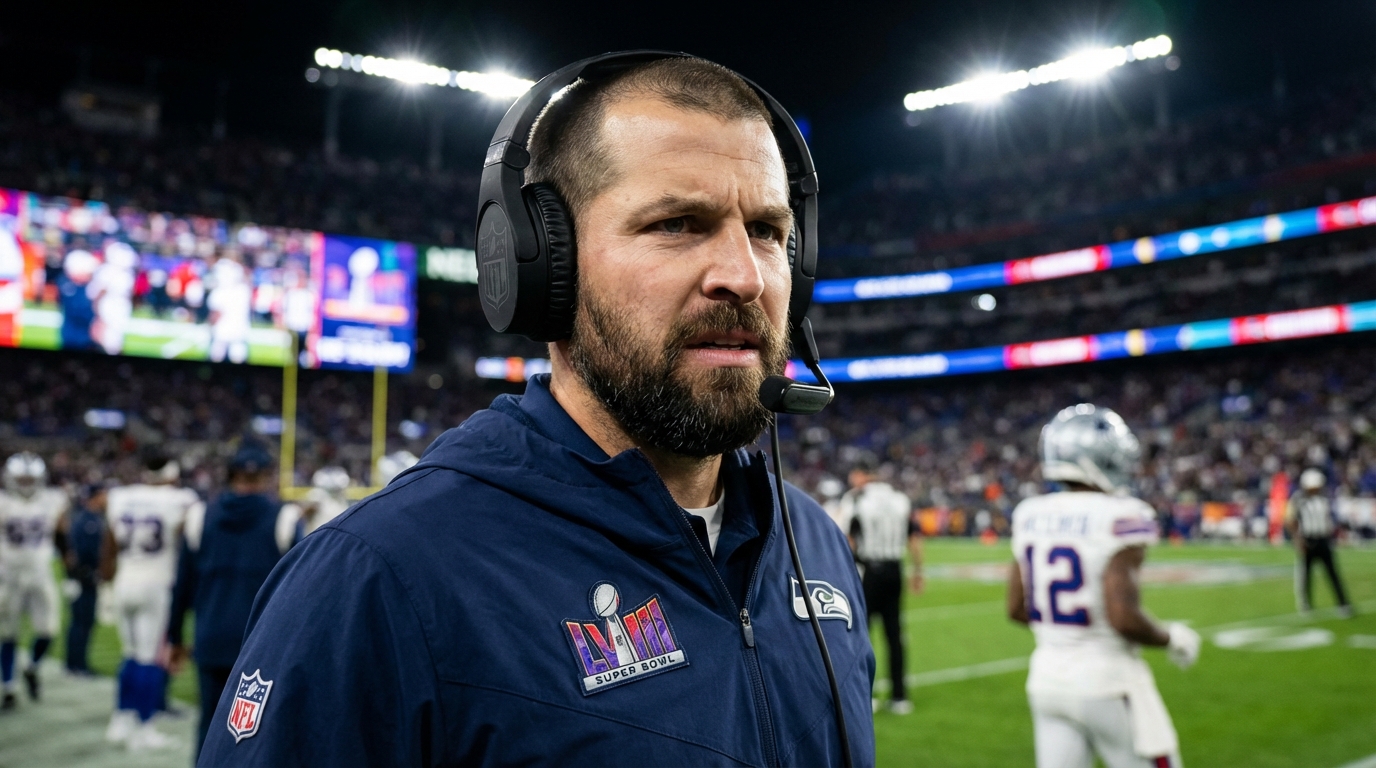
Super Bowl 60: Mike Macdonald's Historic Rise with Seattle
The air inside Levi’s Stadium is thick with the kind of tension that only precedes a coronation or a catastrophe. It is February 8, 2026, and the NFL landscape has shifted beneath our feet. Two years ago, the Seattle Seahawks made a gamble that many viewed as a calculated risk but others saw as sacrilege: moving on from the most successful coach in franchise history to hire a defensive coordinator who hadn’t yet turned forty. Today, as Mike Macdonald paces the sideline during warmups for Super Bowl 60, that gamble looks less like a risk and more like a prophecy fulfilled. The league has spent the last decade chasing offensive gurus, but Seattle found its salvation in a man who specializes in destroying them.
This is not just a story about a team reaching the championship game; it is an investigative look into how quickly an organization can reinvent its soul without losing its identity. Macdonald arrived in the Pacific Northwest with a playbook full of simulated pressures and a demeanor that belied his age. In two short seasons, he has not only reconstructed the Seahawks’ defense into a terrifying monolith but has also rewritten the timeline for coaching success in the modern NFL.
The Architect of Modern Chaos
The narrative surrounding the Seahawks’ ascent often focuses on the speed of the turnaround, but the true story lies in the complexity of the method. To understand why Seattle is playing today, one must dissect the defensive architecture that brought them here. The “Macdonald Doctrine” is built on the illusion of vulnerability. Throughout the 2025 season, opposing quarterbacks consistently reported seeing coverage shells that dissolved the moment the ball was snapped. It is a scheme predicated on intellectual violenceforcing passers to process conflicting data in milliseconds.
According to a recent breakdown by CBS Sports, the Seahawks led the league in “disguised rush rates,” a metric that tracks how often a defense shows a blitz but drops into coverage, or vice versa. This is not accidental. It is the hallmark of a coach who views the game through a prism of probability and deception. In the NFC Championship game, this approach forced three critical turnovers, effectively strangling an offense that had averaged thirty points a game. The Seahawks do not just beat you physically; they dismantle your game plan until you are left guessing at ghosts.
This tactical evolution is particularly fascinating given the opponent waiting on the other sideline. The New England Patriots, led by Jerod Mayo, present a mirror image of defensive fortitude. It is a matchup that purists have dreamed ofa rejection of the high-flying, no-defense era of recent years in favor of a gritty, intellectual brawl. Yet, where Mayo relies on disciplined, gap-sound fundamentals, Macdonald introduces an element of chaos. He is the variable that algorithms struggle to predict.
Shattering the Age Paradigm
For years, the gold standard for youthful coaching brilliance was Sean McVay. The Rams’ head coach set a bar that seemed insurmountable, winning a Super Bowl at age 36. However, history has a way of accelerating. At 38 years old, Mike Macdonald has become the youngest head coach to lead a team to this stage since the McVay era redefined hiring practices. But unlike the offensive wunderkinds who followed in McVay’s wake, Macdonald has done it from the defensive side of the ball, a rarity in a league obsessed with scoring points.
As reported by USA Today, breaking this record is about more than just a birthdate; it signifies a shifting tide in NFL leadership. Front offices are no longer looking solely for the next quarterback whisperer. They are looking for leaders who can command a room and out-scheme the opposition, regardless of which side of the ball they specialize in. Macdonald’s rapid rise validates the idea that emotional intelligence and tactical acumen are not mutually exclusive to veteran coaches.
His youth, often cited as a potential liability during his initial hiring, has proven to be his greatest asset. He connects with players on a fundamental level, bridging the gap between the old-school demands of football and the modern athlete’s need for transparency. In the locker room, he is not viewed as a distant authority figure but as a collaborator. This buy-in was essential during the turbulent transition following Pete Carroll’s departure. Replacing a legend is usually a death sentence for the immediate successor; for Macdonald, it was merely the first challenge on the schedule.
The Ann Arbor Laboratory
To fully grasp the methodology Macdonald employs, we must look back to his tenure at the University of Michigan. It was there, under the tutelage of the Harbaugh family tree, that he refined his philosophy. The collegiate game, with its wide hashes and spread offenses, served as a laboratory for his defensive experiments. He learned to defend space rather than just grass, a concept that has become crucial in the NFL’s pass-heavy environment.
The connection remains strong. As highlighted by the Detroit Free Press, Macdonald’s ability to adapt collegiate concepts to the professional level gave him a distinctive edge. While other coordinators were recycling NFL concepts from the early 2000s, Macdonald was implementing hybrid coverages he perfected in Ann Arbor. This cross-pollination of ideas allowed the Seahawks to stay one step ahead of offensive trends.
Furthermore, the pressure cooker of Michigan football prepared him for the scrutiny of the NFL. In Ann Arbor, a loss is a crisis; in Seattle, following a beloved coach, a loss was an indictment. Macdonald navigated these waters with a stoicism that impressed the Seahawks’ ownership group. He didn’t try to be Pete Carroll. He didn’t try to be Jim Harbaugh. He simply implemented a standard of excellence that demanded accountability from every roster spot, from the practice squad to the Pro Bowlers.
Strategic Warfare at Levi’s Stadium
The matchup against the Patriots in Super Bowl 60 is not just a game; it is a referendum on the future of NFL coaching. Jerod Mayo and Mike Macdonald represent the new guardformer linebackers and defensive minds who have ascended to the throne. The Patriots’ offense, efficient and brutal, will test the discipline of Macdonald’s “amoeba” fronts. The key to the game lies in the trenches.
Seattle’s defensive line has been instructed to play with “controlled aggression.” The danger against a team like New England is over-pursuit. Macdonald knows that Mayo will try to use Seattle’s speed against them, running misdirection and screens to neutralize the pass rush. Consequently, this week of practice has likely focused heavily on eye discipline. If the Seahawks can force the Patriots into third-and-long situations, Macdonald can unleash the exotic blitz packages that have defined this postseason run.
Conversely, if New England can establish the run, they can neutralize the crowd noise and keep Macdonald’s defense on the field. This is where the chess match becomes fascinating. Does Macdonald load the box and dare the Patriots to throw, or does he trust his front four to win without assistance? His history suggests he will mix it up, never giving the opposing play-caller the same look twice in a row. It is a high-risk, high-reward strategy that requires perfect communication among the secondary.
The New Standard in Seattle
Regardless of the final score at Levi’s Stadium, the verdict on the Mike Macdonald era is already in: it is a resounding success. The organization has successfully pivoted from the “Legion of Boom” nostalgia to a new, sharper identity. The Seahawks are no longer a team living in the past; they are the team defining the future of defensive football.
This Super Bowl appearance has massive implications for the NFC West. The division, long dominated by offensive firepower, now has to contend with a defensive juggernaut that is built to last. The young core of players Macdonald has developedmany of whom are on rookie contractsensures that this window of contention is just opening. The front office has aligned perfectly with the coaching staff, drafting players who fit specific roles within Macdonald’s versatile scheme rather than chasing raw athleticism without purpose.
As the teams take the field, the cameras will inevitably find Mike Macdonald. He will look calm, perhaps even detached, amidst the chaos of the biggest sporting event on the planet. But behind that calm exterior is a mind that is processing every alignment, every shift, and every tendency. He has brought the Seattle Seahawks back to the promised land not by shouting louder than everyone else, but by thinking deeper. In a league of copycats, he is the original composition, and Super Bowl 60 is his masterpiece.
Frequently Asked Questions
How does Mike Macdonald’s age compare to other Super Bowl coaches? At 38 years old, Mike Macdonald is among the youngest head coaches to ever reach the Super Bowl. He challenges the record set by Sean McVay, representing a significant shift toward younger, more schematically diverse head coaches in the NFL.
What makes Macdonald’s defensive scheme unique? Macdonald’s defense is characterized by “simulated pressures” and disguised coverages. He frequently shows a blitz look before the snap, only to drop defenders into coverage, or vice versa. This causes confusion for quarterbacks and offensive lines, forcing mistakes and turnovers.
How did his time at Michigan influence his NFL success? During his time as defensive coordinator at Michigan, Macdonald adapted complex NFL concepts for the college game while also learning to defend against modern spread offenses. This hybrid experience allowed him to bring unique, versatile defensive packages back to the NFL that many pro offenses were unprepared for.
Who is the opposing coach in Super Bowl 60? Macdonald is facing Jerod Mayo of the New England Patriots. This matchup is unique because both head coaches have defensive backgrounds, signaling a potential shift away from the offensive-guru trend that has dominated recent Super Bowl matchups.
References
- Birkett, D. (2026, February 8). Mike Macdonald, Michigan football roots & Seahawks Super Bowl run. Detroit Free Press. www.freep.com
- Henderson, B. (2026, February 8). Mike Macdonald eyes history in Super Bowl 60 vs. Patriots. USA Today. www.usatoday.com
- Dubin, J. (2026, February 8). Super Bowl 2026 coaching matchups: Seahawks’ Macdonald vs. Patriots’ Mayo. CBS Sports. www.cbssports.com