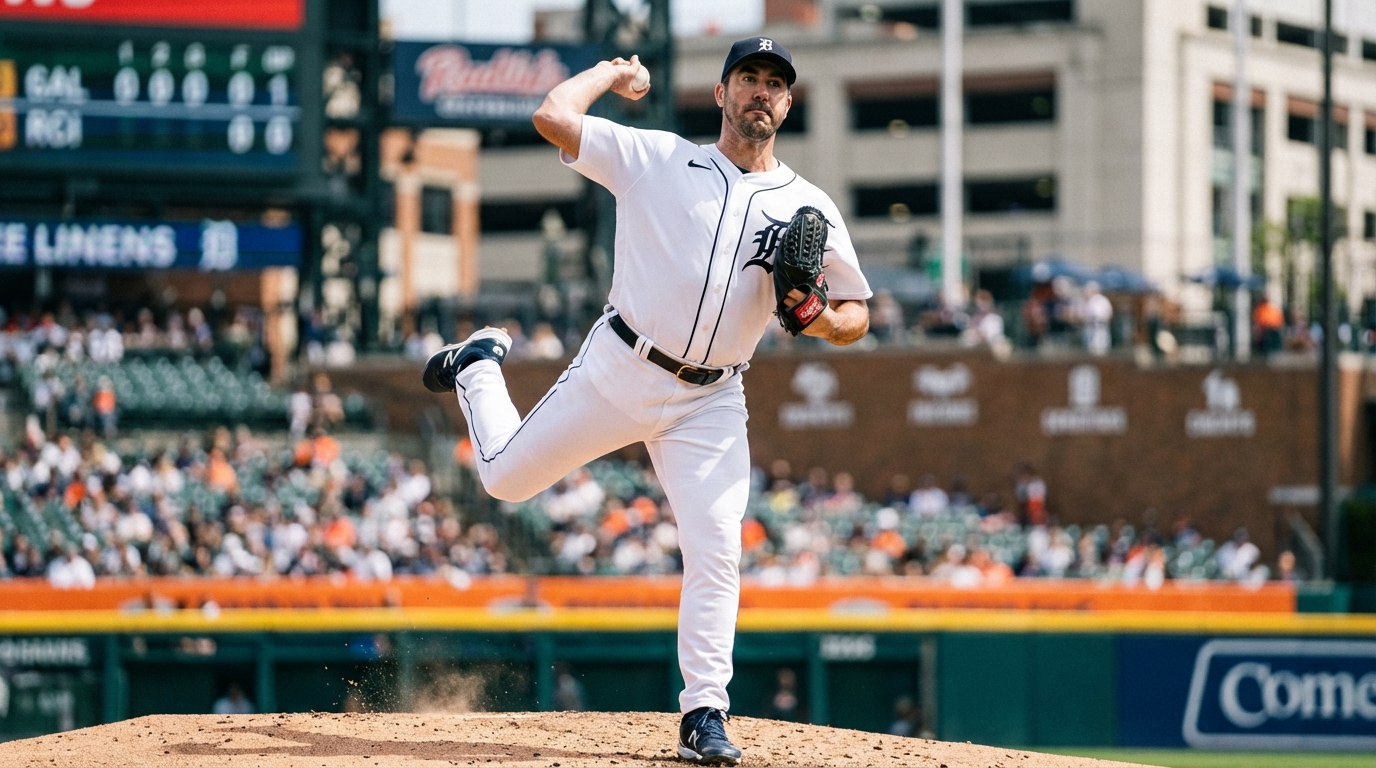
Justin Verlander Returns to Detroit Tigers for 2026 Season
The prodigal son has returned to the mound where he first built his legend. After years of speculation, championship hunts in Houston, and a brief sojourn in New York, Justin Verlander is back in the Old English D. It is a transaction that transcends mere roster construction; it is a restoration of order for a franchise that has spent the better part of a decade searching for the kind of identity Verlander once provided every fifth day. The Detroit Tigers announced the one-year agreement on February 10, 2026, signaling not just a reunion, but a deliberate attempt to inject veteran steel into a clubhouse teeming with unpolished potential.
TL;DR
- The Deal: Justin Verlander signs a one-year contract with the Detroit Tigers for the 2026 season.
- The Context: At age 43, Verlander returns to his original team to likely conclude his Hall of Fame career.
- The Role: He is expected to serve as a mid-rotation stabilizer and mentor to the Tigers’ young pitching core.
- The Impact: The signing immediately boosts fan interest and ticket sales while addressing a need for reliable innings.
The Anatomy of a Homecoming
This is not merely a ceremonial signing. While the romance of the reunion is palpable, the baseball logic remains sound. According to reports from the Detroit News, the Tigers front office identified a critical lack of postseason experience in their current rotation. By bringing back a pitcher who has started World Series games across three different decades, the organization is making a low-risk, high-reward bet on pedigree over raw velocity.
The timeline of this deal is significant. As Spring Training approaches in Lakeland, the market for veteran arms had begun to thin. However, sources indicate that Verlander’s camp and the Tigers had been in communication since the winter meetings. The delay was less about interest and more about structure. The final agreement, as detailed by MLB Trade Rumors, includes a base salary that respects his history while protecting the team against the inevitable wear and tear of a pitcher entering his age-43 season. Incentives based on starts and innings pitched make up a significant portion of the potential earnings, ensuring that the Tigers pay for performance rather than just the name on the back of the jersey.
A Rotation in Need of a General
To understand why this move matters, one must look at the current state of the Tigers’ pitching staff. The roster is populated with talented arms who grew up watching Verlander dominate the American League Central. However, talent does not always equate to durability. The modern game’s obsession with velocity often leads to early bullpen calls, taxing a relief corps by August. Verlander, even in his twilight, represents the old guard philosophy: take the ball, go six or seven innings, and save the bullpen.
This philosophy is exactly what the Tigers need. The rotation has flashed brilliance but lacked the consistency required for a deep October run. By inserting Justin Verlander into the mix, manager A.J. Hinch, who shares a history with Verlander from their Houston days, gains a lieutenant on the field. Hinch knows better than anyone how to manage Verlander’s competitive fire against the physical realities of aging.
The Legacy Play: Chasing History at Comerica
For Verlander, the motivation is twofold. First, there is the pursuit of individual milestones. While 300 wins has become a near-impossible standard in modern baseball, Verlander remains the closest active pursuer of significant career totals in strikeouts and innings. Doing this in a Detroit uniform adds a layer of poetic justice to his statistical resume. Second, there is the matter of closure. His trade to Houston in 2017 was necessary for both parties at the timeDetroit needed to rebuild, and Verlander needed a ring. He got two. Now, the rebuild is ostensibly over, and the “window” is cracking open.
Official confirmation from MLB.com highlighted a statement from Tigers ownership, emphasizing that Verlander’s return is intended to “bridge the eras of Tigers baseball.” It is a clear signal to the fanbase: the lean years are done, and the organization is ready to spend on icons again. This psychology cannot be understated. Detroit fans have been patient, but their patience wears thin. Seeing No. 35 back on the mound provides an immediate morale boost that no mid-tier free agent could replicate.
Comparison Table: Verlander’s 2026 Options
| Option | Best for | Pros | Cons | Pricing/Cost |
|---|---|---|---|---|
| Sign with Tigers | Legacy & Closure | Fan engagement, mentorship, “full circle” narrative. | High injury risk, potentially blocking a prospect. | Moderate Base + High Incentives |
| Stay with Contender (e.g., Astros/Mets) | Ring Chasing | Better immediate odds of a World Series title. | Role likely diminished to #4 starter; less sentimental value. | High Short-term |
| Retirement | Health & Family | Preserves career stats, no risk of poor final season. | Leaves “gas in the tank” on the table; misses farewell tour. | $0 |
| Sign with NL West Team | Lifestyle | Warm weather, proximity to LA residence. | Disconnect from historical fanbase; unfamiliar division. | Market Rate |
The Financial and Roster Implications
The structure of the contract is a masterclass in modern roster management for aging stars. By keeping the base salary manageable, the Tigers maintain flexibility to add bullpen depth or a right-handed bat at the trade deadline. If Verlander pitches 150 innings, he gets paid like an ace. If he pitches 80, the team isn’t crippled by an albatross contract. This is the model the St. Louis Cardinals used effectively with returning legends in the past, and Detroit is wise to emulate it.
Furthermore, the roster expansion rules and the way teams manage the injured list allow Detroit to be creative. They can skip Verlander’s starts occasionally to keep him fresh, using “openers” or long relievers to fill the gaps. This wasn’t an option during his 2011 MVP season when he was expected to finish what he started, but in 2026, it is a necessity for survival.
Pros and Cons
Pros
- Mentorship: Young pitchers like Tarik Skubal or Jackson Jobe get direct access to a Hall of Fame brain.
- Ticket Revenue: Opening Day and Verlander’s starts will see significant attendance spikes.
- Innings Eater: Even a diminished Verlander is likely to throw more competitive innings than a replacement-level arm.
- Clubhouse Culture: Instills winning expectations and professionalism.
Cons
- Age Factor: At 43, the risk of a season-ending injury is statistically higher.
- Performance Drop-off: If his velocity dips below 92mph, he may struggle against elite lineups.
- Roster Spot: Could potentially block a rising prospect from getting major league experience.
The Fan Perspective: Healing Old Wounds
When Verlander left in 2017, it was a tearful goodbye. He was the last link to the Jim Leyland era, the 2006 and 2012 World Series appearances. His success in Houston was celebrated by Detroit fans, but it was also a painful reminder of what could have been. This signing heals that wound. It allows the city to reclaim him. He isn’t just an Astro who used to play here; he is a Tiger who went on a journey and came home.
Social media reaction to the news has been overwhelmingly positive, with “Must See TV” becoming the sentiment for his first start. The visual of Verlander walking from the bullpen to the mound at Comerica Park, accompanied by ‘Eminem’ or ‘The White Stripes’, is a marketing dream that the Tigers are eager to capitalize on.
FAQ
Q: Is this definitely Justin Verlander’s final season? A: While not officially announced as a retirement tour, the one-year nature of the deal and his age (43) suggest this is likely his final season. However, Verlander has historically stated he wants to pitch as long as his body allows, citing 45 as a goal.
Q: Will Verlander be the Opening Day starter? A: This depends on his Spring Training performance. While sentimentality says yes, the Tigers have other younger aces who may merit the honor based on the previous season’s performance. It is more likely Verlander gets the home opener or the second game of the season.
Q: What happens if the Tigers are not in contention by the trade deadline? A: This is the delicate part of the deal. If Detroit is out of the race, Verlander could theoretically be traded to a contender, similar to 2017. However, it is highly probable that this contract includes a full no-trade clause, giving him control over his destiny.
Conclusion
The 2026 season for the Detroit Tigers will be defined by this narrative. Whether it ends in a playoff berth or a tearful wave to the crowd in September, the return of Justin Verlander ensures that the season will matter. In a sport increasingly driven by spreadsheets and efficiency, the Tigers have made a move for the heart of the game. They have brought the ace home, giving a legendary career the ending it deserves in the city where it began.
References
- MLB.com - Justin Verlander Free Agent Deal
- Detroit News - Tigers Bringing Back Former Ace
- MLB Trade Rumors - Tigers Sign Justin Verlander