Premier League Standings: Data vs Reality in the Title Race
The Algorithm vs. The Atmosphere: Decoding the Title Race
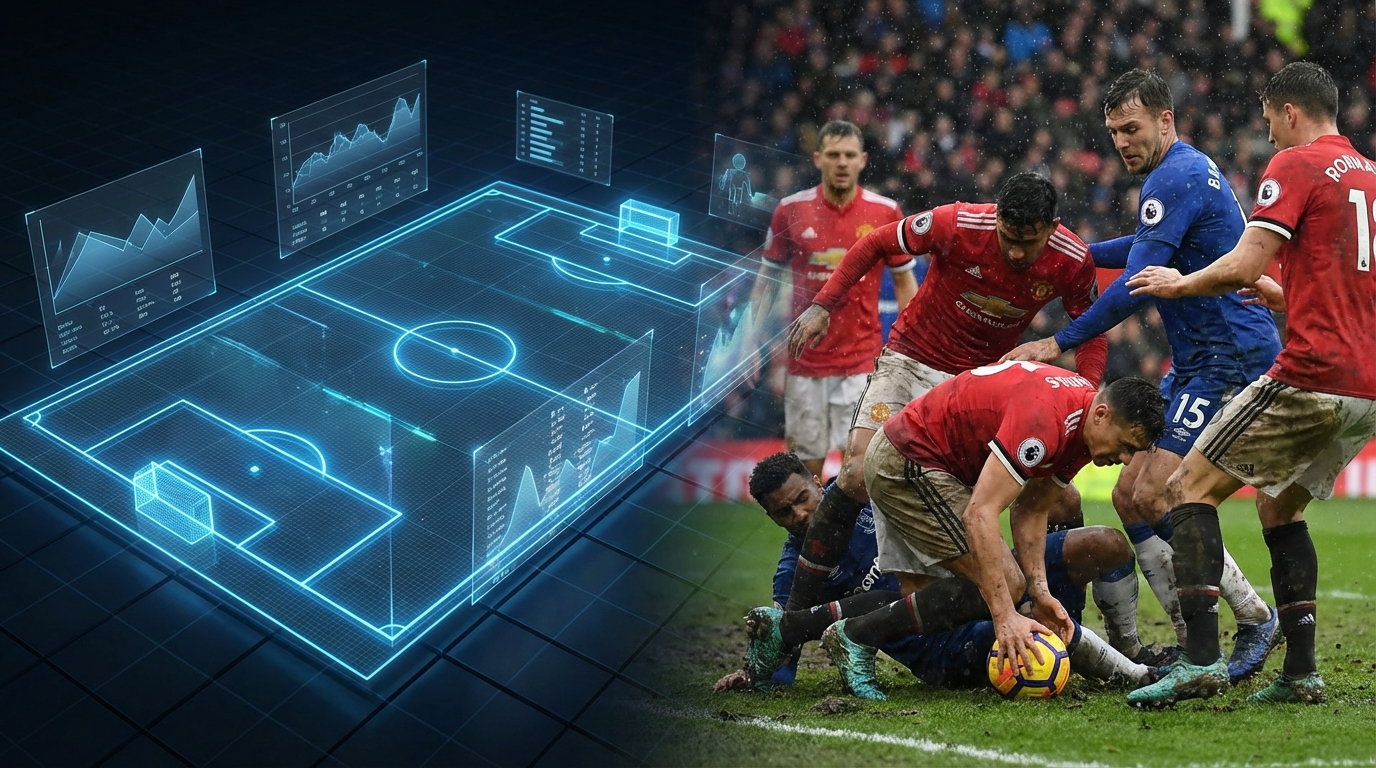
In the modern era of sports consumption, particularly as the Premier League expands its footprint across the United States, we have become obsessed with certainty. We crave the projected outcome, the win probability, and the expected goals (xG) before the ball has even hit the back of the net. However, as we gaze at the current premier league standings, we are reminded that football remains a sport defiantly resistant to total quantification. The table tells us where the teams are today, but the underlying data and the narratives spinning out of North London and Manchester tell a far more complex story about where they are going.
The race for the 2024/25 crown has transcended a simple accumulation of points; it has become a referendum on whether perfection is sustainable. Manchester City, the monolithic dynasty under Pep Guardiola, finds itself in a rare position of vulnerability, while Mikel Arteta’s Arsenal looks to convert potential into silverware. Yet, despite the visual evidence of City’s fallibility, the machines are still betting on blue.
The Ghost in the Machine: Why Data Favors the Dynasty
It is easy to look at a few dropped points and declare the end of an era, but predictive modeling operates without emotion. Recently, a supercomputer simulation conducted by betting analysts threw a wrench into the narrative of a changing guard. According to a report by Sports Illustrated, advanced simulations predict that Manchester City will not only recover but will secure the title through a specific, pivotal sequence of events, including a “wild” victory at Anfield against Liverpool.
This projection is fascinating not because it is guaranteed, but because it highlights how algorithms weigh squad depth and historical performance over temporary dips in form. The computer looks at the premier league standings and sees noise; it looks at Manchester City’s underlying metrics and sees a team that, statistically, creates enough chances to regress to the meanwhich, in their case, means winning almost every game. The “Anfield Win” scenario is particularly telling. For years, Anfield has been the one fortress Guardiola struggled to breach consistently. If the models are predicting a victory there, they are essentially predicting that City will overcome their greatest statistical anomaly.
However, data cannot account for fatigue or the specific hunger of a challenger who has finished second twice. The machine assumes City acts as City always has. But what if the engine is finally sputtering?
The Gunners Evolution: From Contenders to Killers
While the supercomputers run their simulations, Arsenal is busy rewriting their own code. For two seasons, the narrative was that Arsenal “bottled” the league. This season, the tone has shifted. The Gunners are no longer playing with the frantic energy of a team surprised to be at the top; they are playing with the cold, suffocating control of a champion-in-waiting.
Recent analysis from Football London highlights a significant boost in Arsenal’s title odds following a string of resilient performances. The key difference this year is defensive solidity. In the brutal economy of the Premier League, goals win games, but clean sheets win titles. Arsenal’s ability to grind out results when their attack isn’t firing is the exact trait that City used to monopolize the trophy.
The relationship between the two managers adds a layer of Shakespearean drama to the statistics. As seen above, the embrace between Mikel Arteta and Pep Guardiola is one of mutual respect, but also of a master realizing the apprentice is now a peer. Arteta knows Guardiola’s playbook because he helped write part of it. This familiarity neutralizes City’s tactical surprises. When you look at the standings, you aren’t just seeing points; you are seeing the result of Arteta systematically plugging the holes that Guardiola previously exploited.
The Volatility of the “Wild” Result
The concept of a “wild Anfield win” changing the trajectory of the season is a reminder that the Premier League is often decided by moments of madness rather than months of consistency. In the United States, we often compare the Premier League to the NFL, where “any given Sunday” is the mantra. The Premier League is statistically more stratified, but the variance in a single 90-minute match remains high.
If the supercomputer’s prediction holds true, and City manages to snatch three points from a chaotic game at Liverpool, it does more than just add points to their tally. It breaks the psychological resolve of their rivals. The premier league standings are fragile. A five-point lead can evaporate in two weeks. The psychological weight of City winning a game they “shouldn’t” win is often what breaks Arsenal or Liverpool. It sends a message that resistance is futile.
Conversely, if the simulation is wrongif the human element of a raucous Anfield crowd or a controversial VAR decision swings the game the other waythe algorithm’s entire probability tree collapses. This is where investigative observation beats predictive modeling. You have to watch the knees of the midfielders, the frustration in the striker’s eyes, and the body language on the sideline. Right now, City looks more frustrated than they have in years, while Arsenal looks possessed.
The American Perspective: Why We Watch the Math
It is worth noting why these supercomputer predictions gain so much traction in the US market. American sports culture is deeply rooted in sabermetrics and probability. We want to know the odds. We want to know if the premier league standings are a fluke or a trend.
Sources like Filmogaz and other aggregators often circulate these predictions because they provide a sense of order to the chaos. But for the purist, the joy of this season is precisely that the computer might be wrong. If City is predicted to win 90% of the time, the 10% where they fail becomes the most compelling story in sports.
The Final Stretch: Destiny vs. Data
As we approach the business end of the season, the table will fluctuate. Injuries will occur. Referees will make mistakes. The supercomputer will re-run its numbers a thousand times, adjusting the probabilities by fractions of a percentage point.
But the players do not play the percentages. They play the moment. Manchester City is fighting against the gravity of their own success, trying to prove that they can sustain brilliance indefinitely. Arsenal is fighting against history, trying to prove that they have the mental fortitude to cross the line first.
Ultimately, the premier league standings will be finalized not by a simulation, but by the unpredictable reality of the pitch. Whether it is a wild win at Anfield or a defensive masterclass at the Emirates, the numbers will eventually have to bow to the result. And right now, for the first time in years, the result is anyone’s guess.
Frequently Asked Questions
Q: How accurate are supercomputer predictions for the Premier League? A: Supercomputers use historical data, xG (expected goals), and squad strength to simulate the season thousands of times. While they are generally accurate at predicting long-term trends (like who will finish in the top four), they often struggle to account for intangible factors like player morale, locker room unrest, or sudden injuries to key players.
Q: Why is the “Wild Anfield Win” significant for Manchester City? A: Anfield (Liverpool’s home ground) is historically one of the most difficult venues for visiting teams. For Manchester City, a win there is statistically rare and difficult. If they achieve it, it usually signals a massive momentum shift that can demoralize rival title contenders like Arsenal.
Q: What determines the tie-breaker in the Premier League standings? A: If teams are tied on points at the end of the season, the position is decided by goal difference (goals scored minus goals conceded). If that is also equal, it goes to goals scored, and then head-to-head record. This makes Arsenal’s recent defensive solidity and high scoring rate crucial.