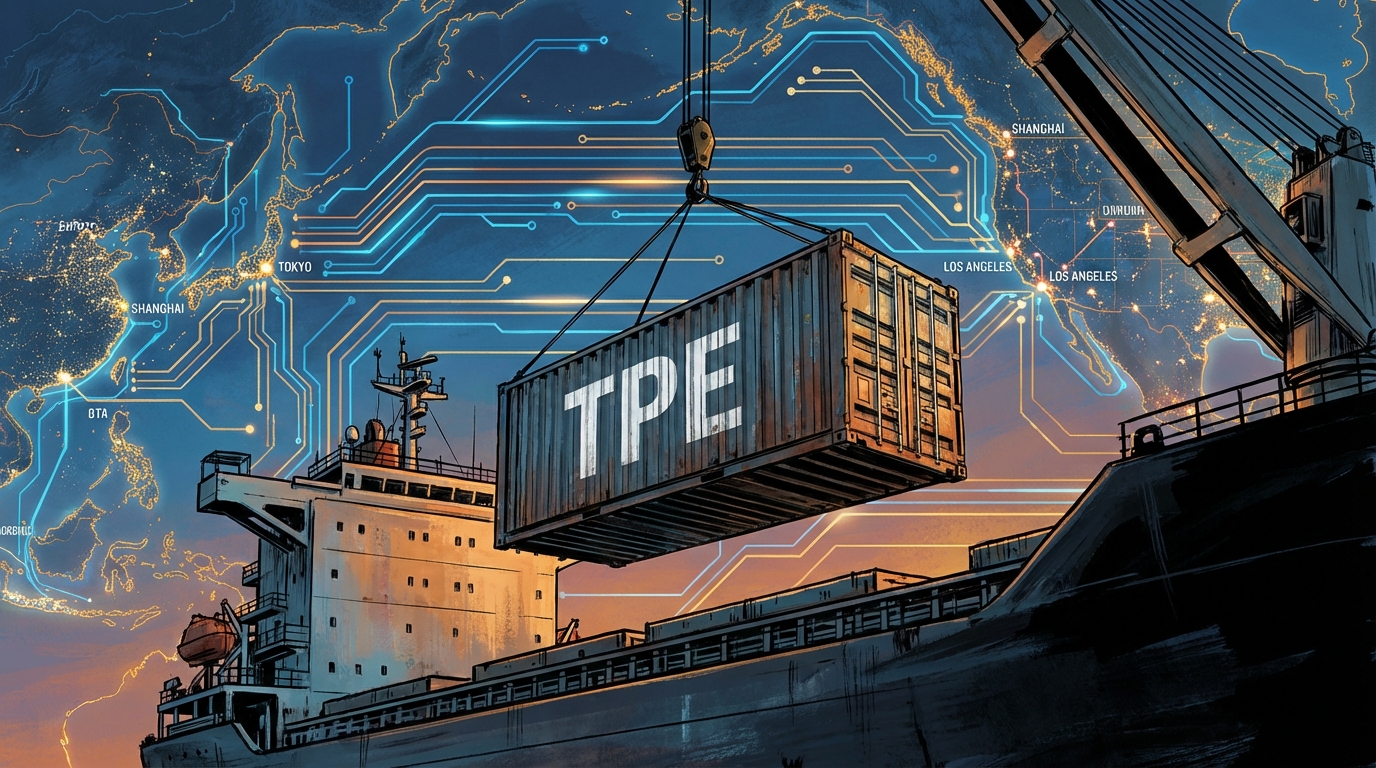
Beyond the TPE Country Code: US-Taiwan 2026 Trade Deal
It is February 2026, and the geopolitical map of the Pacific Rim has just been redrawn, not with warships, but with a pen. In a move that surprised market analysts and diplomats alike, the United States has formalized a trade agreement with the island nation that powers the world’s digital infrastructure. While international logistics and sporting bodies often obscure its sovereignty under the label of the tpe country code, Taiwan has successfully negotiated a pact that pierces through the veil of diplomatic ambiguity. This new agreement, aimed at slashing tariffs and bolstering supply chains, represents a significant shift in Washington’s approach to the Indo-Pacific, moving from rhetoric to binding economic integration.
TL;DR
- Tariff Rollback: The US has agreed to lower specific tariffs on Taiwanese imports, easing costs for American tech consumers.
- Reciprocal Access: Taiwan is lowering barriers for US agricultural and manufacturing goods, opening its markets further.
- Corporate Autonomy: Taiwan’s President clarified that while the government supports ties, companies like TSMC decide their own US investment levels.
- Strategic Pivot: The deal marks a departure from broad protectionist measures, carving out a specific exemption for a critical strategic partner.
- Geopolitical Signal: The agreement reinforces US support for Taiwan without formally crossing the threshold of diplomatic recognition.
The 2026 Tariff Thaw
The architecture of this deal is built upon the dismantling of barriers that were erected during the height of the “America First” protectionist waves. According to a report by CNBC, the United States has signed a trade deal that specifically lowers the “Trump tariffs” that had previously encompassed a wide range of Asian imports. This is a surgical strike against inflation in the electronics sector. By reducing levies on Taiwanese components, the administration is effectively acknowledging that the cost of decoupling was becoming too high for American consumers to bear.
The timing is critical. For years, the threat of blanket tariffs loomed over the semiconductor industry, creating uncertainty that stifled innovation. This February 2026 agreement acts as a pressure release valve. It suggests that the administration has recognized the difference between a strategic competitor and a strategic partner, even if that partner operates in a geopolitical gray zone. The deal does not just benefit Taiwanese exporters; it provides relief to US manufacturers who rely heavily on the intricate supply chain that originates in Hsinchu Science Park.
However, this is not a one-way street. The negotiations required concessions from Taipei as well. As detailed by NBC News, the Trump administration reached this deal only after securing agreements to lower Taiwan’s own tariff barriers. This likely impacts US agricultural exports, a sector that has long demanded better access to Asian markets. The reciprocity is what allowed this deal to pass the scrutiny of domestic economic nationalists who typically oppose free trade agreements.
Comparison Table: Trade Frameworks Analyzed
The following table breaks down the economic frameworks considered during these negotiations, highlighting why the current “Limited Preferential Deal” was the chosen path.
| Option | Best for | Pros | Cons | Pricing/Cost |
|---|---|---|---|---|
| Status Quo (Pre-2026) | Domestic Protectionism | Protects specific US legacy industries from competition. | High consumer prices; supply chain friction; strained relations. | High (Tariffs passed to consumers) |
| 2026 Limited Deal | Tech & Agriculture | Lowers costs for electronics; opens markets for US farmers; strengthens alliances. | Does not cover all sectors; risks angering Beijing; complex compliance. | Moderate (Reduced tariffs) |
| Full Free Trade Agreement | Maximum Integration | Zero tariffs; complete market integration; strongest political signal. | Political non-starter due to sovereignty issues; high risk of retaliation. | Low (No tariffs) |
Corporate Autonomy in the Face of Geopolitics
While the governments shake hands, the captains of industry are drawing their own lines in the sand. A crucial component of this narrative is the autonomy of Taiwan’s semiconductor giants. There has been immense pressure from Washington for Taiwanese companies to “friend-shore” their manufacturing capacity to American soil, specifically to states like Arizona and Texas. The assumption in DC was that a trade deal would come with guaranteed investments.
However, the reality on the ground is more nuanced. Reporting from Reuters highlights a firm stance from Taiwan’s leadership: it is up to Taiwan companies to decide their US investments. The President of Taiwan made it clear that while the government facilitates the environment for cooperation, it does not dictate the capital expenditure of private entities. This is a polite but firm rebuff to the idea that Taiwan’s tech sector can be commanded by political decrees from either Taipei or Washington.
This distinction is vital. It preserves the “Silicon Shield”the idea that keeping the most advanced manufacturing in Taiwan is essential for the island’s security. If all the advanced capacity were moved to the US, the strategic incentive for the US to intervene in a cross-strait crisis might diminish. Therefore, the trade deal lowers costs for moving goods, but it does not mandate the movement of factories.
Pros and Cons of the 2026 Agreement
Pros
- Supply Chain Resilience: Reduces the friction and cost of moving critical semiconductors from Taiwan to US assembly plants.
- Inflation Control: removing tariffs on intermediate goods helps lower the final price of consumer electronics in the US.
- Diplomatic Signaling: Reinforces the US commitment to the region without violating the formal “One China” policy structure.
- Market Access: US agricultural producers gain better access to Taiwan’s wealthy consumer base.
Cons
- Geopolitical Friction: The deal inevitably invites condemnation and potential economic retaliation from Beijing.
- Domestic Pushback: US labor unions may argue that lowering barriers discourages the reshoring of manufacturing jobs.
- Implementation Complexity: Defining “rules of origin” for technology products to qualify for the tariff cuts is notoriously difficult.
- Limited Scope: It falls short of a full treaty, leaving some sectors still vulnerable to future policy shifts.
The Strategic Weight of the TPE Country Designation
The nomenclature used in international trade and sports referring to Taiwan as the tpe country code or Chinese Taipei has always been a diplomatic fig leaf. It allows the world to engage with Taiwan while pretending not to. However, the substance of this 2026 trade deal makes the label increasingly irrelevant in practical terms. When the United States Trade Representative signs a document reducing billions of dollars in tariffs, they are treating the counterparty as a sovereign economic entity, regardless of the three-letter code on the shipping manifest.
This deal elevates the “TPE” designation from a convenient placeholder to a powerhouse classification. It signals to other nations that economic pragmatism can coexist with diplomatic ambiguity. The US is essentially saying that it will not let semantic disputes hinder economic necessity. For investors and supply chain managers, this provides a level of certainty that was previously missing. The “TPE” code now comes with preferential status, making it a more attractive node in the global logistics network than it was under the previous high-tariff regime.
Furthermore, this move forces a re-evaluation of risk. Previously, the ambiguity of Taiwan’s status added a risk premium to doing business there. By formalizing trade terms, the US is underwriting that risk to some degree. It is a bet that economic integration is a stronger deterrent to conflict than isolation.
FAQ
Q: Does this trade deal mean the US formally recognizes Taiwan as a sovereign country?
A: No. The agreement is an economic pact between the United States and the governing authorities on Taiwan. It operates within the framework of the Taiwan Relations Act and does not constitute formal diplomatic recognition, despite the deepening ties.
Q: Will this lower the price of smartphones and computers?
A: Potentially. By removing the “Trump tariffs” on components imported from Taiwan, the cost of manufacturing electronics drops. However, whether companies pass these savings to consumers or retain them as profit depends on market competition.
Q: Why is the code ‘TPE’ used so frequently?
A: TPE is the International Olympic Committee code and ISO 3166-1 alpha-3 code often associated with “Chinese Taipei.” It is used to allow Taiwan to participate in international events and systems without triggering diplomatic standoffs regarding its sovereignty.
Q: How does this affect US farmers?
A: Positive impact. The deal includes provisions for Taiwan to lower its barriers to US agricultural goods, meaning US beef, pork, and grain exporters should see increased demand from the Taiwanese market.
The Path Forward
The February 2026 trade deal is a pragmatic acknowledgment of reality. The global economy runs on silicon, and the heart of that silicon beats in Taiwan. By lowering tariffs and formalizing trade relations, the US has chosen stability over protectionist dogma. While the diplomatic dance around the tpe country label continues in international forums, the economic reality is now clear: the US and Taiwan are more integrated than ever. The challenge moving forward will be managing the inevitable geopolitical fallout while ensuring that the benefits of this deal reach the workers and consumers in both nations.