Chris Paul Retires: The End of an Era for the Point God
The era of the traditional ‘Point God’ has officially come to a close. In a sequence of moves that highlights the cold business nature of the National Basketball Association, Chris Paul has announced his retirement from professional basketball. The decision comes on the heels of a transactional flurry that saw the future Hall of Famer land with the Toronto Raptors, only to be waived shortly thereafter. For nearly two decades, Paul served as the league’s competitive conscience, a floor general whose command of the game was absolute. His departure marks not just the end of a career, but the sunset of a specific archetype of basketball leadership that prioritized precision over pace and intellect over athleticism.
TL;DR
- Chris Paul has officially retired from the NBA after 19 seasons.
- The decision followed a move where the Toronto Raptors waived him to clear salary cap space.
- Paul leaves the game ranked third all-time in assists and steals.
- His heartfelt statement focused on gratitude toward his family and the teammates who shaped his journey.
- Despite never winning a championship, his first-ballot Hall of Fame status is undisputed.
The Mechanics of the End
The conclusion of Paul’s career was precipitated by a financial maneuver rather than an on-court defeat. The Toronto Raptors, in a move widely anticipated by salary cap experts, decided to part ways with the veteran guard. According to reports, the Raptors waived Chris Paul shortly after acquiring him. This transaction was not a reflection of Paul’s diminishing skillsthough he had slowed down at age 39but rather a strategic decision by the franchise to maximize financial flexibility. The waiving allowed Toronto to avoid the full guarantee of his substantial contract, a common practice in the modern NBA for aging stars on expiring deals.
This transactional coldness stands in stark contrast to the warmth of the player’s legacy. While the Raptors’ front office was balancing books, the basketball world was preparing to say goodbye to one of its greatest tacticians. It is a reminder that even legends often face unceremonious exits on paper, even if their cultural exit is celebrated with reverence.
A Heartfelt Departure
Following the news of his release, Paul did not seek another team. Instead, he chose to bow out on his own terms. In a statement that resonated across the sports landscape, Chris Paul announced his retirement with a focus on gratitude. His message was devoid of bitterness regarding the lack of a championship ring or the nature of his final transaction. Instead, he focused on the “privilege” of playing the game he loved for so long.
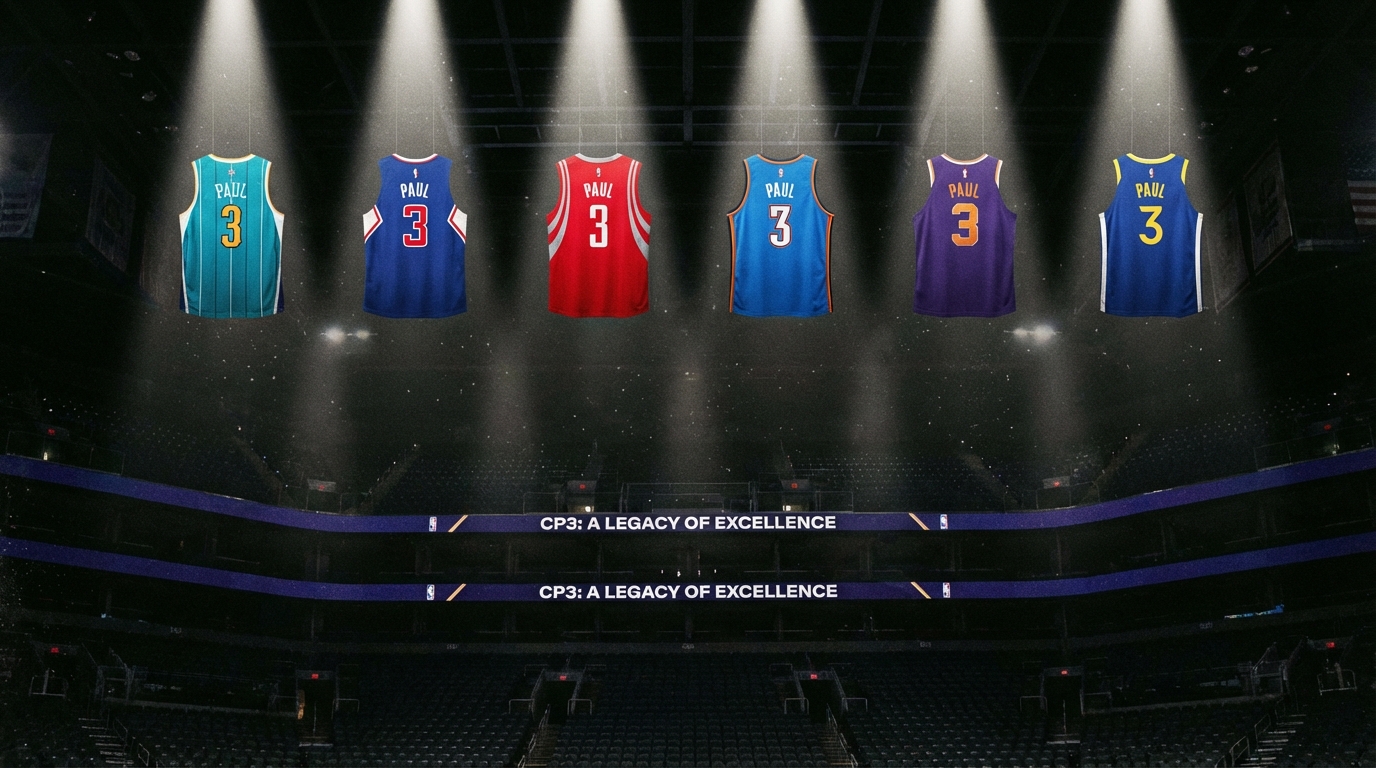
Paul’s statement highlighted the support system that sustained his longevity. He thanked his family, his teammates, and the fans who followed him from New Orleans to Los Angeles, Houston, Oklahoma City, Phoenix, and finally, briefly, the Bay Area. The emotional weight of his farewell underscores that for Paul, basketball was always deeply personala craft he honed with obsessive dedication.
Comparison Table: Eras of the Point God
Chris Paul’s career can be viewed in distinct phases, each defined by a different role and strategic imperative. The following table breaks down these eras.
| Era | Defining Trait | Pros | Cons | Contract Context |
|---|---|---|---|---|
| The Hornet (NOLA) | Athleticism & Speed | Peak explosiveness, MVP-level production, 20/10 machine. | Lack of playoff experience, weaker supporting cast. | Rookie Scale / Max Extension |
| Lob City (Clippers) | Highlight Reels | Elite playmaking, transformed franchise culture, high visibility. | Playoff injuries, locker room friction, “Second Round Curse”. | Supermax Contract |
| The Mentor (OKC/Suns) | Leadership & IQ | Elevating young talent, NBA Finals appearance (Suns), clutch efficiency. | Declining athleticism, durability issues in postseason. | High Veteran Salary (40M+) |
| The Final Chapter (Warriors) | Role Acceptance | High assist-to-turnover ratio, veteran stability off the bench. | Lowest scoring output, defensive liability against speed. | Waived (Non-Guaranteed) |
The Statistical Titan
To understand the magnitude of this loss, one must look at the numbers. Paul retires as a statistical anomaly. He is one of the few players in NBA history to rank in the top five for both assists and steals. According to CBS Sports, Paul’s consistency over nearly two decades allowed him to accumulate numbers that modern point guards may never reach due to load management and the shifting nature of the position.
He was the master of the mid-range jumper, a shot deemed inefficient by analytics models until Paul proved that efficiency is determined by the shooter, not the spot on the floor. His assist-to-turnover ratio remains the gold standard for ball security. In an era where turnovers are often accepted as the cost of doing business for high-usage players, Paul treated every possession as precious property.
Pros and Cons of the CP3 Legacy
Pros
- Unmatched Basketball IQ: Widely regarded as one of the smartest players to ever step on the court, serving as a coach on the floor.
- Franchise Elevator: Every team Paul joined saw an immediate increase in winning percentage and offensive efficiency.
- Defensive Tenacity: A 9-time All-Defensive Team selection, proving that size does not dictate defensive impact.
- NBPA Leadership: Served as President of the Players Association, guiding the league through the bubble and CBA negotiations.
Cons
- The Ringless Resume: The most glaring omission from his trophy case is the Larry O’Brien trophy, often used by critics to diminish his standing.
- Playoff Health: Significant injuries at critical playoff moments (2015, 2018) often derailed his teams’ championship aspirations.
- Abrasive Leadership: His demanding style sometimes wore on teammates, leading to friction in locker rooms like the Clippers and Rockets.
The Void Left Behind
The NBA is currently in a transition phase where the “pure point guard” is becoming an endangered species. Players like Luka Doncic and Shai Gilgeous-Alexander dominate the ball, but they are scorers first and facilitators second. Paul was a facilitator first, second, and third. His retirement signals the potential extinction of the pass-first superstar who can dominate a game taking only eight shots.
Furthermore, the league loses a vital mentor. During his stints in Oklahoma City and Phoenix, Paul was instrumental in the development of stars like Shai Gilgeous-Alexander and Devin Booker. His ability to teach the nuances of the pick-and-roll and the dark arts of drawing fouls was a resource that accelerated the growth of young rosters. With him gone, that institutional knowledge must now be passed down by the very players he taught.
Analyzing the “Ring” Argument
In the wake of his retirement, the discourse will inevitably turn to his lack of a championship. However, context is required. Paul played in the Western Conference during the peak of the Kobe Bryant Lakers, the Tim Duncan Spurs, and the Stephen Curry Warriors. His best chance, the 2018 Houston Rockets, saw them up 3-2 on the greatest team ever assembled (the KD-era Warriors) before a hamstring injury sidelined him for Games 6 and 7.
To define his career solely by the absence of a ring is to ignore the transformative effect he had on every organization he touched. He took the Hornets to relevance, made the Clippers a powerhouse, nearly toppled the Warriors with Houston, and dragged a dormant Phoenix Suns franchise to the NBA Finals. As noted in the coverage of his retirement announcement, his legacy is cemented by his impact on the game’s culture and his peers, regardless of the jewelry collection.
FAQ
Q: Why did the Raptors waive Chris Paul? A: The Raptors waived Paul primarily for financial reasons. His contract was non-guaranteed or partially guaranteed, meaning waiving him allowed Toronto to clear significant salary cap space to rebuild their roster around younger talent.
Q: Will Chris Paul make the Hall of Fame? A: Yes, Chris Paul is considered a lock for the Naismith Memorial Basketball Hall of Fame on the first ballot. His standing as a top-five point guard all-time, combined with his stats (top 3 in assists and steals) and All-NBA selections, makes his induction a formality.
Q: Did Chris Paul ever win an MVP award? A: No, Chris Paul never won the regular season MVP. His closest finish was in the 2007-2008 season, where he finished second in voting behind Kobe Bryant in a highly contested race.
Q: Which team will retire Chris Paul’s jersey? A: It is highly likely that the New Orleans Pelicans (Hornets history) and the Los Angeles Clippers will retire his jersey. The Phoenix Suns may also consider it given he led them to their first Finals appearance in nearly three decades.
Conclusion
As the dust settles on this announcement, the basketball world must grapple with the reality of a league without its Point God. Chris Paul leaves the game not as a defeated veteran waived by a rebuilding team, but as an architect who reshaped the floor plans of modern basketball. His influence is visible in the play of the next generation’s guards, even if they lack his specific brand of abrasive perfectionism. While the championship ring remained elusive, his legacy is secure. He mastered the game, maximized his potential, and walked away on his own terms, leaving a standard of excellence that will be studied for decades to come.