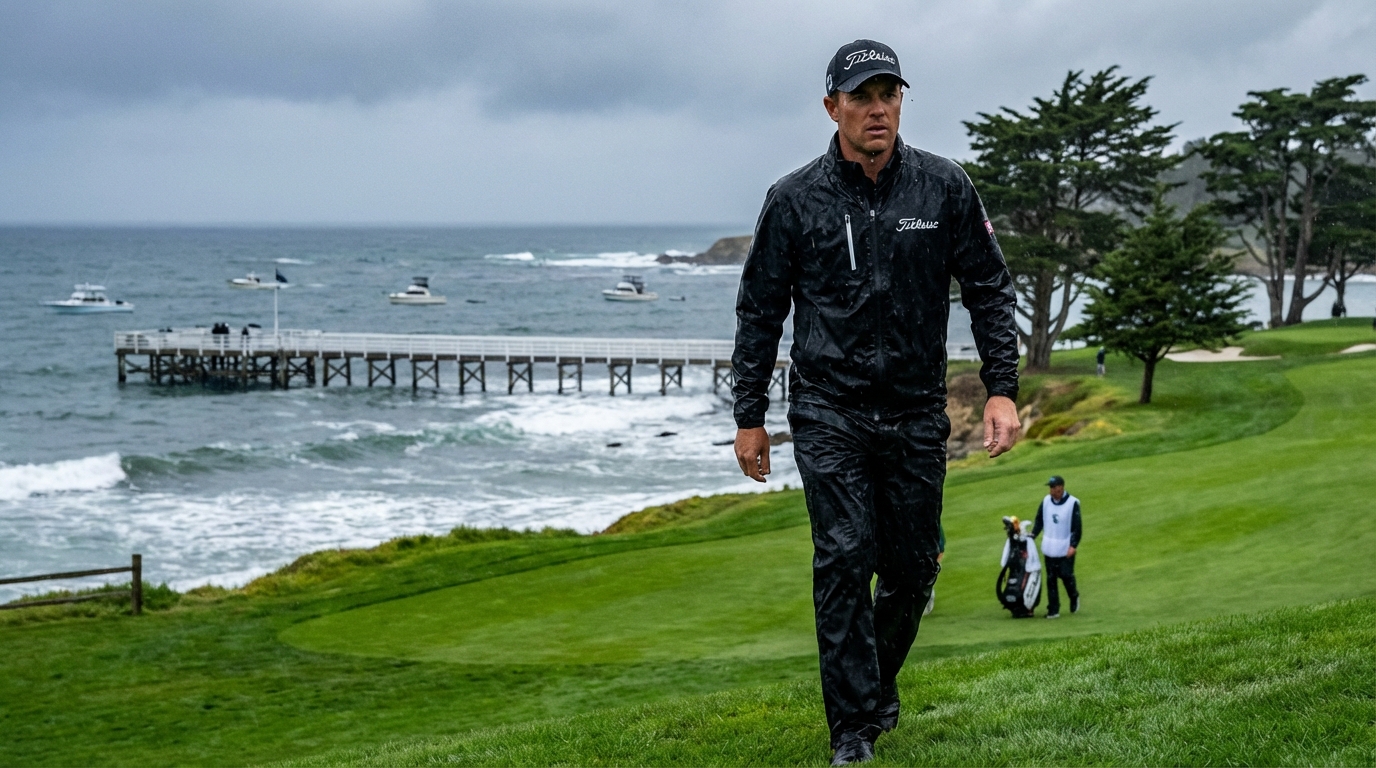
2026 PGA Pebble Beach Pro-Am: Weather Chaos & Betting
The Monterey Peninsula offers one of the most breathtaking backdrops in sports, but as the 2026 AT&T Pebble Beach Pro-Am demonstrated, it can also provide one of the most hostile environments for professional golf. For the pga and its officials, the second week of February turned into a logistical high-wire act, balancing the integrity of the competition against the safety concerns posed by gale-force winds and relentless rain. As fans watched the leaderboard fluctuate with every gust, the narrative shifted from a simple stroke-play event to a test of survival, highlighting the unique challenges of West Coast swing golf.
TL;DR
- Severe Weather Impact: High winds and rain forced the PGA Tour to delay rounds and adjust tee times, threatening a shortened 54-hole event.
- Top Contenders: Despite the chaos, Shane Lowry and Collin Morikawa solidified their positions as favorites, utilizing their ball-striking prowess.
- Betting Volatility: Odds fluctuated wildly as course conditions deteriorated, favoring players with strong scrambling metrics.
- Logistical Strain: Officials had to constantly revise schedules, pushing the possibility of a Monday finish to ensure a fair conclusion.
- Course Difficulty: Pebble Beach played significantly over par during the worst squalls, testing the mental fortitude of the entire field.
Strategic Betting Options During Weather Delays
When a tournament is plagued by stoppages, the betting landscape changes instantly. The following table compares different wagering approaches suitable for a weather-delayed event like the 2026 AT&T Pebble Beach Pro-Am.
| Option | Best for | Pros | Cons | Pricing/Cost |
|---|---|---|---|---|
| Live Betting | Reacting to immediate weather shifts | Allows capitalization on sudden momentum swings or wind gusts affecting specific holes. | Odds change in seconds; broadcast delays can put bettors at a disadvantage. | Varies by sportsbook |
| 3-Ball Matchups | Isolating player performance | Lowers variance by focusing on beating two specific opponents rather than the whole field. | Payouts are generally lower than outright winner bets. | Standard Juice (-110 to +150) |
| Top 5/10/20 Finish | Risk-averse bettors | Provides a safety net if a player contends but falls short of winning. | Significantly reduced odds compared to “To Win” bets. | Varies (e.g., +200 to +400) |
| Futures (Outrights) | High-risk, high-reward seekers | Massive payouts if predicting a winner correctly before the final round chaos. | High risk of losing the entire stake; weather introduces randomness. | High Variance (+800 to +5000) |
Pros and Cons of Weather-Shortened Events
The debate over whether to push for 72 holes or accept a 54-hole result is constant during the winter swing. Here is an analysis of the trade-offs involved in these decisions.
Pros
- Player Safety: Calling an event at 54 holes avoids forcing players to compete in dangerous conditions involving falling branches or unplayable lies.
- Schedule Integrity: Concluding on Sunday allows players to travel to the next tour stop without fatigue or logistical delays.
- Broadcast Certainty: Networks prefer a guaranteed Sunday finish to fit within programmed time slots, ensuring higher viewership.
- Course Preservation: Limiting play prevents excessive damage to soft greens and fairways that occurs during heavy saturation.
Cons
- Competitive Fairness: A 54-hole event eliminates the pressure of the final 18 holes, which is often where tournaments are won or lost.
- Record Asterisks: Wins in shortened events are often viewed differently by historians and critics compared to full 72-hole victories.
- Fan Disappointment: Ticket holders for the final day lose out on the experience if the tournament is called early or moved to a Monday without crowds.
- Momentum Killers: Players mounting a late charge on Sunday are robbed of the opportunity to catch the leaders if the fourth round is canceled.
The Meteorological Battle at Pebble Beach
The 2026 edition of the AT&T Pebble Beach Pro-Am will be remembered as much for the meteorology as for the golf shots. The primary issue facing tournament organizers was a powerful Pacific storm system that battered the Monterey coastline. According to reports regarding the schedule, officials were forced to make drastic changes to the flow of the tournament. Golfweek noted that tee times were adjusted due to severe weather, a move that signaled the severity of the conditions.
These delays are not merely inconveniences; they fundamentally alter the nature of the sport. When play is stopped and restarted, players must constantly warm up and cool down, disrupting their physical rhythm. Furthermore, the “draw” becomes a critical factor. Players who happened to be on the course during the worst of the squalls faced a distinct disadvantage compared to those who were safely in the clubhouse or playing during a brief window of calm. This variance is inherent to golf, but at Pebble Beach, the disparity can be worth several strokes.
Navigating the Odds: Lowry and Morikawa
Amidst the wind and rain, specific players demonstrated the ball-striking ability required to pierce through the heavy coastal air. Two names that rose to the top of the conversation were Shane Lowry and Collin Morikawa. Their pedigree as major champions equipped them well for the adversity presented by the course. Lowry, an Open Champion, is historically comfortable in adverse weather, while Morikawa’s iron play is precise enough to control ball flight in unpredictable winds.
Betting markets reacted swiftly to their performance. As the third round approached, analysts pinpointed them as the smart money. The PGA Tour’s analysis highlighted them as top picks, noting that their statistical profiles aligned perfectly with the demands of a wet and windy Pebble Beach. For bettors, the challenge was determining if the shortened odds offered enough value given the volatility of the weather. If the tournament were to be shortened to 54 holes, the leader after the third round would be declared the winner, adding immense pressure to every shot on Saturday.
The Final Round Scramble
The uncertainty of the finish created a tense atmosphere as the weekend progressed. The possibility of a “Monday finish” loomed largea scenario that the tour tries to avoid but often accepts to ensure a 72-hole champion. The logistics of a Monday finish are complex, involving volunteer retention, television broadcast extensions, and travel delays for the entire traveling circus of caddies and players.
By Sunday, the focus shifted to simply getting the ball in the hole by any means necessary. Scoring conditions were difficult, and the leaderboard was volatile. The Palm Beach Post reported on the final round tee times and scores, tracking the frantic efforts to conclude the event. For the players near the lead, the strategy shifted from aggression to preservation. In such conditions, making pars is often enough to move up the leaderboard as opponents falter with bogeys and doubles.
The Impact of Weather Protocols on the PGA
The 2026 AT&T Pebble Beach Pro-Am serves as a case study for the tour’s evolving weather protocols. In recent years, there has been a concerted effort to use advanced meteorological data to predict playable windows more accurately. However, the unique geography of Pebble Beach, with holes directly abutting the Pacific Ocean, makes prediction difficult. Wind speeds can vary dramatically from the tee box to the green on the same hole.
This event underscores the importance of the “lift, clean, and place” rule, often invoked when fairways become sodden. While purists argue that the ball should be played as it lies, the reality of mud balls in professional golf is that they introduce a random variable that compromises the skill element. By allowing players to clean the ball, the tour attempts to maintain a level playing field, even when the course itself is fighting back.
FAQ
Q: What happens if the tournament is shortened to 54 holes? A: If 72 holes cannot be completed due to weather conditions and a Monday finish is not feasible, the tournament is declared official after 54 holes. The leader at that stage is declared the winner and receives full FedExCup points and prize money.
Q: How does a Monday finish affect the TV broadcast? A: Monday finishes are typically broadcast on the Golf Channel rather than the main network (CBS or NBC). Viewership usually drops significantly, but it ensures the integrity of a 72-hole competition.
Q: Why do tee times change during weather delays? A: Officials may switch to a “shotgun start” or use split tees (starting on holes 1 and 10 simultaneously) to compress the playing window and get as many players on the course as possible during daylight hours.
Q: Are bets voided if the tournament is shortened? A: Most sportsbooks consider a 54-hole winner a valid result for outright winner bets. However, specific prop bets regarding the 4th round would typically be voided and stakes returned.
Conclusion
The 2026 AT&T Pebble Beach Pro-Am was a testament to the endurance required to succeed on the pga tour. While fans often associate professional golf with manicured fairways and sunshine, the reality of the winter schedule is often grit, rain gear, and patience. The performances of players like Shane Lowry and Collin Morikawa under these conditions highlight the immense skill gap between tour pros and amateurs. As the tour moves forward, the lessons learned from the logistical challenges at Pebble Beach will likely inform future weather protocols, ensuring that even when Mother Nature intervenes, the competition remains fair and the champion is worthy.