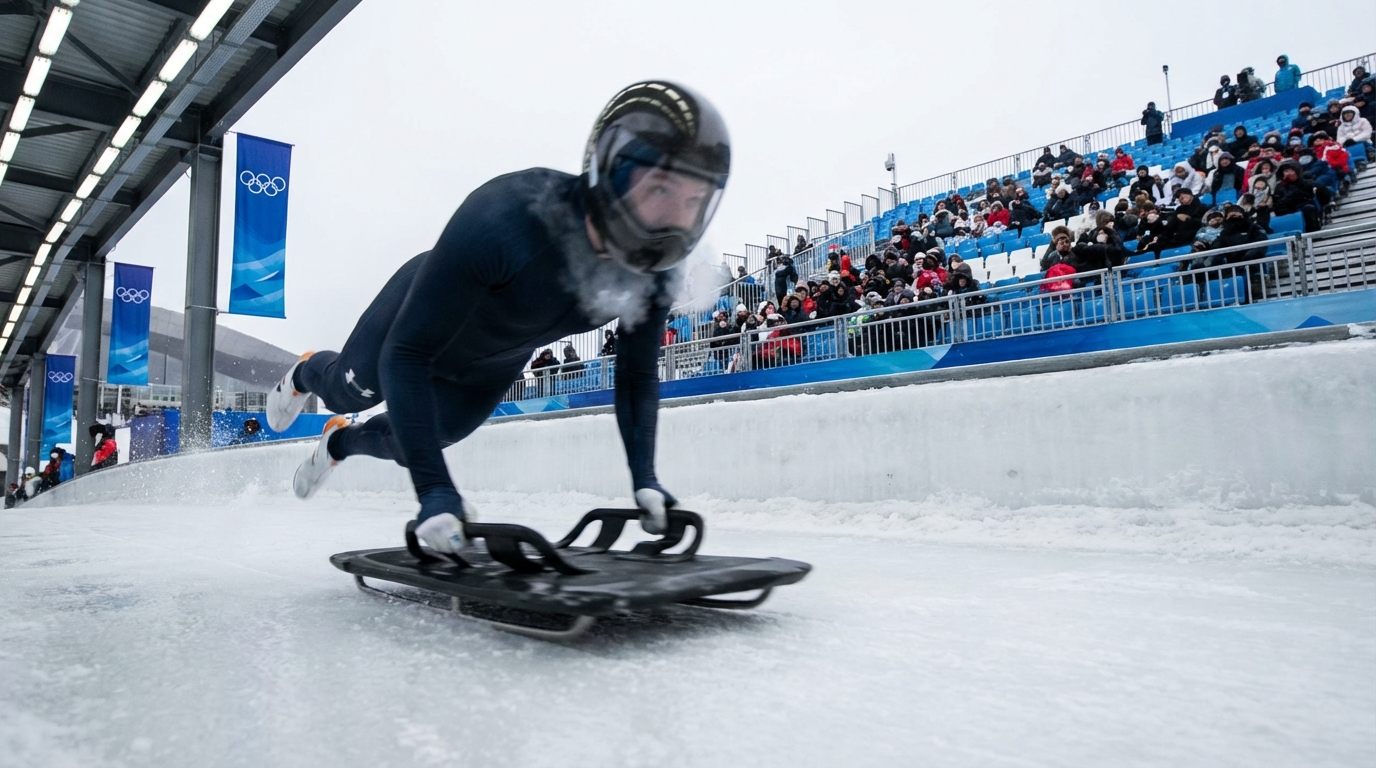
Dan Barefoot Takes 20th Place in Men's Olympic Skeleton
The ice track is an unforgiving ribbon of frozen water, demanding absolute precision from those brave enough to slide down it headfirst at speeds exceeding 80 miles per hour. For Dan Barefoot, a native of Cambria County, Pennsylvania, this track represents the culmination of years of training, sacrifice, and the hopes of a tight-knit community back home. In a sport where success is measured in hundredths of a second, Barefoot’s journey from the quiet streets of Geistown to the global Olympic stage is a testament to resilience. His recent performance, securing a 20th place finish in the men’s skeleton, is not just a statisticit is a narrative of consistency under pressure and the enduring power of hometown roots.
TL;DR
- Final Standing: Dan Barefoot finished 20th in the men’s skeleton event at the Winter Olympics.
- Performance Data: He clocked a combined time of 3:04.09 across his heats, showing high consistency.
- Local Roots: A native of Geistown and Johnstown, PA, he is a Richland High School alumnus.
- Community Support: Local schools and families organized rallies and watch parties to support his debut.
- Significance: Breaking into the top 20 in a global field solidifies his status as an elite slider.
The Anatomy of a Top-20 Finish
To understand the magnitude of what Dan Barefoot accomplished, one must look beyond the final ranking and analyze the data of the heats themselves. Skeleton is a sport of minutiae; a slight shift in weight or a brush against the wall can cost a slider ten spots on the leaderboard. According to race data, Barefoot completed his Olympic campaign with a total time of 3:04.09. This aggregate score was built upon three grueling heats where consistency was the defining factor.
In his first heat, Barefoot laid down a time of 1:01.65. For a debut run on Olympic ice, this established a solid baseline. However, it was his subsequent adjustments that demonstrated his caliber as an elite athlete. He improved in the second heat with a time of 1:01.21 and followed it up with a nearly identical 1:01.23 in the third heat. This level of consistencyvarying by only 0.02 seconds between his second and third runsindicates a slider who has mastered the mental game, capable of replicating complex physical mechanics under extreme stress. As reported by WJAC TV, this performance secured him the 20th spot, a respectable finish in a field dominated by athletes from nations with extensive sliding tracks and massive funding infrastructure.
From Geistown to the Global Stage
The narrative of the Olympic athlete often focuses on the podium, but the investigative angle reveals that the foundation of success is built in places like Geistown, Pennsylvania. Barefoot is not a product of a mysterious factory; he is a Johnstown native and a former student of Richland High School. The geography of his upbringing plays a crucial role in his story. Western Pennsylvania is known for grit, but it is not traditionally known as a hub for skeleton sliding, making his ascent even more improbable.
Support from the local community was palpable throughout the competition. It wasn’t just family watching from their living rooms; the support was institutional. Students at Richland High School, Barefoot’s alma mater, actively participated in showing their support, turning a singular athletic endeavor into a community event. According to coverage by Ubirata Online, the student body rallied around the Geistown native, highlighting how local pride fuels Olympic dreams. This sociological aspect of the sportthe transfer of energy from a small town to an athlete halfway across the worldis often the unseen engine behind the performance.
Comparison Table: Olympic Sliding Disciplines
To better understand the specific challenges Dan Barefoot faced, it is helpful to compare Skeleton to its Olympic counterparts. Each requires different physics and courage.
| Option | Best for | Pros | Cons | Cost/Accessibility |
|---|---|---|---|---|
| Skeleton | Adrenaline junkies who prefer head-first speed. | High individual control; minimalist equipment compared to bobsled. | Extremely dangerous (head-first); high G-forces on the neck. | High (sleds cost thousands); rare tracks. |
| Luge | Athletes with strong core stability (feet-first). | Fastest of the sliding sports; precise aerodynamics. | Limited visibility (lying flat); difficult to steer. | High; requires specialized footwear and sleds. |
| Bobsled | Team players (2-man or 4-man) and power lifters. | Team camaraderie; protected inside a chassis. | Most expensive equipment; reliant on teammates. | Very High; sleds cost nearly $100k. |
The Weight of Expectations and Local Pride
The psychological burden on an athlete representing a specific, small locale can be immense. For Barefoot, the “Johnstown Native” tag is worn as a badge of honor. The local media, including WTAJ, emphasized the pride felt by family and friends. This wasn’t just about winning a medal; it was about representation. In an era where sports can feel increasingly commercialized and distant, the connection between Barefoot and Cambria County serves as a reminder of the organic roots of athleticism.
When a slider finishes 20th, the casual observer might miss the significance. However, in the context of the Olympics, being the 20th best person in the world at a specific discipline is a monumental achievement. It signifies that Barefoot survived the cut-offs that eliminated other world-class competitors. His ability to qualify for the Olympics and then perform consistently across three heats places him in the upper echelon of winter sports history.
Pros and Cons of the Olympic Skeleton Journey
Pros
- Global Recognition: Achieving a top-20 world ranking solidifies an athlete’s legacy.
- Community Cohesion: Acts as a rallying point for hometowns like Johnstown and Geistown.
- Personal Mastery: The ability to control a sled at 80mph requires peak mental and physical conditioning.
- Historic Achievement: Being the first or one of the few from a region to reach this level.
Cons
- Physical Risk: The sport carries inherent dangers of high-speed crashes and G-force strain.
- Financial Burden: Training, travel, and equipment for skeleton are incredibly expensive without massive sponsorship.
- Niche Visibility: Unlike figure skating or hockey, skeleton receives limited broadcast time, often reducing the athlete’s exposure.
- High Pressure: Carrying the expectations of a hometown can add stress to an already tense competition.
Analyzing the Technical Margins
Looking closer at the technical breakdown of Barefoot’s run, the margins for error were razor-thin. A variance of 0.02 seconds between his second and third heat suggests that he found his “line”the optimal path down the ice. In skeleton, the slider steers using subtle shifts of their shoulders and knees. To replicate a run within two-hundredths of a second implies that Barefoot was hitting the same entry and exit points on the curves with robotic precision. While he may not have had the raw velocity of the podium finishers, his technical proficiency was undeniable. This consistency is often what separates those who crash out from those who complete the competition with a respectable standing.
FAQ
Q: What was Dan Barefoot’s final ranking in the Olympics? A: Dan Barefoot finished in 20th place in the men’s skeleton competition. He maintained this position through consistent performance across his heats.
Q: Where is Dan Barefoot from? A: He is a native of Johnstown and Geistown in Cambria County, Pennsylvania. He attended Richland High School, where students organized events to support him.
Q: What were his heat times? A: His heat times were 1:01.65, 1:01.21, and 1:01.23, resulting in a total combined time of 3:04.09.
Q: Did Dan Barefoot win a medal? A: No, he did not win a medal. However, finishing 20th in the world is considered a major athletic accomplishment in the highly competitive field of Olympic skeleton.
Conclusion: A Legacy on Ice
As the dust settles on the competition, the story of Dan Barefoot remains one of triumph for Cambria County. While the Olympic podium is the ultimate goal for any athlete, the journey of a Johnstown native to the icy tracks of the Winter Games carries a weight that gold and silver cannot measure. By finishing 20th with a total time of 3:04.09, Barefoot proved that he belongs among the world’s elite. His performance was characterized not by erratic flashes of speed, but by the steady, disciplined consistency that defines a true professional. For the students at Richland High and the residents of Geistown, he remains a symbol of what is possible when talent is paired with unwavering determination.