The PWHL Pipeline: Caroline Harvey's Path to Pro Hockey
The trajectory of women’s ice hockey in the United States is often measured in four-year cycles, punctuated by the drama of the Winter Olympics. However, the emergence of the pwhl (Professional Women’s Hockey League) has added a new, daily dimension to the sport’s narrative. Yet, to understand the future of the professional league, one must look at the collegiate crucibles forging its future stars. No story illustrates this pipeline better than that of Caroline Harvey, a defender whose journey from the shadows of the Beijing bench to the spotlight of the Milan Cortina cycle represents the resilience required to succeed at the next level.
TL;DR
- Redemption Arc: Caroline Harvey went from playing limited minutes in the 2022 Beijing Olympics to becoming a central figure for Team USA in preparation for 2026.
- Development Hub: The University of Wisconsin serves as a critical training ground, bridging the gap between amateur potential and professional readiness.
- Modern Defender: Harvey exemplifies the new archetype of defenders who drive offense, a skill set highly coveted by PWHL scouts.
- Mental Fortitude: The psychological pivot from disappointment to dominance is a key indicator of future professional success.
- Future Impact: Harvey’s eventual entry into the PWHL draft will likely signal a shift in franchise building strategies.
The Crucible of Beijing: A Foundation for Growth
To appreciate the player Caroline Harvey has become, one must revisit the stark reality of February 2022. At just 19 years old, Harvey was the youngest member of the U.S. Olympic team in Beijing. While making the roster was a feat in itself, the experience on the ice was humbling. She found herself benched during critical moments, a spectator to the gold medal game where Canada reclaimed the top spot. For many athletes, such a public limitation of their role could be a career-defining trauma. For Harvey, it became high-octane fuel.
According to a recent profile by Fox 11, the experience of being “benched in Beijing” was not a setback but a setup. Harvey returned to the ice with a renewed ferocity, determined to prove that her selection was not a fluke but a prelude. This psychological resilience is exactly what pwhl general managers look for. Talent is common, but the ability to metabolize failure into performance is rare.
The Wisconsin Development Engine
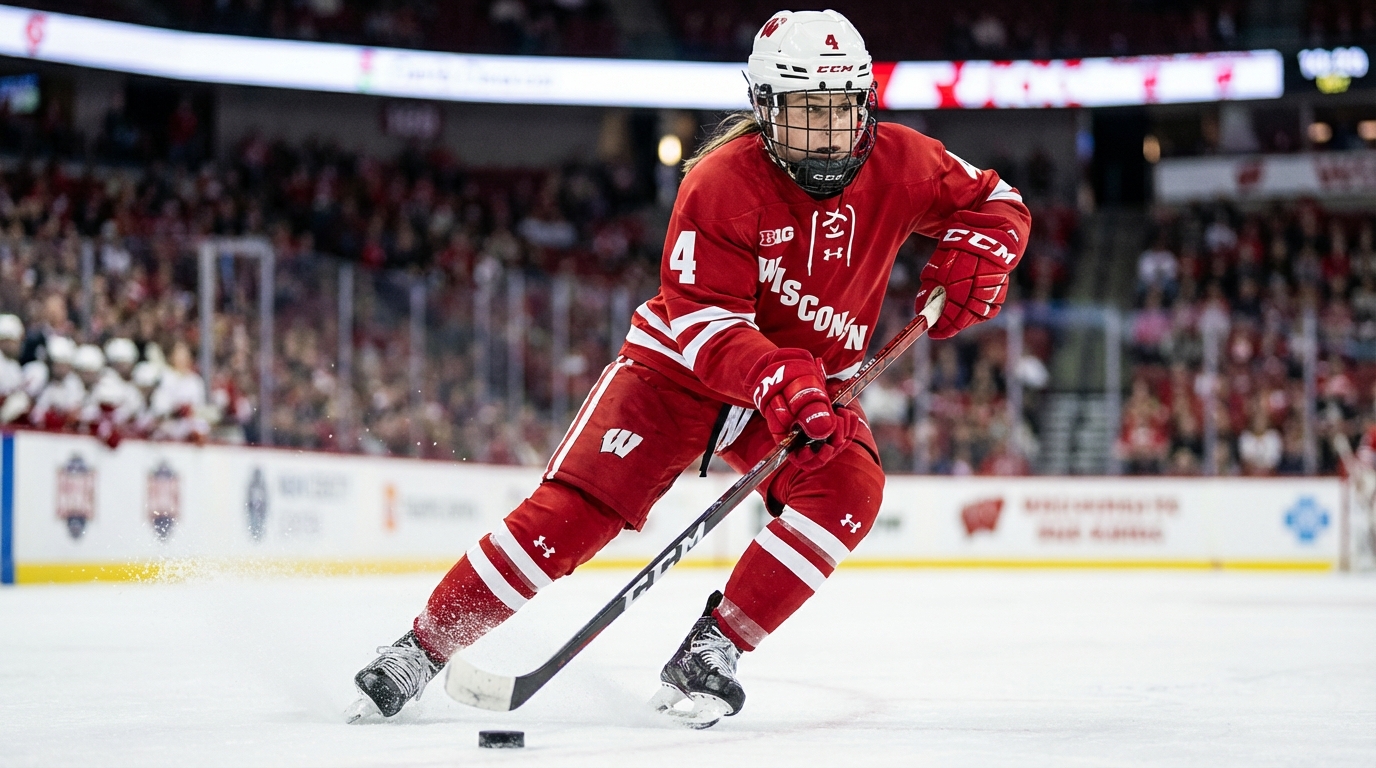
Following the Olympics, Harvey took her talents to the University of Wisconsin, a program renowned for churning out Olympic and professional caliber players. Under the tutelage of head coach Mark Johnson, himself a legend of the 1980 “Miracle on Ice,” Harvey began to refine her game. The collegiate environment provided the stability and ice time necessary to experiment with her offensive instincts while shoring up defensive liabilities.
The results have been undeniable. Harvey has transformed into a “quarterback” on the blue line, capable of breaking the puck out of the zone with elite speed and vision. As noted in a report by USA Today, Harvey is now positioned as a breakout star for the upcoming games. Her time with the Badgers has allowed her to mature physically and mentally, creating a player who dominates not just through skill, but through game management.
The PWHL and the Next Generation of Talent
The establishment of the pwhl has fundamentally changed the horizon for players like Harvey. Previously, the post-collegiate landscape was fragmented. Now, there is a unified, singular destination for the world’s best. While Harvey is currently focused on her NCAA eligibility and the national team, her style of play is tailor-made for the professional game. The PWHL favors speed, physicality, and two-way playattributes Harvey possesses in spades.
Scouts tracking the Google Trends data for the league know that interest spikes around star power. When Harvey eventually declares for the draft, she will bring with her a built-in narrative and a fanbase cultivated through her redemption arc. Her ability to control the pace of the game from the back end makes her a franchise-altering prospect.
Comparison Table: Pathways to Professional Hockey
| Option | Best for | Pros | Cons | Pricing/Cost |
|---|---|---|---|---|
| NCAA Division I | Development & Education | High-level coaching, degree acquisition, physical maturity | Unpaid (NIL varies), strict eligibility rules | Scholarship (Free) |
| PWHL (Professional) | Elite Competition | Salary, world-class facilities, media exposure | intense competition, immediate performance pressure | Salaries $35k - $80k+ |
| National Team (Olympics) | Global Prestige | unmatched visibility, national pride, centralization | Cyclical schedule, limited roster spots | Stipends/Grants |
| European Leagues (SDHL/Naisten Liiga) | International Experience | Cultural experience, different play style | Lower visibility in North America, varying resource levels | Varies (often lower than PWHL) |
Tactical Evolution: The Offensive Defender
The modern game, both in the pwhl and internationally, demands defenders who can contribute to the scoring summary. The days of the “stay-at-home” defenseman are fading. Harvey represents the pinnacle of this evolution. Her skating ability allows her to pinch deep into the offensive zone to keep plays alive, yet recover quickly enough to prevent odd-man rushes against her team.
Analysis from The Athletic suggests that Harvey’s role in Milan Cortina will be vastly different from Beijing. She is expected to log heavy minutes, anchor the power play, and serve as a primary catalyst for the American offense. This shift puts immense pressure on her shoulders, but her track record suggests she thrives under such weight. For the PWHL, this signals a future where defenders are as marketable as high-scoring forwards.
Pros and Cons of the Collegiate Route to the PWHL
Pros:
- Holistic Development: Players like Harvey benefit from four years of strength and conditioning, nutrition, and tactical coaching before facing grown women in the pros.
- Education: Earning a degree provides a safety net, acknowledging that professional hockey careers can be short.
- Maturity: The mental resilience built through NCAA tournaments and Frozen Fours translates directly to professional playoff atmospheres.
- Brand Building: Star players build regional followings (e.g., Wisconsin fans) that follow them to the pros.
Cons:
- Delayed Earnings: Unlike male counterparts in some sports, women’s hockey players often complete their full eligibility, delaying their entry into the paid workforce.
- Injury Risk: Playing four years of high-intensity college hockey increases the wear and tear on the body before a professional paycheck is secured.
- Transition Shock: The jump from NCAA speed to PWHL physicality can still be jarring, regardless of college success.
- Roster Logjams: As the PWHL retains talent, roster spots for incoming rookies become increasingly scarce.
The 2026 Horizon and Beyond
As the hockey world turns its eyes toward Milan Cortina, Caroline Harvey stands as a testament to the power of development. She is no longer the teenager happy to be on the roster; she is a force to be reckoned with. Her journey underscores the vital relationship between the NCAA, the national team program, and the burgeoning pwhl.
The ecosystem of women’s hockey is healthier than ever because of this interconnectivity. When Harvey takes the ice in 2026, she won’t just be representing Team USA; she will be showcasing the future standard of the professional league. For fans and scouts alike, her shifts will be a preview of the dominance expected when she finally signs a professional contract.
FAQ
Q: Is Caroline Harvey currently playing in the PWHL? A: No, Caroline Harvey is currently playing collegiate hockey for the University of Wisconsin Badgers. She is expected to be a top prospect for the PWHL draft once her NCAA eligibility concludes.
Q: How did Caroline Harvey perform in the 2022 Beijing Olympics? A: In 2022, Harvey was the youngest player on the team and saw limited ice time, often being benched during crucial moments. This experience served as a major motivator for her subsequent development.
Q: What makes Caroline Harvey a top prospect for the future? A: Harvey combines elite skating ability with high hockey IQ and offensive instincts. Her ability to play heavy minutes and contribute to scoring from the blue line makes her a highly valuable asset for any future professional team.
Q: When will Caroline Harvey play in the Olympics again? A: Barring injury, Harvey is a projected lock for the Team USA roster for the 2026 Winter Olympics in Milan Cortina, where she is expected to take on a leadership role.
Conclusion
The story of women’s hockey is being rewritten by players who refuse to be defined by a single moment. Caroline Harvey’s evolution from a bench player to a superstar is a narrative that fits perfectly within the ethos of the pwhl. The league is built on the backs of players who have fought for their space, refined their skills, and demanded excellence. As the pipeline from the NCAA to the pros continues to strengthen, the quality of play in the PWHL will only rise, fueled by the next generation of talent that Harvey so perfectly represents.