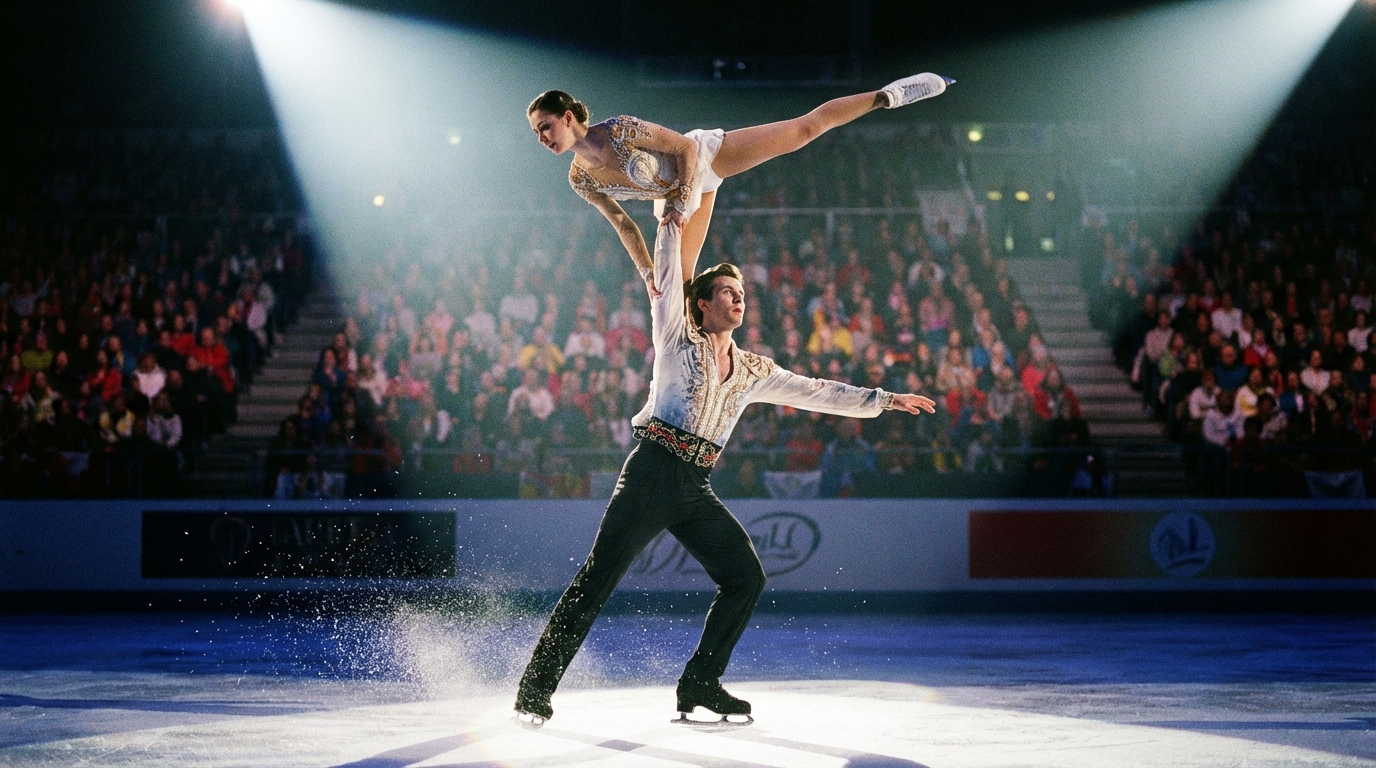
A New World Order in Figure Skating at Milan-Cortina
The Ice Has Shifted: A New World Order in Figure Skating
When the lights dimmed at the Milan-Cortina Games, the atmosphere inside the arena felt markedly different from Beijing four years prior. The tension was there, certainly, but the suffocating inevitability that had plagued the sport for a decade had lifted. For the first time in recent memory, figure skating stepped onto the Olympic ice without the monolithic shadow of the Russian dynasty looming over the podium. What we witnessed instead was not a diluted competition, but a renaissance of global parity and a celebration of resilience.
For years, the narrative of the sport was dictated by a specific brand of dominanceoften teenage, often ephemeral, and almost exclusively Eastern European. But 2026 has rewritten that script. The story is no longer about who can survive the meat grinder of a state-sponsored system; it is about who can endure the test of time, chemistry, and artistic evolution. The result was an event that felt less like a coronation and more like a true contest.
This shift was most palpable in the pairs discipline, a corner of the sport historically reserved for Soviet and Russian hegemony. The vacuum left by their absence did not result in a hollow victory for the new champions. Instead, it allowed the world to see just how high the ceiling has risen elsewhere, particularly in Japan and North America.
The Vacuum and the Velocity
The narrative leading up to these Games was dominated by the question of the “Russian ban.” Critics and purists worried that without the traditional powerhouses, the event would lack technical luster. However, the reality on the ice proved the exact opposite. As noted by The Christian Science Monitor, the absence of Russian skaters forced a recalibration of what constitutes excellence. It wasn’t about the sheer number of revolutions in a vacuum anymore; it was about the total packageskating skills, synchronization, and emotional connection.
The geopolitical landscape of the sport has effectively decentralized. We are no longer looking at a unipolar world where one nation hoards the medals. The diversification of the podium in 2026 suggests that the sport is healthier than it has been in twenty years. Nations that previously felt locked out of the medal conversation found that with proper investment and coaching, the podium was reachable. This democratization has breathed new life into national federations in Italy, Canada, and Japan, who now see a tangible return on their investment in athlete development.
The Rising Sun: Japan’s Historic Grand Slam
The crowning achievement of this new era belongs to Riku Miura and Ryuichi Kihara. Their victory was not just a win; it was a statement. By securing the gold medal, the duo completed a career “Grand Slam”adding Olympic gold to their World, Four Continents, and Grand Prix Final titles. This is a feat of consistency that is arguably harder to achieve than a singular flash of brilliance at the Games.
According to Time, their victory marks the first time Japan has ever won Olympic gold in pairs skating, a discipline where the country had virtually no footprint two decades ago. Their performance was a masterclass in the “Riku-Ryu” style: explosive speed combined with a tenderness that softens the edges of their difficult technical elements. Unlike the mechanical precision often seen in previous dominant teams, Miura and Kihara skate with a palpable joy that translates to the judges and the audience alike.
Their journey to the top also highlights a shift in training philosophy. Moving their base to Oakville, Canada, to train under Bruno Marcotte allowed them to blend Japanese discipline with North American pair techniques. This cross-pollination of styles is becoming the blueprint for success in the modern era. It proves that isolationism in training is dead; the future belongs to global citizens of the ice.
Technical Mastery in a Post-Quad Era
One of the most refreshing aspects of the 2026 pairs event was the focus on quality over dangerous, sustainable difficulty. In previous cycles, the conversation was often dominated by the race for quad twists and throw jumpselements that carry a high risk of injury and often degrade the aesthetic quality of the program. With the field reset, the focus returned to the purity of the unison.
Analysis from The Washington Post suggests that the scoring system is finally rewarding the “in-between” momentsthe transitions, the difficult entries into death spirals, and the speed across the ice. The judges sent a clear message: a clean, high-speed triple twist with a seamless landing is worth more than a messy, labored quad attempt. This shift protects the athletes’ longevity and results in a more watchable product for the fans.
This return to “clean” skating favored teams like the Americans, Ellie Kam and Danny O’Shea, who delivered a personal best to finish in the top tier. It signaled that the US program, which has often struggled to find pairs teams that stick together long-term, is finally finding its footing by focusing on fundamentals rather than chasing impossible technical standards set by state-sponsored anomalies.
The Age of Resilience: Stellato-Dudek’s Legacy
Perhaps the most compelling storyline of the 2026 Games, aside from the gold medalists, was the silver medal performance of Canada’s Deanna Stellato-Dudek and Maxime Deschamps. At 42 years old, Stellato-Dudek is not just defying the odds; she is dismantling the ageist framework of the sport. In a discipline where women were historically treated as “expirable” by age 20, her success is revolutionary.
Her presence on the podium is a direct rebuke to the “churn and burn” culture that consumed so many young skaters in the 2010s. It demonstrates that peak physical strength and artistic maturity can coalesce later in life. This narrative is crucial for the sustainability of figure skating. If the sport is to survive as a professional avenue for athletes, it cannot be a playground solely for teenagers. Stellato-Dudek proves that an adult woman, with a lifetime of experience, brings a gravity to the ice that a 15-year-old simply cannot replicate.
The rivalry between the Japanese and Canadian teams throughout this Olympic cycle has been one of mutual respect and intense competition. It was a battle of veterans, not a hazing of rookies. This dynamic elevated the event, making it feel like a clash of titans rather than a showcase of prodigies.
The North American Resurgence
For the United States, the 2026 Games offered a glimpse into a promising future. While the gold went to Japan, the American teams showed that the gap is closing. The US strategy has shifted toward nurturing partnerships that can endure multiple Olympic cycles. The days of “throw-together” teams formed six months before Nationals appear to be ending.
The performance of the US contingent suggests a systemic improvement in pairs literacy. Coaches are prioritizing skating skillsthe ability to generate speed and power from the edgesbefore layering on the big tricks. This foundational approach takes longer to yield results, but as evidenced by the longevity of the top teams in Milan, it is the only way to build a sustainable career.
Furthermore, the cultural exchange is evident. With top teams from Japan, Canada, and the US all training in North American rinks, there is a centralization of knowledge that is raising the collective standard. The “secret sauce” of pairs skating is no longer hidden behind the Iron Curtain; it is being refined in rinks in Montreal, Irvine, and Colorado Springs.
Frequently Asked Questions
Q: Did the absence of Russian skaters lower the difficulty level of the 2026 competition? A: While the sheer number of attempted quad twists may have decreased, the overall quality of skating, synchronization, and component scores increased. The competition focused more on clean execution and artistic complexity, resulting in performances that were technically sound and aesthetically superior.
Q: What is the significance of the “Grand Slam” achieved by Miura and Kihara? A: A Grand Slam in figure skating involves winning the four major ISU championships: the Olympic Games, the World Championships, the Four Continents (or Europeans), and the Grand Prix Final. Achieving this proves that a team is not just lucky at one event but has dominated the sport consistently across all major formats.
Q: How does age factor into the new era of pairs skating? A: The 2026 Games highlighted a shift toward older, more experienced skaters. With medalists in their late 20s, 30s, and even 40s (Stellato-Dudek), the sport is moving away from the dominance of teenagers. This shift allows for greater artistic maturity and safer, more sustainable training practices.
Q: Will the US be a contender for gold in 2030? A: Based on the trajectory seen in Milan, the US is well-positioned. The current crop of American pairs is young but technically sound. If they maintain their partnerships and continue the holistic development approach, they will be prime contenders for the podium in the French Alps in 2030.
Conclusion: A Cleaner, Brighter Future
As the ice resurfacers cleared the rink in Milan for the final time, the message was clear: figure skating has survived its existential crisis. The sport has emerged from a dark period of scandal and homogeneity into an era of vibrant, global competition. The 2026 Winter Olympics will be remembered not for who wasn’t there, but for the brilliance of those who were.
We are witnessing a recalibration of valueswhere longevity is celebrated, where geography is no longer destiny, and where the integrity of the sport is slowly being restored. Japan’s historic victory is the headline, but the subtext is the health of the discipline itself. The ice is slippery, and champions will rise and fall, but for the first time in a long time, the ground beneath the sport feels solid.