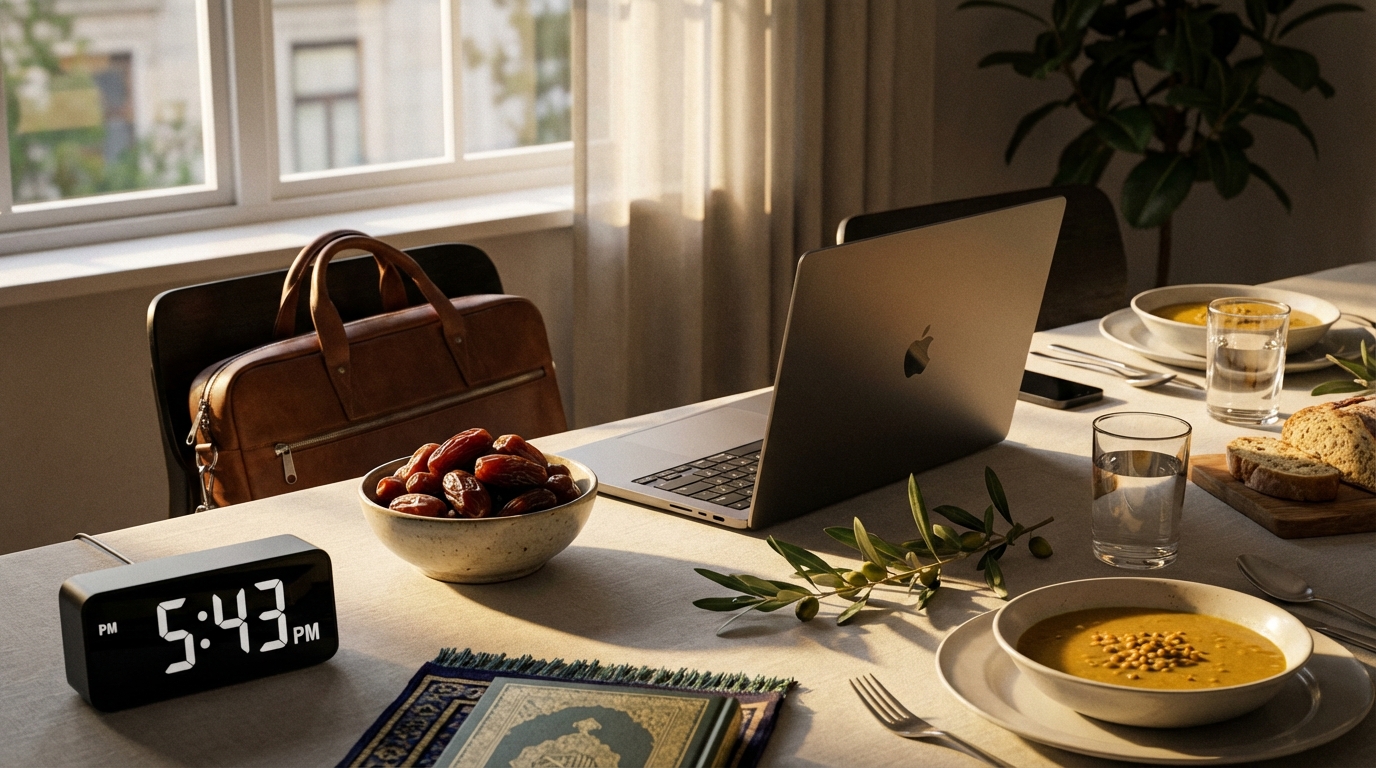
Iftar Time 2026: The Shift to Winter Fasting in the US
The chill of mid-February has brought with it a silence that descends earlier than usual this year. For the millions of Muslims across the United States, the rhythm of the day has shifted, governed not just by the Gregorian calendar but by the regression of the lunar cycle. We have officially entered the era of the winter Ramadan, a phenomenon that has not occurred since the turn of the millennium. The primary conversation in mosques from Dearborn to Dallas is no longer about the grueling heat or sixteen-hour days; it is about the iftar time 2026a time that now arrives before many have even clocked out of their offices.
This year marks a pivotal moment in the 33-year lunar cycle. As the holy month drifts backward by roughly eleven days annually, we have left the long, thirsty days of summer behind. However, what should be a period of respite has arguably been complicated by a fierce, renewed debate over timekeeping itself. While the physical burden has lessened for those in the Northern Hemisphere, the intellectual and communal friction regarding when we start and when we break fast has intensified, revealing deep fissures in how the modern Muslim world reconciles tradition with technology.
The Winter Shift: A reprieve and a Paradox
For the past decade, Ramadan was synonymous with endurance. In 2015 or 2016, a Muslim in New York City or London might have fasted for nearly 17 hours. The psychological toll of waiting until nearly 9:00 PM for a sip of water defined the experience. Today, the landscape is radically different.
According to data analyzed by Al Jazeera, the fasting hours for 2026 in the Northern Hemisphere range significantly lower, with cities like Oslo and London seeing fasts as short as 10 to 11 hours. In the United States, the change is palpable. The sun sets in the Northeast around 5:30 PM to 5:45 PM. While this sounds like a luxury compared to the summer solstice fasts, it introduces a paradox of time management.
In the summer, there was a clear demarcation: work ended, you went home, you rested, and then you ate. Now, the iftar time 2026 crashes directly into the American rush hour. The breaking of the fast is no longer a leisurely evening event but a race against the commuter clock. We are seeing a new anxiety emergenot of thirst, but of logistics. How does one break a fast while stuck on the I-405 or the BQE? The spiritual pause is competing with the secular hustle in a way it hasn’t for a generation.
The Moon Wars: Calculation vs. The Naked Eye
However, the timing of the daily meal is secondary to the confusion over the month’s commencement. This year has seen one of the most fractured starts to the holy month in recent memory. The tension lies between the Hisab (astronomical calculation) and the Ru’yah (physical moon sighting).
On February 17, authorities in the Middle East made their position clear. As reported by The Dispatch, Saudi Arabia announced the start of the Islamic holy month based on traditional sighting methodology. For many in the US who follow the “global moon sighting” opinion, this settled the matter. The logic is simple: unity requires following the location of the Two Holy Mosques.
Yet, this unity is becoming increasingly fragile. In Europe, a different narrative unfolded, one that mirrors the growing independence of Western Muslim communities. A significant rift occurred in France, home to Europe’s largest Muslim population.
According to France 24, there was widespread confusion as rival organizations announced different starting datesFebruary 18 versus February 19. The French Council of the Muslim Faith (CFCM) favored astronomical data, which predicted the new moon’s presence before it was visible to the eye, while the Grand Mosque of Paris adhered to the traditional sighting.
This isn’t just a theological quibble; it has real-world consequences. In the US, this fragmentation means that neighbors on the same street might be fasting on different days. One family might be celebrating Eid while the house next door is still fasting their final day. The “Moon Wars” of 2026 highlight a crisis of authority. In an age of precision apps and satellite imagery, the reliance on the human eye is seen by some as a beautiful submission to nature and by others as an unnecessary hurdle to communal cohesion.
The 5:00 PM Scramble
The impact of these timing shifts is most acutely felt in the American workplace. The winter Ramadan changes the negotiation between employee and employer. In previous years, the request was often for a shortened lunch break to leave early. Now, the request is for a break at a very specific, inflexible time: sunset.
With iftar time 2026 falling largely between 5:30 PM and 6:00 PM across the continental US, the “sunset break” coincides exactly with the final meetings of the day or the commute home. Corporate diversity boards are scrambling to adjust. We are seeing a rise in “sunset policies” in major tech and finance firms, allowing Muslim employees to block out the 5:15 PM to 5:45 PM window entirely.
However, for the gig economy workersthe Uber drivers, the delivery personnel, the shift workersthis winter schedule is brutal. Breaking a fast requires water, dates, and a moment of prayer. Doing this while navigating rush hour traffic or fulfilling a delivery quota is a safety hazard that has not been adequately addressed. The winter fast is physically easier but logistically more dangerous for the working class.
The Halal Economy Adjusts
Restaurateurs are also facing a strange new reality. In the summer, the window between Iftar (sunset) and Suhoor (pre-dawn meal) was short, roughly 8 hours. Now, the window is nearly 13 hours long. This sounds like a business opportunity, but it dilutes the “rush.”
In 2026, restaurants are finding that the Iftar crowd arrives earlyoften before the dinner service is fully preppedand leaves early. The late-night caf culture that defines Ramadan in places like Dearborn or Bay Ridge is stretching thin. People are eating at 5:45 PM and are often in bed by 10:00 PM because the work morning still looms. The vibrant, all-night festivals of the summer Ramadans are being replaced by brisk, efficient meals. The economy of the holy month is slowing down, mirroring the hibernation of the season itself.
Conclusion: The Quiet Turn
As we navigate the remaining days of this month, the focus remains on the clock. The iftar time 2026 schedule has forced a change in behavior, turning the holy month into a more private, domestic affair. The grand tent parties are harder to sustain when the sun sets while the children are still finishing homework.
Yet, there is a silver lining to this winter chill. The shorter days allow for a spiritual recalibration that isn’t dominated by exhaustion. The controversy over the moon sighting, while frustrating, forces a community dialogue about what it means to be a global faith in a localized world. Whether one follows the calculation or the sighting, the act of fasting in February serves as a reminder that time is the one resource we cannot hoardwe can only observe it.
Frequently Asked Questions
Q: Why are the fasting hours shorter in 2026 compared to previous years?
A: The Islamic calendar is lunar, meaning it is roughly 11 days shorter than the solar Gregorian calendar. This causes Ramadan to regress through the seasons. In 2026, Ramadan falls in February (winter in the Northern Hemisphere), resulting in shorter days and longer nights, which naturally shortens the fasting window.
Q: Why was there confusion regarding the start date of Ramadan 2026?
A: The confusion stems from different methods of determining the start of the lunar month. Some authorities, like those in Saudi Arabia, rely on traditional naked-eye sightings of the crescent moon. Others, particularly some councils in Europe and North America, rely on astronomical calculations that predict when the new moon is born, even if not yet visible. This led to a split start date of February 18 and 19.
Q: How does the winter Iftar time affect working professionals in the US?
A: With sunset occurring between 5:15 PM and 6:00 PM in many parts of the US, Iftar often coincides with the end of the standard workday or the evening commute. This requires employees to negotiate specific break times to break their fast or pray, rather than simply waiting until they get home as they might during summer Ramadans when sunset is much later.
References
- Al Jazeera. (2026, February 15). Ramadan 2026: Fasting hours, suhoor and iftar times around the world. www.aljazeera.com
- The Dispatch. (2026, February 17). When is Ramadan 2026? Saudi Arabia announces start of Islamic holy month. www.dispatch.com
- France 24. (2026, February 18). France Islam Muslims confusion rival Ramadan dates February 18 19 mosque CFCM lunar moon crescent. www.france24.com