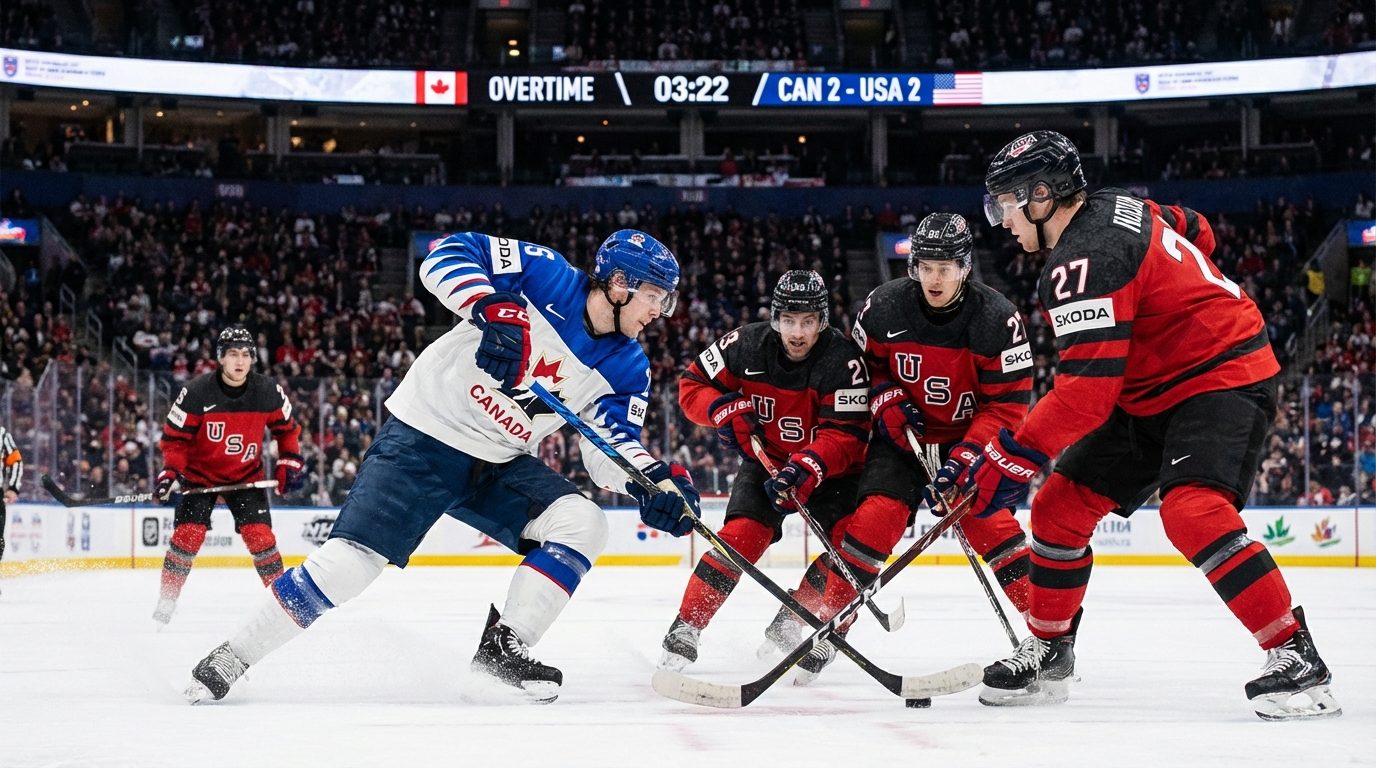
Olympic Hockey Overtime Rules: Prelims to Gold Medal
The tension inside an Olympic arena when the clock strikes zero in a tied game is palpable, distinct, and governed by a specific set of regulations that can baffle even the most seasoned NHL fans. As we look toward the 2026 Winter Games and reflect on recent international tournaments, the olympic hockey overtime rules have emerged as a critical tactical battleground. Unlike the standardized approach seen in North American professional leagues, the International Ice Hockey Federation (IIHF) employs a tiered system that escalates in intensity and duration as the stakes of the tournament rise. For coaches and players, understanding these nuances is not just about rulebook compliance; it is about survival.
TL;DR
- Preliminary Round: 5 minutes of 3-on-3 sudden death, followed by a 5-round shootout.
- Playoff Round (Quarters/Semis/Bronze): 10 minutes of 3-on-3 sudden death, followed by a 5-round shootout.
- Gold Medal Game: 20 minutes of 3-on-3 sudden death, followed by a 5-round shootout.
- Shootout Difference: The Olympics require five shooters initially, compared to the NHL’s three.
- Format: All overtime periods are played 3-on-3, prioritizing open ice and skill.
The Tiered Escalation of International Overtime
The most jarring adjustment for casual viewers is that Olympic overtime is not a static concept. In the NHL, a regular-season game is treated identically whether it is in October or April: five minutes of 3-on-3 followed by a shootout. However, the Olympics recognize that a game determining group seeding carries different weight than a game determining a podium finish.
According to USA Today, the 2026 Winter Olympics will strictly adhere to a three-tier format. In the preliminary round, the format mirrors the NHL’s time constraints: a five-minute sudden-death period played 3-on-3. If the deadlock remains, the game proceeds to a shootout. This format is designed to keep the tournament moving and protect players from excessive fatigue during the dense schedule of the group stages.
However, once the tournament shifts to the knockout phasespecifically the quarterfinals, semifinals, and the Bronze Medal Gamethe rules shift. The sudden-death window doubles to 10 minutes. This extra time is crucial. In a 3-on-3 format, five minutes can evaporate in just a few possessions. By extending it to 10 minutes, the IIHF allows for the natural variance of the game to settle, giving superior teams a better chance to score a “hockey goal” rather than relying on the skills competition of a shootout.
Comparison Table: NHL vs. Olympic Formats
| Option | Best for | Pros | Cons | Pricing/Cost |
|---|---|---|---|---|
| NHL Regular Season | Quick resolution | Familiar to fans; protects players from long games. | Short duration often forces shootouts; ties feel unresolved. | N/A (League Rule) |
| Olympic Prelims | Group stage efficiency | Standardizes fatigue management across teams. | 5 minutes of 3v3 can be high variance/luck-based. | N/A (IIHF Rule) |
| Olympic Knockout | Elimination stakes | 10-minute duration reduces reliance on shootouts. | Increased injury risk with open ice play. | N/A (IIHF Rule) |
| Olympic Gold Medal | Championship integrity | 20-minute period maximizes chance of a game-winning goal. | Exhausting for goalies; eventual shootout feels anticlimactic. | N/A (IIHF Rule) |
The Gold Medal Exception
The most dramatic deviation occurs during the Gold Medal Game. The IIHF has determined that deciding the Olympic champion requires a test of endurance as much as skill. In this final showdown, the overtime period is expanded to a full 20 minutes of 3-on-3 play.
This is a massive departure from traditional hockey norms. In the NHL playoffs, teams play 5-on-5 for 20-minute periods until a goal is scored, potentially going on for hours. The Olympic version retains the 20-minute clock but strips the players down to 3-on-3. As noted by Sports Illustrated, this creates a chaotic, high-cardio environment. The amount of open ice available for 20 minutes means that defensive breakdowns are inevitable. It forces coaches to rotate their benches differently, as star players cannot physically sustain the sprinting required for 3-on-3 over such a long duration without significant rest.
If the Gold Medal Game remains tied after this 20-minute marathon, the game does not continue to a second overtime. Instead, it moves to a penalty-shot shootout. This remains a point of contention for purists who believe a championship should never be decided by a shootout, but logistical constraints of the Olympics dictate that a winner must be crowned within a broadcast window.
The Shootout: Five Rounds of Nerves
When sudden death fails to produce a winner, the shootout protocols further differentiate the Olympic game from the North American pro leagues. In the NHL, a shootout consists of three rounds. If tied after three, it goes to sudden-death shots.
The olympic hockey overtime rules require a five-round shootout initially. This places a premium on roster depth. A team cannot simply rely on three superstars to secure a win; they need five competent shooters. As detailed by Sporting News in their coverage of past tournaments, this format changes the complexion of roster selection. General managers must consider shootout specialists who might be lower in the lineup but possess the specific hands required to beat an international goaltender one-on-one.
Furthermore, the “tie-breaker” rules in the shootout differ. Once the initial five rounds are complete, teams can reuse players in the sudden-death rounds. This leads to iconic moments where a single player might take multiple shots in succession if they have the hot hand, a dramatic flair that the NHL rules generally prohibit until the entire roster has shot.
Pros and Cons of the IIHF System
Pros
- Decisive Outcomes: The tiered time limits ensure games end within a predictable timeframe, which is essential for tournament scheduling.
- Skill Showcase: The 3-on-3 format highlights the incredible speed and playmaking ability of the world’s best skaters.
- Fairer Knockouts: Extending the Quarterfinal and Semifinal OT to 10 minutes reduces the randomness of a 5-minute sprint.
- Goaltender Heroics: The open ice forces goaltenders to make athletic, desperation saves that become highlight-reel staples.
Cons
- Shootout Reliance: Despite longer periods, the shootout still determines medal winners, which many argue is an illegitimate way to end a championship.
- Cardiovascular Strain: Playing 20 minutes of 3-on-3 in the Gold Medal Game is physically grueling and alters the style of play significantly compared to regulation.
- Roster Imbalance: Teams with faster skaters have a disproportionate advantage in 3-on-3 compared to 5-on-5, potentially negating a team’s defensive structure built over 60 minutes.
- Confusion: Casual fans often struggle to track which rules apply to which stage of the tournament.
Strategic Implications for 2026
Looking ahead to the 2026 Games in Milan and Cortina, these rules will heavily influence team construction. With NHL players returning to the Olympics, the speed of the game will be unprecedented. The larger international ice surface (if used, though many recent tournaments use NHL hybrid sizes) combined with 3-on-3 rules creates a massive amount of space.
Coaches will prioritize defensemen who can skate like forwards. The days of the slow, bruising defender are numbered in this format. If a defenseman gets caught flat-footed in 3-on-3 overtime, it is almost certainly a 2-on-1 break for the opposition. Additionally, the five-round shootout rule means that “shootout specialists”players who might not be top-line scorers but have high conversion rates on breakawaysmight earn roster spots specifically for these scenarios.
The psychological aspect cannot be overstated. In the Gold Medal Game, knowing that a 20-minute period of 3-on-3 awaits can change how teams play the third period. A team might play more conservatively in regulation to preserve energy for the open ice of overtime, or conversely, push hard to win in regulation to avoid the volatility of the extra frame.
FAQ
Q: Is the Gold Medal Game overtime sudden death? A: Yes. Even though the period is scheduled for 20 minutes, the game ends immediately once a goal is scored. The 20-minute duration is the maximum time played before a shootout.
Q: How many shooters are in an Olympic shootout? A: The IIHF rules mandate five shooters per team in the initial round. If the score remains tied after five rounds, it proceeds to a sudden-death shootout where teams can reuse players.
Q: Is Olympic overtime 3-on-3 or 4-on-4? A: For the 2026 Winter Olympics, all overtime periodsincluding the Gold Medal Gameare played at 3-on-3 strength. This aligns with the modern trend of maximizing scoring chances.
Q: Do penalties carry over into overtime? A: Yes. If a team is on a power play when regulation ends, the overtime will start with a manpower advantage (e.g., 4-on-3), adjusting back to 3-on-3 at the first stoppage after the penalty expires.
Conclusion
The evolution of olympic hockey overtime rules reflects a desire to balance entertainment value with competitive integrity. By implementing a sliding scale of overtime duration, the IIHF acknowledges that a Gold Medal match deserves more runway than a preliminary tilt. While the reliance on shootouts remains a polarizing topic among purists, the shift to 3-on-3 across all stages guarantees that Olympic overtime will remain one of the most heart-pounding spectacles in sports. As the world’s best players converge for future tournaments, their ability to adapt to these specific regulations will likely be the difference between standing on the podium and going home empty-handed.