Carlos Alcaraz: The Strategic Plan for Long-Term Success
In the hyper-commercialized world of modern professional sports, where young prodigies are often chewed up by the machinery of fame before they hit their mid-twenties, Carlos Alcaraz stands as a fascinating anomaly. He is not merely a tennis player; he is the frontman of a carefully curated project built on traditional family values and ruthless strategic planning. While the world watches his forehand, the real story lies in the protective infrastructure built around hima fortress designed to keep the chaos of celebrity at bay while he navigates the brutal ATP calendar. The narrative surrounding Alcaraz is shifting from his on-court explosiveness to his off-court sustainability, a transition that will define the next decade of tennis.
TL;DR
- Family-First Governance: Alcaraz’s parents control his finances and schedule, creating a buffer that allows him to remain a “normal” young man despite his global fame.
- The Pedri Parallel: Like FC Barcelona’s Pedri, Alcaraz utilizes a tight-knit circle of childhood friends to prevent his personality from morphing under the pressure of success.
- Strategic Rest: The “2025 Plan” devised by his team prioritizes physical recovery and mental breaks, acknowledging that the current tennis calendar is unsustainable without calculated withdrawals.
- The Humility Mandate: The primary goal of his inner circle is to prevent the “diva” behavior often associated with young stardom, maintaining a public image akin to Rafael Nadal.
The Architecture of Groundedness
The most critical component of the Alcaraz phenomenon is not his athleticism, but his domestic environment. According to recent reports, the family dynamic is structured specifically to prevent the young star from losing touch with reality. His parents, Carlos and Virginia, along with his brothers, serve as an emotional anchor. As noted in a profile by Lecturas, the family is acutely aware of the public’s desire to cast him as the next Rafael Nadal. However, they are equally protective of his private “plot” of life, ensuring that the comparisons do not invade his personal identity or sense of self.
This protective detail extends to the management of his empire. Unlike many young athletes who are handed the keys to their fortunes immediately, the Alcaraz household maintains a traditional hierarchy. His father, a former tennis player himself, understands the volatility of the sport. By managing the administrative and financial burdens, the parents allow Carlos to focus exclusively on the geometry of the court. This division of labor is not just about logistics; it is a psychological firewall. It reinforces the idea that at home, he is a son and a brother first, and a global superstar second.
The Psychology of the Inner Circle
The challenge of maintaining humility is not unique to tennis. Alcaraz has found a kindred spirit in Pedri, the young football star for Spain and Barcelona. Both athletes have publicly discussed the necessity of their “inner circles” in navigating the surreal nature of their lives. As detailed by Semana, both Alcaraz and Pedri share a fear of becoming “different persons” due to their success. They rely heavily on childhood friends who treat them without the reverence the rest of the world offers.
This reliance on pre-fame relationships is a strategic defense mechanism against isolation. Fame often creates a vacuum where an athlete is surrounded by ‘yes-men’ and employees. Alcaraz actively combats this by keeping his circle tight and populated by people who knew him before the trophies. This social strategy complements his family’s management style, creating a comprehensive support network that prioritizes his mental health. The goal is to ensure that the person holding the racket remains the same humble kid from El Palmar, regardless of the ranking points he accumulates.
The 2025 Blueprint: Rest as a Weapon
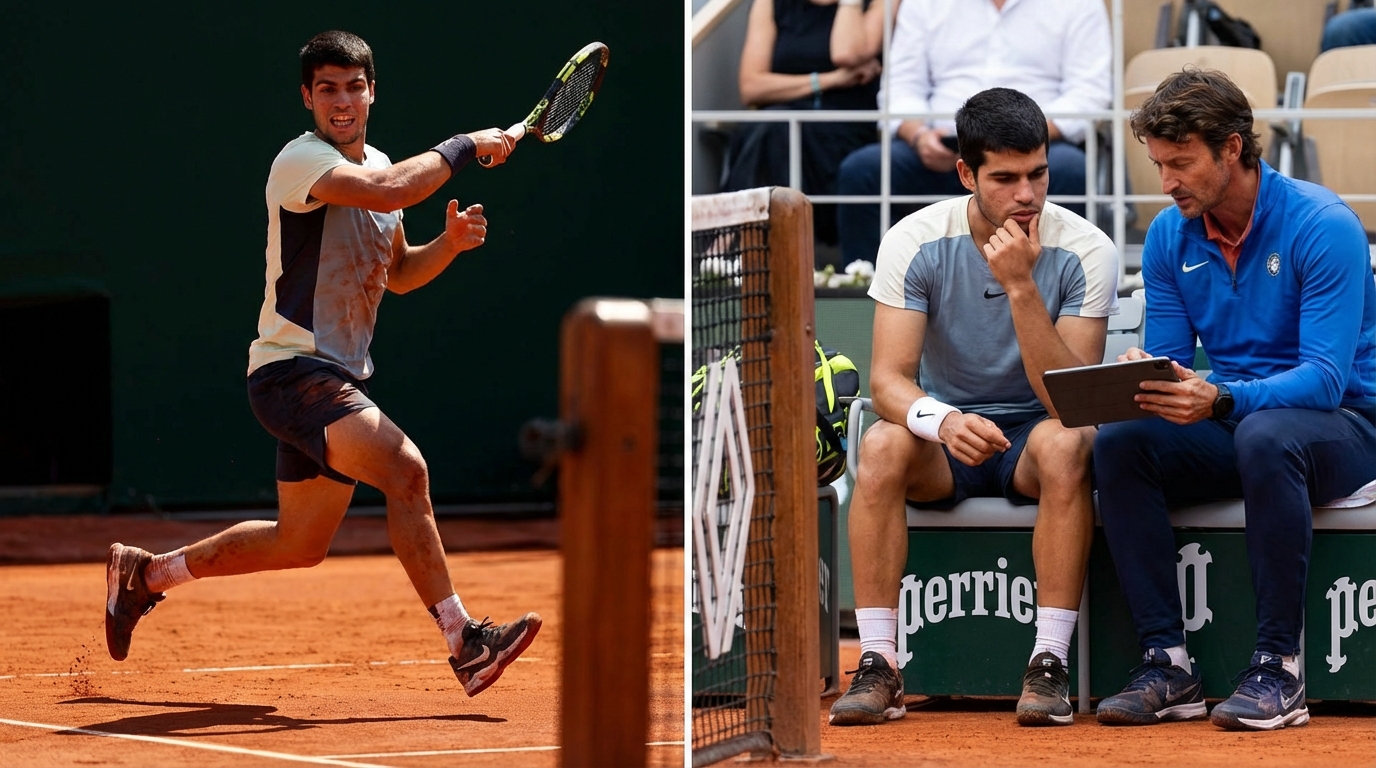
While his family protects his mind, his coaching team, led by Juan Carlos Ferrero, is obsessed with protecting his body. The physical toll of the modern ATP tour is immense, and Alcaraz’s explosive style of play places significant stress on his joints and muscles. Recognizing this, his team has formulated what Sport.es describes as a “Perfect Plan” for the upcoming seasons. This strategy is a departure from the “play everything” mentality that often burns out young talent.
The plan focuses heavily on periodizationscheduling specific blocks of rest and training to ensure he peaks at the Majors. The team is reportedly willing to sacrifice participation in smaller tournaments to guarantee his longevity. This approach requires discipline, not just from the player, but from his commercial partners who crave his visibility. By prioritizing rest, Ferrero is acknowledging that Carlos Alcaraz is an asset that must be managed over a fifteen-year horizon, not just the current fiscal quarter. The strategy involves careful monitoring of his physical load, ensuring that minor niggles do not turn into chronic injuries.
Commercial Pressure vs. Personal Privacy
The tension between Alcaraz’s growing brand and his need for privacy is the central conflict of his career. His family’s insistence on maintaining a private sphere is a direct counter-measure to the invasive nature of modern sports media. As noted in the analysis of his family dynamics, there is a conscious effort to keep the “business” of tennis separate from the “life” of the family. This is difficult when the athlete is the face of global brands, but it is essential for his longevity.
The comparison to Nadal is instructive here. Nadal managed to keep his private life remarkably shielded throughout his career, which contributed to his mental stability. Alcaraz’s team is clearly trying to replicate this model. They understand that if the public consumes every aspect of his life, he will have nothing left for himself. This boundary-setting is a sophisticated form of reputation management, ensuring that the public sees a focused, humble athlete rather than a reality TV star.
Comparison Table
The following table illustrates different athlete management models, highlighting where the Alcaraz approach fits within the broader sports landscape.
| Option | Best for | Pros | Cons | Pricing/Cost |
|---|---|---|---|---|
| The Family-Centric Model (Alcaraz) | Young prodigies needing grounding | High trust, low exploitation risk, emotional stability | Potential for lack of professional expertise, emotional conflicts | Unknown (Emotional labor is high) |
| The Agency-First Model | Athletes seeking rapid commercialization | Maximized earnings, professional PR handling | Risk of burnout, commoditization of the athlete | High (15-20% of earnings) |
| The Hybrid Model (Nadal) | Established stars | Balance of family trust and professional execution | Requires a family willing to learn the business | Varies (Mixed commission structures) |
Pros and Cons of the Alcaraz Strategy
Pros
- Mental Stability: By keeping his circle small, Alcaraz avoids the isolation that plagues many superstars.
- Financial Safety: Parents managing finances reduces the risk of fraud or mismanagement common with external agents.
- Longevity: The “Perfect Plan” prioritizes a long career over short-term ranking points or appearance fees.
- Brand Image: The humble, family-oriented image appeals to sponsors and fans, aligning him with the legacy of Nadal.
Cons
- Pressure on Family: The dual role of parent and manager can strain domestic relationships.
- Insularity: A tight inner circle can sometimes create an echo chamber, filtering out necessary external criticism.
- Dependency: Heavy reliance on family support can make it difficult for the athlete to develop independent life skills.
- Commercial Conflict: Family values may occasionally clash with the ruthless demands of high-stakes sponsorship deals.
FAQ
Q: Who manages Carlos Alcaraz’s finances? A: His parents, specifically his father, play a central role in managing his finances and business affairs. This arrangement allows Carlos to focus entirely on his tennis training and performance without the distraction of complex financial decisions.
Q: How does Alcaraz’s team plan to prevent injury in 2025? A: His coaching team, led by Juan Carlos Ferrero, has developed a schedule that prioritizes rest periods and training blocks over constant tournament play. They are selective about which events he enters to ensure his body has time to recover between major competitions.
Q: Is Carlos Alcaraz trying to copy Rafael Nadal? A: While comparisons are inevitable, Alcaraz’s family and team are focused on him carving his own path. However, they do emulate Nadal’s approach to humility, privacy, and the importance of a stable family environment to handle the pressures of the tour.
Conclusion
The trajectory of Carlos Alcaraz suggests a maturity that belies his age, driven largely by the people standing in his shadow. By fusing a traditional family structure with a modern, data-driven approach to physical management, his team is attempting to solve the puzzle that has baffled so many others: how to be a superstar without losing your soul or your health. As he moves into the next phase of his career, the success of this “Perfect Plan” will not just be measured in Grand Slam titles, but in his ability to remain the grounded, smiling young man from Murcia amidst the noise of history being made.