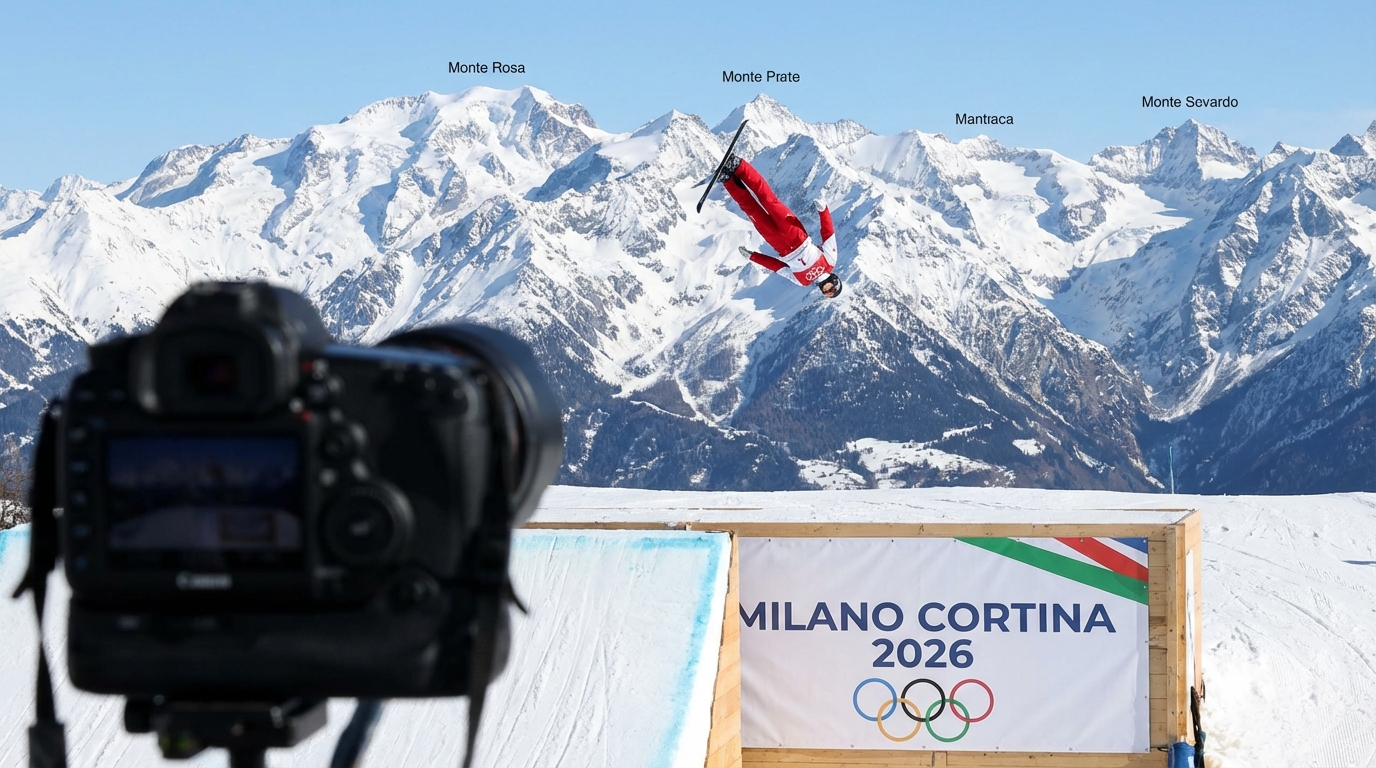
Kaila Kuhn Helps Team USA Retain Olympic Aerials Gold
The air in the Italian Alps is notoriously thin, offering little resistance to those who dare to launch themselves forty feet above the snow, but the weight of expectation resting on Kaila Kuhn was heavy enough to ground a lesser athlete. As the 2026 Winter Olympics in Milano Cortina reached its fever pitch, the narrative surrounding the United States freestyle skiing team shifted from hopeful optimism to the defense of a dynasty. In a sport often decided by the slightest flutter of a ski tip or the angle of a landing, Kuhn’s performance in the mixed team aerials didn’t just secure a medal; it validated a four-year cycle of rigorous preparation and signaled that the American aerials program is no longer an underdog storyit is the standard.
TL;DR
- Historic Defense: Team USA successfully defended their Olympic title in mixed team aerials, securing back-to-back golds.
- Record Breakers: The victory contributed to a record-breaking gold medal count for the United States at a single Winter Games.
- Kuhn’s Role: Kaila Kuhn provided the critical stability and high scoring required to outpace fierce competition from China and Ukraine.
- Broader Impact: The win underscores the effectiveness of the U.S. development pipeline in freestyle skiing.
The Dynasty Defense in the Dolomites
When the mixed team aerials event debuted in Beijing four years ago, it was viewed as a chaotic novelty. By 2026, it had evolved into one of the marquee events of the freestyle calendar, and the United States arrived in Italy with a target on their backs. According to USA Today, Team USA successfully repeated their gold medal feat, a testament to a program that has prioritized depth and consistency. The pressure to repeat is often higher than the pressure to win the first time, yet the squad, anchored by the precision of their female jumpers, seemed immune to the nerves that plagued their European counterparts.
The victory was not merely about landing; it was about degree of difficulty. The strategy employed by the American coaches was aggressive. Rather than playing it safe to ensure a score, the team opted for high-tariff jumps that demanded perfection. This gamble paid off, separating them from the rest of the field in the final round. The synergy between the male and female athletes in this format is crucial, as the aggregate score leaves no room for a single weak link.
A Golden Avalanche for Team USA
Kuhn’s triumph did not happen in a vacuum; it was part of a broader surge in American winter sports dominance. The 2026 Games have seen the United States shatter previous ceilings regarding podium finishes. As reported by Yahoo Sports, the gold in mixed aerials pushed the U.S. tally to its highest ever in a single Winter Games. This momentum is infectious. When athletes see their compatriots succeeding across different disciplinesfrom the ice rink to the halfpipeit creates a collective psychological bolster.
This “golden avalanche” was further highlighted by the achievements of veterans in other disciplines. For instance, NPR noted that Alex Ferreira secured a historic 10th gold medal for Team USA in the halfpipe just prior to the aerials final. The atmosphere in the Olympic Village was electric, fueled by a sense of inevitability that the Americans were the team to beat. Kuhn capitalized on this energy, channeling the collective confidence of the delegation into her takeoff.
Kaila Kuhn: Precision Under Pressure
While the team medal is shared, the individual contributions are scrutinized, and Kaila Kuhn emerged as the bedrock of the American effort. Aerial skiing is a brutal sport; a gust of wind or a millisecond delay in rotation can result in a catastrophic crash. Kuhn’s journey to this moment has been defined by resilience. In a discipline where mental fortitude is as vital as physical agility, her ability to spot the landing while spinning three times roughly 50 feet in the air is nothing short of physics-defying.
Her technical proficiency in the final round was the differentiator. While rival teams struggled with landing deductionshand touches or back-slaps that bleed pointsKuhn put down a clean, high-scoring jump that forced the remaining competitors to chase an almost impossible total. It is this specific capability, the ability to perform the “money jump” when the lights are brightest, that separates Olympic champions from World Cup participants.
Comparison of Aerial Disciplines
To understand the unique challenge Kuhn faced, it is helpful to compare the mixed team format against the traditional individual event. The dynamics differ significantly in terms of strategy and pressure.
| Option | Best for | Pros | Cons | Pricing/Cost |
|---|---|---|---|---|
| Mixed Team Aerials | National depth & strategy | Promotes gender equity; higher aggregate excitement; emphasizes team consistency. | One error dooms the whole squad; less individual glory. | Unknown (Event entry covered by NOC) |
| Individual Aerials | Solo superstars | Purest test of individual skill; athletes control their own destiny. | High variance; one bad jump ends the run immediately. | Unknown (Event entry covered by NOC) |
| Big Air (Freeski) | Creative expression | Allows for style and innovation; less rigid judging criteria than aerials. | Higher injury risk due to terrain park features; subjective judging. | Unknown (Event entry covered by NOC) |
The Pros and Cons of the Mixed Format
The inclusion of the mixed team event has revolutionized how nations prepare for the Olympics. However, it brings its own set of advantages and drawbacks for athletes like Kuhn.
Pros:
- Shared Burden: The pressure is distributed among three athletes, allowing for a support system on the hill.
- Increased Medal Opportunities: Athletes have two chances (individual and team) to secure hardware.
- Strategic Depth: Coaches can arrange the jumping order to maximize psychological pressure on opponents.
Cons:
- Guilt Factor: A mistake in the team event feels heavier because it impacts teammates’ careers.
- Schedule Fatigue: Competing in both individual and team events within a compressed Olympic schedule is physically draining.
- Selection Controversy: With deep squads, leaving a talented jumper off the three-person team can cause internal friction.
The Future of American Flight
The success in Italy signals a healthy future for US Ski & Snowboard. The “Project Gold” initiatives and the development programs in Park City, Utah, and Lake Placid, New York, are clearly yielding results. By investing in water ramps and year-round training facilities, the U.S. has bridged the gap with nations like China, who dominated this sport for two decades.
Looking forward, the technical bar will only rise. We are likely to see women attempting quintuple-twisting triples with greater frequency. Kuhn’s generation has laid the groundwork, proving that technical difficulty and clean execution can coexist. The gold medal in 2026 is not an endpoint but a launchpad for the 2030 Games, where the children watching Kuhn today will likely be the ones strapping on the skis.
FAQ
Q: What specific jump did Kaila Kuhn land to help secure the gold? A: While jump specifics vary by round, in the finals, athletes typically perform triple-twisting double backflips or double-twisting triples. Kuhn’s high execution scores indicate she landed a high-degree-of-difficulty jump with minimal landing deductions.
Q: How does the mixed team aerials scoring work? A: The event consists of teams of three skiers (at least one of each gender). The scores of all three athletes are added together for a total team score. The highest aggregate score wins, making consistency across all three jumpers mandatory.
Q: Has the U.S. won this event before? A: Yes. The United States won the gold medal in the mixed team aerials at the 2022 Beijing Olympics, making the 2026 victory a successful title defense.
Q: Who were the main rivals for Team USA in 2026? A: Traditionally, China and Ukraine are the fiercest competitors in aerial skiing. China, in particular, has a deep history of excellence in the sport and challenged the U.S. until the final jumps.
Conclusion
The 2026 Winter Olympics will be remembered for many thingsthe Italian scenery, the records brokenbut for the U.S. aerials community, it will be defined by the resilience of its mixed team. Kaila Kuhn and her teammates didn’t just win a medal; they confirmed a shift in the global power balance of freestyle skiing. By repeating as champions, they proved that 2022 was not a fluke, but the beginning of an era. As the torch eventually passes to the next host city, the legacy of this gold medal will be measured not in grams of metal, but in the inspiration it provides to the next generation of American flyers.