Punch Monkey Japan: Viral Fame and Primate Psychology
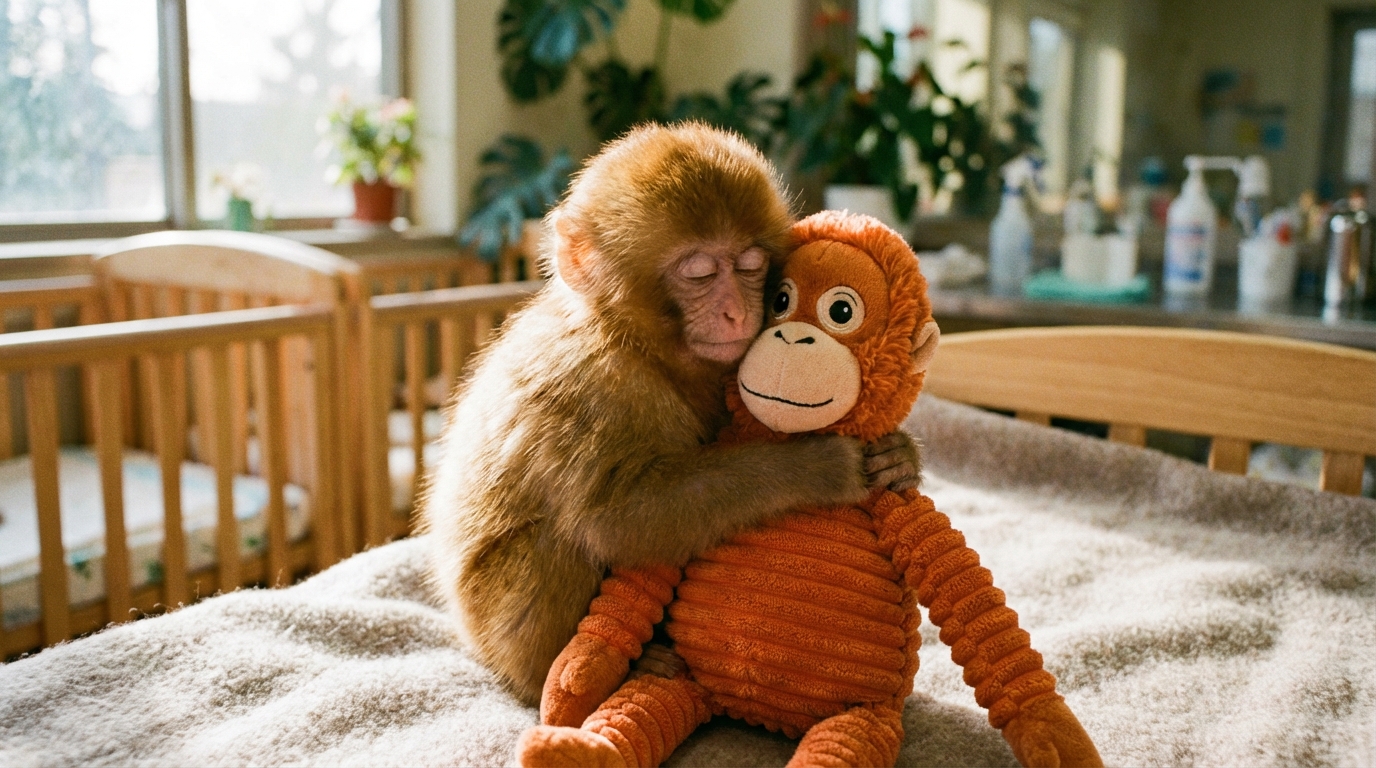
In the vast, chaotic ecosystem of internet culture, viral trends usually burn out as quickly as they ignite. However, occasionally, a story emerges that arrests the collective attention of the digital world, not through controversy or shock, but through a profound display of biological vulnerability. In February 2026, search engines across the United States and Asia saw a massive spike in a peculiar phrase: punch monkey japan. Those expecting a clip of inter-species combat or a video game tutorial were instead greeted by something disarmingly different: a small, snow-dusted macaque named Punch, clinging for dear life to a stuffed orangutan twice his size.
This is not merely a story about a cute animal video. It is an investigation into the psychology of abandonment, the ethics of captivity, and the strange, lucrative economy of empathy that drives modern social media. Punch, a Japanese macaque born in a mid-sized zoo in the Nagano prefecture, has inadvertently become the face of a new conversation regarding how we view the emotional lives of primates.
The Rejection of Punch
The story begins not with a viral hit, but with a tragedy common in the animal kingdom. Born in late January 2026, Punch was the offspring of a high-ranking female in the zoo’s macaque troop. According to zoological records, the mother, likely stressed by the social dynamics of the enclosure or suffering from a lack of lactation, rejected the infant within hours of birth. In the wild, this is a death sentence. The winter temperatures in Japan’s mountainous regions are unforgiving, and a neonate without a mother’s warmth will succumb to hypothermia rapidly.
Zoo staff intervened immediately, moving the infant to an incubator. However, physical warmth is only half the equation for primate survival. As famously demonstrated by Harry Harlow’s controversial experiments in the 1950s, primates have a biological imperative for “contact comfort.” They do not just need milk; they need something to hold. It was here that a keeper, acting on intuition, introduced a plush toya shaggy, orange stuffed orangutan found in the zoo’s gift shop.
The reaction was instantaneous. As reported by Reuters, the abandoned baby monkey found comfort in the stuffed orangutan almost immediately, treating the inanimate object as a surrogate parent. He did not just sit near it; he wrapped his limbs around it, burying his face in its synthetic fur, his heart rate visibly stabilizing. The keepers named him “Punch”a nod to his feisty survival instinct and perhaps a hopeful prediction of the strength he would need to reintegrate into the troop later in life.
Deconstructing the Viral Spike
The transition from a veterinary case study to a global phenomenon happened overnight. A junior staff member uploaded a short clip of Punch to a video-sharing platform. In the video, Punch creates a rhythmic motion, playfully striking the plushie with his small fists before collapsing into a hug. The internet, ever eager for a catchy tag, latched onto the action. The search term punch monkey japan began to trend, creating a feedback loop of curiosity.
According to a cultural analysis by Euronews, the video resonated because it combined two powerful psychological triggers: the “cuteness response” (kindchenschema) and the narrative of the underdog. Viewers were not just watching a monkey; they were witnessing a creature overcome the trauma of abandonment through a unique coping mechanism. The juxtaposition of his playful “punches”asserting dominance over his silent, orange protectorand his desperate need for affection struck a chord with a global audience fatigued by cynical news cycles.
However, the viral fame brings scrutiny. Is it healthy for a wild animal to bond with a toy? Dr. Elena Moretti, a primatologist specializing in macaque behavior, suggests that while the plushie is a lifesaver, it is a temporary fix. “The danger with the ‘Punch’ phenomenon is that the public sees a Disney movie, while the biologists see a critical developmental gap,” Moretti noted in an interview. “The plushie cannot groom him. It cannot teach him social cues. When he is eventually reintroduced to the troop, the other monkeys will not care that he is famous. They will only care that he speaks their language.”
The Economics of Cuteness
The impact of Punch’s story extends beyond likes and shares; it has tangible economic ramifications for the region. The zoo, previously a modest attraction overshadowed by the more famous Jigokudani Monkey Park, has seen ticket sales triple since the story broke in mid-February 2026. Merchandise featuring stylized versions of a macaque hugging an orangutan has sold out, with proceeds reportedly going toward primate conservation efforts.
Local hotels and restaurants are capitalizing on the influx of “Punch tourists.” This reflects a broader trend in the Japanese economy where hyper-specific viral moments drive micro-tourism booms. However, this commodification of animal welfare issues walks a fine ethical line. The zoo must now balance the public’s desire to see the “star” with the animal’s need for quiet rehabilitation. There are reports that the zoo has had to limit viewing hours to prevent the flash photography and noise from stressing the infant, a move that has frustrated some travelers who flew in specifically for the experience.
The Biology of Comfort
To understand why Punch’s story is scientifically significant, we must look at the biology of the Japanese Macaque (Macaca fuscata). These primates are intensely social, living in matrilineal troops with complex hierarchies. The mother-infant bond is the cornerstone of their society. When that bond is severed, the infant’s cortisol levels spike, suppressing the immune system.
The plush orangutan serves as a “contact proxy.” The texture of the toy mimics the fur of a mother, triggering the release of oxytocin in Punch’s brain. This is not a conscious decision by the monkey to “pretend” the toy is alive; it is a biological reflex. As highlighted in footage reviewed by the BBC, Punch attempts to groom the toy, picking at its synthetic fibers. This behavior, while futile, indicates that his instincts are intact. He is practicing the social grooming that will eventually be the currency of his relationships with other monkeys.
Critics argue that the anthropomorphizing of Punchattributing human emotions to his actionscan be harmful to conservation efforts. When we see Punch “hugging” his toy, we project our own need for comfort. While the emotional overlap is real, the ecological reality is that macaques are wild animals that can become aggressive and dangerous as they mature. The “cute” phase is fleeting. The challenge for the zoo will be managing the public’s expectations when Punch grows into a 10-kilogram adult male with large canines and a desire to dominate, rather than cuddle.
A Future for Punch
What happens when the cameras turn off? The reintegration process for hand-reared macaques is notoriously difficult. Without a mother to protect him, Punch will enter the troop at the very bottom of the hierarchy. He will likely face aggression from other males and indifference from females. The plush orangutan, his current savior, cannot follow him into the enclosure. It will eventually have to be removed to force him to bond with his own kind.
Zoo officials have outlined a “soft release” plan for late 2026, where Punch will be allowed visual and olfactory contact with the troop through a mesh barrier before physical introduction. The hope is that a surrogate female within the troop might adopt him, or at least tolerate his presence. Until then, he remains in the nursery, the unintended star of a global reality show.
Conclusion
The phenomenon of punch monkey japan is a testament to the strange intersection of nature and technology. It reminds us that despite our complex digital lives, we are still drawn to the primal, simple narratives of survival and connection. Punch’s reliance on his stuffed orangutan is a mirror of our own desire for security in an unpredictable world. While the internet may move on to the next viral sensation by next month, for Punch, the struggle to survive and find his place in the troop is just beginning. His story is not just a moment of entertainment; it is a live-streamed lesson in resilience, demonstrating that sometimes, comfort comes in the most unlikely of orange, synthetic packages.
Frequently Asked Questions
Q: Why is the search term “punch monkey” associated with this story? A: The term comes from the monkey’s name, Punch, and a specific viral video where he playfully “punches” or wrestles with his stuffed orangutan toy before hugging it. The internet combined his name, the action, and the location into a catchy search string.
Q: Will Punch be able to return to the other monkeys? A: That is the goal. Zoo keepers are planning a slow reintegration process. However, hand-reared macaques often struggle with social hierarchies, so his success depends on whether a female in the troop accepts him or if he can learn social cues without a biological mother.
Q: What kind of monkey is Punch? A: Punch is a Japanese Macaque, also known as a Snow Monkey. They are native to Japan and are famous for bathing in hot springs during the winter, though Punch lives in a zoo facility rather than the wild Jigokudani park.
Q: Why did the mother abandon him? A: Rejection can happen for various reasons, including maternal stress, lack of milk production, or inexperience if the mother was a first-time parent. In the wild, this usually results in the infant’s death, but in captivity, keepers can intervene.