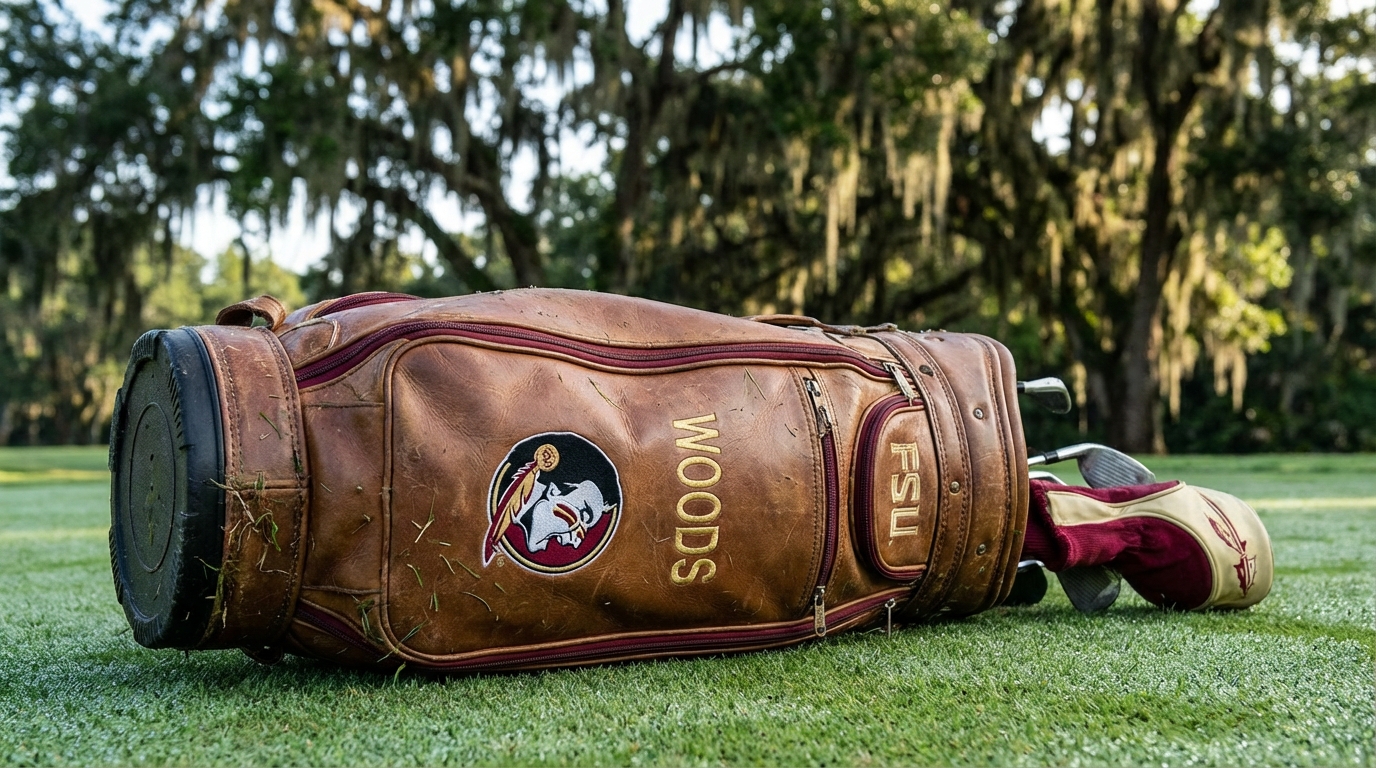
Tiger Woods' Son Charlie Chooses FSU Over Stanford Legacy
The Tallahassee Turn: Inside the Decision That Redefines the Woods Dynasty
It was never guaranteed that the son would follow the father, but the assumption hung over the golf world like morning mist at Augusta. For years, pundits and fans quietly penciled Charlie Woods into the roster at Stanford, assuming the Cardinal red was a birthright. However, the announcement this week has shattered those presumptions and signaled a new era in the monetization and management of amateur golf talent. As Tiger Woods watches from the gallery, his son has charted a course that is distinctly his own, committing to Florida State University and simultaneously inking a representation deal that would have been impossible during his father’s amateur tenure.
This is not merely a college recruitment story; it is a case study in legacy management. The decision to head to Tallahassee rather than Palo Alto speaks volumes about the autonomy Charlie is being granted, but it also highlights the intricate chessboard Tiger has been playing since Charlie first swung a club on national television. By stepping away from the shadow of Stanford, where his father’s name is etched on every trophy case, Charlie is attempting to build a legacy in a place where he can breathe, albeit in the humidity of the Florida Panhandle.
The Seminole Strategy and the Nicklaus Connection
The choice of Florida State University is a fascinating pivot that aligns the Woods trajectory with another titan of the game: Jack Nicklaus. While the “Big Three” of the modern eraWoods, Mickelson, and the next generationoften dominate headlines, the collegiate connection at FSU offers a different historical thread. As noted by Golfweek, the Seminoles have quietly become a sanctuary for the progeny of legends. The program previously hosted GT Nicklaus, Jack’s grandson, creating a lineage that Charlie now inherits.
From an investigative standpoint, the FSU decision appears calculated to maximize competitive comfort while minimizing direct historical comparison. At Stanford, every round Charlie played would be overlaid with his father’s collegiate statistics. At FSU, he joins a powerhouse program that allows him to be a top-tier recruit without the ghost of the 1996 NCAA Champion lurking in the dorm room. Furthermore, the geographical proximity to the Woods family base in Jupiter, Florida, cannot be overstated. It allows for a support system that is physically accessible, a luxury Tiger did not have when he crossed the country to California in the mid-90s.
The Commercialization of the Amateur Swing
Perhaps more significant than the college choice is the simultaneous announcement regarding Charlie’s professional representation. In a landscape drastically altered by Name, Image, and Likeness (NIL) legislation, the line between amateur and professional has all but vanished. According to reports from the Sports Business Journal, Charlie has signed with a premier agency to manage his off-course portfolio. This is a watershed moment. When Tiger turned pro, it was a binary switch: “Hello World” marked the end of amateurism. For Charlie, the commercial machinery is being assembled while he is still a teenager.
This agency signing indicates that the Woods camp is ready to leverage the massive commercial interest surrounding Charlie. However, it raises ethical and developmental questions. Can a player develop a killer instinct when the financial safety net is secured before winning a collegiate title? Critics argue that the hunger required to win majors is forged in necessity. Yet, the counter-argument is visible in the modern PGA Tour, where young stars arrive media-trained and financially literate. The agency’s role will be to filter the noise, ensuring that Charlie’s time at FSU is not consumed by sponsorship activations, but rather focused on course management and swing mechanics.
The Architecture of Influence: How Tiger Woods Steered the Ship
The public perception of Tiger Woods has shifted dramatically over the last decade. He has morphed from the stoic, impenetrable competitor into the role of the elder statesman and, most visibly, the doting father. However, insiders suggest that the “Golf Dad” persona masks a rigorous strategic mind that is still very much in control. Tiger’s approach to Charlie’s development has been a masterclass in controlled exposure. The PNC Championships were not just fun family outings; they were soft launches for Charlie’s brand, testing his ability to handle cameras, crowds, and pressure in a low-stakes environment.
By allowing Charlie to sign with an agency now, Tiger is effectively outsourcing the “bad cop” role. He can remain the mentor and father, while agents handle the negotiations and rejections. This separation of church and state is crucial. It prevents the resentment that often builds in parent-child coaching dynamics (see: the tennis world). Tiger knows better than anyone the toll that commercial obligations take on a player’s mental bandwidth. By establishing this infrastructure before Charlie hits his first tee shot as a Seminole, Tiger is building a fortress around his son’s development.
The Weight of Expectation vs. Statistical Reality
The elephant in the room remains the statistical improbability of Charlie matching his father’s achievements. The data on second-generation athletes is unforgiving. While names like Manning and Griffey suggest it is possible, golf is a sport of individual isolation. There are no teammates to hide behind. As highlighted by Newsweek, this career decision is the first step into a spotlight that will be unforgiving. The media will parse every bogey and over-analyze every missed cut.
The commitment to FSU suggests a desire for a “normal” collegiate experience, but normalcy is relative when your last name is Woods. The investigative question moving forward is how the FSU coaching staff handles the circus. Will practices be closed? Will media availability be limited? The agency signing suggests a desire to control the narrative, but collegiate sports are notoriously leaky environments. The true test of this new arrangement will come when Charlie faces his first significant slump. That is when the insulation provided by Tiger and the new agency will be tested against the raw reality of competitive golf.
Frequently Asked Questions
Why did Charlie Woods choose FSU over Stanford? While Stanford is his father’s alma mater, Florida State offers a powerhouse golf program closer to the family’s home in Jupiter, Florida. Additionally, it allows Charlie to forge his own identity separate from the direct historical comparisons that would inevitably occur at Stanford.
Does signing with an agency make Charlie a professional golfer? No. Under current NIL (Name, Image, and Likeness) rules, collegiate and high school athletes can sign with agencies for representation regarding marketing and sponsorship deals without forfeiting their amateur status for NCAA competition.
What is the connection between the Woods and Nicklaus families at FSU? The Nicklaus family has deep ties to FSU golf, specifically through Jack Nicklaus’s grandson, GT Nicklaus, who played for the Seminoles. Charlie’s arrival cements FSU as a hub for the descendants of golf’s greatest legends.
Will Tiger Woods be coaching the FSU team? There is no indication that Tiger will take an official coaching role. His involvement will likely remain that of a supportive parent and informal mentor, though his presence at events will undoubtedly draw significant attention to the program.
Conclusion: The Torch Has Been Lit, Not Passed
As we look toward the fall season of 2026, the narrative of golf is shifting. The story is no longer solely about Tiger’s potential return to glory, but about the genesis of the next chapter. By committing to Florida State and professionalizing his management team early, Charlie Woods is attempting to navigate a minefield that no other junior golfer has ever faced. He is armed with the best equipment, the best advice, and the most famous surname in sports history.
Yet, the game of golf remains undefeated. It does not care about agency contracts or family trees. The ball must still go in the hole. For Tiger Woods, the challenge is no longer beating the field, but guiding his son through the noise he helped create. The decisions made this weekthe college, the agency, the locationare the opening moves of a long game. Whether this strategy results in major championships or merely a well-adjusted young man remains to be seen, but the world will undoubtedly be watching every swing.