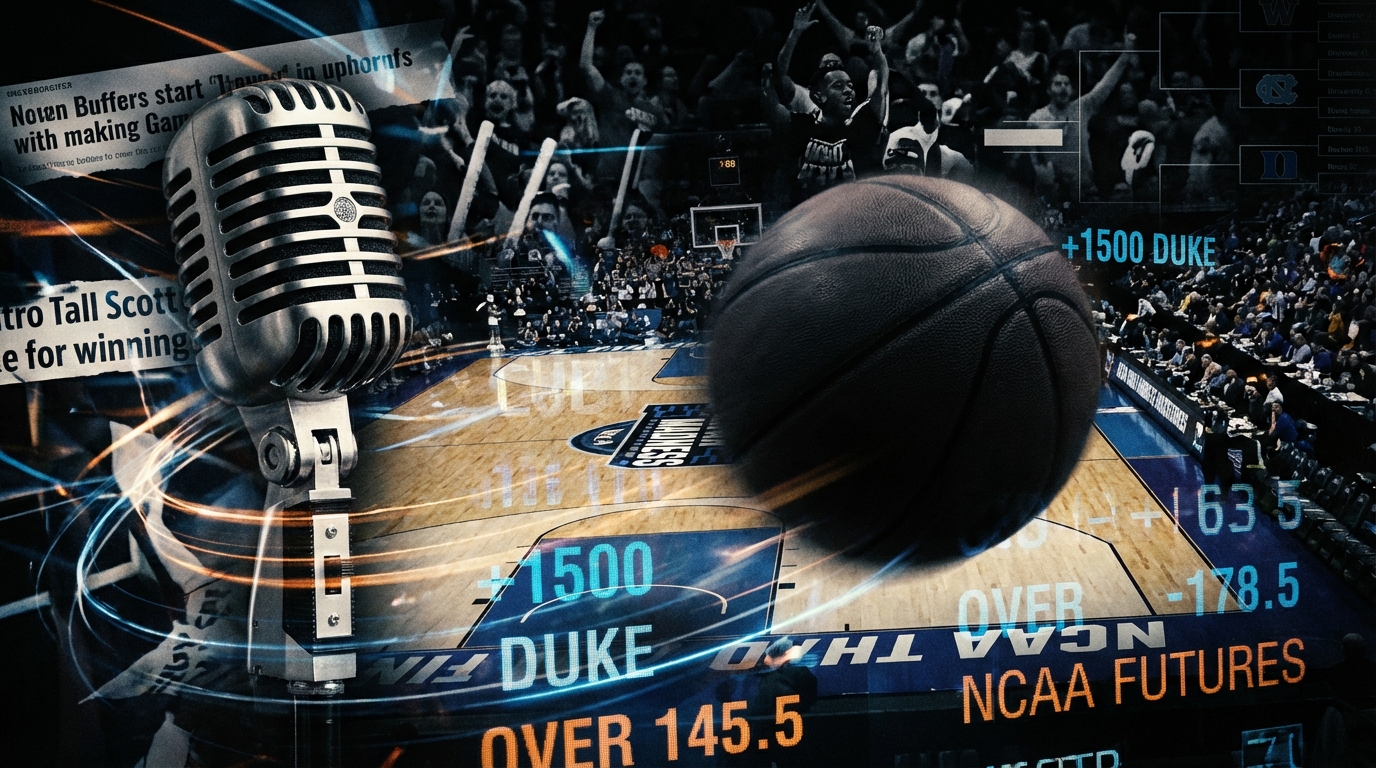
How ESPN Shapes the 2026 College Basketball Narrative
The machinery of college basketball never truly powers down; it merely shifts gears from the frenetic energy of the hardwood to the speculative buzz of the boardroom and the betting counter. In this modern era, where the transfer portal spins as fast as a roulette wheel, the conversation regarding the 2026 national championship is already reaching a fever pitch. At the center of this relentless content churn is ESPN, the self-proclaimed worldwide leader, which dictates the tempo of the conversation, turning distant futures into immediate headlines. The network, along with its competitors, has transformed the offseason into a season of its own, where power rankings and bracketology serve as the primary currency.
The Architecture of Anticipation
It is no longer sufficient to analyze the game in front of us; the sports media ecosystem demands a constant projection of what lies ahead. This phenomenon is most visible in how quickly the narrative pivots to future cycles. As we dissect the landscape for the 2026 NCAA Tournament, we see a distinct pattern emerging: a heavy reliance on brand-name programs to anchor the coverage. The media apparatus requires giants, and the early odds reflect a desperate search for dynastic stability in an unstable era.
The proliferation of “way-too-early” rankings is not merely clickbait; it is a market-moving force. When a major outlet releases a projection two years out, it impacts Name, Image, and Likeness (NIL) valuations and recruiting leverage. The scrutiny is intense, and the data points are often fragile. Yet, the appetite for this content is insatiable. Fans and boosters use these early metrics to validate their investments, creating a feedback loop where media projections fuel donor enthusiasm, which in turn fuels the very roster construction that justifies the ranking.
The Michigan and Arizona Resurgence
Specific programs have captured the imagination of the oddsmakers for the 2026 cycle. According to recent analysis by CBS Sports, the Michigan Wolverines are positioning themselves as a formidable force in the futures market. This optimism is likely rooted not just in current performance, but in a projected recruiting haul and the strategic utilization of the transfer portal. In the modern game, a team’s potential is measured less by returning scoring averages and more by the aggressive nature of its front officethe coaching staff’s ability to navigate the free agency of college sports.
Similarly, the Arizona Wildcats are tracking as a top-tier contender. Reports from The Athletic indicate that oddsmakers are reacting to Arizona’s structural consistency and their pipeline of elite talent. The duality of Michigan and Arizona at the top of these early boards represents a clash of styles and conferences, but also a convergence of strategy: both programs have embraced the professionalization of the collegiate game. They are building rosters designed not just to compete, but to survive the attrition of a long season and the variance of March.
The Betting Market as Truth Serum
While media pundits offer narratives, the betting markets offer probabilities backed by financial liability. The divergence between a media “power ranking” and the Vegas consensus is often where the real story lies. The futures market for the 2026 national championship is currently acting as a sophisticated aggregation of insider information, recruiting rumors, and coaching stability ratings.
However, these markets are volatile. A single injury in a high school senior season or a sudden coaching change can shift the odds dramatically. Yet, the volume of money flowing into these future bets suggests a public confidence in the predictability of the sport that may be misplaced. As noted in coverage by USA Today, the top 16 seeds in these early projections often look vastly different by the time Selection Sunday actually arrives. The danger for the bettorand the casual fanis mistaking a snapshot of potential for a guarantee of performance.
The Role of Broadcast Rights and Scheduling
The influence of ESPN extends beyond analysis; it dictates the very schedule that shapes these teams’ rsums. The matchups we see in November and Decemberthe “Feast Week” tournaments and the made-for-TV classicsare curated to validate the preseason hype. If Michigan and Arizona are projected as top contenders, television executives will ensure they are placed in primetime slots against high-caliber opposition. This creates a self-fulfilling prophecy: to be ranked high is to play on the biggest stage, which provides the strength-of-schedule metrics needed to maintain that high ranking.
This ecosystem creates a significant barrier to entry for mid-major programs. Without the preseason hype generated by the major networks, schools like Gonzaga or San Diego State must work twice as hard to earn the same level of respect from the selection committee. The narrative is often written before the first ball is tipped, and changing the script requires a level of dominance that is difficult to sustain.
Navigating the NIL Landscape
The 2026 projections cannot be decoupled from the financial realities of the sport. The teams sitting at the top of the odds boards are invariably the ones with the most robust NIL collectives. We are witnessing the solidification of a new hierarchy, where financial liquidity is the strongest predictor of future success. The media coverage, intentionally or not, acts as a prospectus for these collectives. A glowing segment on a national broadcast is effectively a fundraising tool, signaling to donors that their contributions are yielding a return on investment in the form of national relevance.
This monetization of hope is the engine driving the industry. When analysts debate the ceiling of a recruit who won’t step on campus for another year, they are participating in a complex valuation process. The pressure on these young athletes is immense, as they are expected to deliver on the promises made by algorithms and talking heads long before they have played a minute of collegiate basketball.
The Volatility of Long-Term Forecasting
Despite the confidence of the oddsmakers, history teaches us that college basketball is defined by chaos. The transfer portal ensures that rosters are fluid until the last possible moment. A team that looks like a juggernaut in the early projections can be dismantled by a few key departures in May. This inherent instability makes the work of columnists and analysts both difficult and essential. We attempt to impose order on a system designed for entropy.
The fixation on 2026 while the current cycles are still unfolding speaks to our collective impatience. We are always looking for the next great team, the next generational talent, the next dynasty. It is a pursuit that keeps the lights on at networks like ESPN, but it also risks overshadowing the present. The beauty of the sport lies in its unpredictability, yet the industry is dedicated to predicting the outcome with increasing precision.
Frequently Asked Questions
Q: How accurate are national championship odds released two years in advance? A: Historically, they are highly volatile. While they often correctly identify the pool of top 10-15 programs (the “blue bloods”), predicting the specific winner is statistically difficult due to injuries, transfers, and coaching changes.
Q: Why do networks like ESPN release rankings so early? A: It drives engagement during the off-season. College sports is a year-round business, and “way-too-early” rankings bridge the gap between the end of the tournament and the start of football season, keeping fans on the platform.
Q: How does the transfer portal affect these future odds? A: The portal has made future odds more fluid. Oddsmakers now have to account for the likelihood of a team adding a star veteran in the offseason, meaning programs with aggressive NIL collectives often get shorter odds.
Q: Are Michigan and Arizona the only teams favored for 2026? A: No, they are simply among the current favorites based on projected roster retention and recruiting. Programs like Duke, Kansas, and Kentucky remain perennial fixtures in the top tier of betting markets regardless of the specific year.
The Final Verdict
As we look toward the 2026 horizon, the lines between sports journalism, entertainment, and financial speculation continue to blur. The coverage provided by ESPN and its peers serves as the soundtrack to a high-stakes game of musical chairs, where coaches and players scramble for position in a rapidly changing environment. While the odds makers favor Michigan and Arizona today, the only certainty in March is the madness itself. The industrial complex of college basketball will continue to churn out predictions, but the game will ultimately be decided on the floor, far away from the algorithms and the television studios.