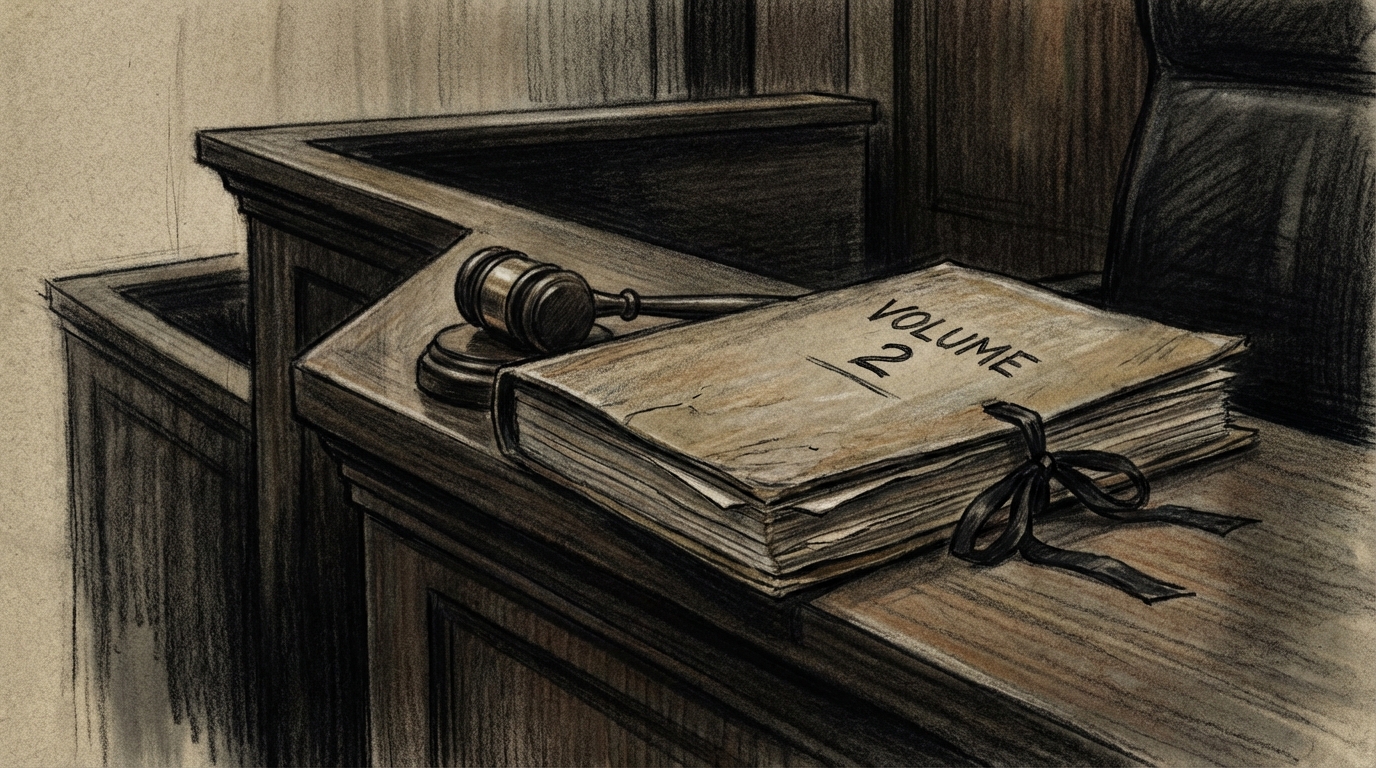
Aileen Cannon Blocks Release of Special Counsel Report Vol 2
In the quiet corridors of the federal courthouse in Fort Pierce, Florida, a significant chapter of American legal history is being rewritten — or rather, redacted into oblivion. The long-awaited conclusion to the Special Counsel’s investigation into the mishandling of classified documents at Mar-a-Lago has arrived, but the public may never see the full picture. Aileen Cannon, the U.S. District Judge presiding over the matter, has issued a decisive order blocking the release of “Volume 2” of Jack Smith’s final report.
This volume, which reportedly details the obstruction of justice aspects of the investigation, has been deemed by the court as prejudicial and violative of Department of Justice protocols regarding uncharged conduct. While the Special Counsel’s office argued that the public interest outweighed privacy concerns in a case of this magnitude, the court disagreed. The ruling creates a paradox where an investigation commissioned to ensure accountability has ended in a judicially enforced silence.
For legal observers who have watched this case unfold since 2022, the move is consistent with a judicial philosophy that prioritizes strict procedural protections for the accused, even at the expense of transparency. However, critics argue this goes beyond standard protection, effectively burying the historical record of a presidency.
The Battle Over Volume 2
The conflict centers on the structure of the Special Counsel’s final submission. According to sources familiar with the filing, the report was bifurcated. Volume 1 dealt with the retention of national defense information, while Volume 2 focused on the complex narrative of obstruction — specifically, how boxes were moved and what directives were given to staff. CNN reported that while Smith intended for a redacted version of both volumes to be released, Judge Cannon accepted the defense’s argument that releasing the obstruction narrative, without accompanying charges for all individuals named, would violate their due process rights.
The judge’s order emphasized that the Department of Justice’s own manual discourages the disparagement of subjects who are not indicted. By applying this standard to the Special Counsel’s report, the court has effectively categorized the historical accounting of the investigation as a potential violation of privacy rights. This interpretation creates a high wall for transparency, suggesting that unless a fact leads directly to a conviction or an active charge, it belongs in a sealed vault rather than the public record.
Aileen Cannon and the Expansion of Judicial Discretion
This ruling is not an isolated incident but the capstone of a specific judicial approach. Throughout the pretrial proceedings, Aileen Cannon has consistently shown a willingness to entertain novel legal theories presented by the defense. From the initial appointment of a Special Master to review seized documents — a move eventually overturned by the 11th Circuit — to this final blockade of the report, the trajectory has been clear.
In her latest opinion, she cited the need to protect the “reputational interests” of uncharged third parties. However, legal analysts note that this protection is usually reserved for grand jury secrecy, not the final report of a Special Counsel, which historically — as seen with the Mueller Report — finds a way to the public domain. NBC News noted that the court’s reliance on the “inherent supervisory powers” to block the report is an expansive use of judicial authority, essentially overruling the Attorney General’s discretion on what to release to Congress and the public.
The friction here is between the Executive Branch’s function to investigate and report, and the Judicial Branch’s duty to ensure fairness. By stepping in to block the report’s transmission, the court is asserting that its duty to prevent reputational harm overrides the Executive’s desire for transparency. This sets a precedent that could hobble future Special Counsels, knowing that their final work product is subject to the veto of a single district judge.
The Anatomy of the “Shadow Docket” Decision
The mechanism used to block this release is as important as the decision itself. The ruling was issued following a series of sealed hearings and filings, a process often referred to as the “shadow docket” when applied to the Supreme Court, but here playing out in Fort Pierce. The lack of public access to the arguments made by the Special Counsel regarding the necessity of release has left the public guessing at the government’s justification.
According to The Hill, the Special Counsel’s office argued that the report contained vital information regarding the security of classified material that the public had a right to know, independent of criminal liability. The court, however, found this argument unpersuasive, focusing instead on the potential for the report to be used as a political tool. This reasoning introduces a subjective element into the judicial review process: assessing the potential political impact of a legal document.
This approach raises questions about the separation of powers. Typically, the decision to release a report lies with the Attorney General, who navigates the political fallout. By interjecting the court into this decision-making loop, the judiciary effectively becomes the editor-in-chief of the Department of Justice’s historical record.
The Legacy of the Mar-a-Lago Case
The blocking of Volume 2 ensures that the Mar-a-Lago case ends not with a bang, but with a redacted whimper. The Special Counsel regulations were designed to provide an alternative to the Independent Counsel statute, ensuring that while a prosecutor could operate with independence, they were still accountable to the Attorney General. The regulations anticipate a report explaining the prosecution or declination decisions.
If a district judge can intercept that report before it reaches the public eye, the accountability mechanism is broken. The public is left with the charges that were filed, but without the context of why certain paths were not taken or what obstacles the investigation faced. It creates a “black box” of justice where the inputs are known (the raid, the indictment) but the internal processing (the obstruction investigation findings) remains hidden.
This decision creates a roadmap for future defense teams involved in high-profile investigations. The strategy of aggressive litigation over procedural minutiae, combined with appeals to reputational privacy, has proven effective in delaying and ultimately suppressing adverse findings. The court’s willingness to prioritize these privacy interests over the public’s right to know suggests a shift in how federal courts may handle politically sensitive investigations moving forward.
Frequently Asked Questions
Q: Does the Attorney General have the power to override Judge Cannon’s order? A: Not directly. While the Attorney General has the authority to release the report under Special Counsel regulations, they are bound by valid court orders. The Department of Justice would need to appeal the judge’s ruling to the 11th Circuit Court of Appeals to overturn the blockade on the report’s release.
Q: Why is Volume 2 specifically being targeted for sealing? A: Volume 2 reportedly focuses on obstruction of justice and the movement of boxes at Mar-a-Lago. This volume likely contains details about the conduct of individuals who were not ultimately charged, or evidence that was not used in court. The judge ruled that releasing this information violates the privacy and due process rights of those uncharged individuals.
Q: Is this ruling unprecedented for a Special Counsel report? A: It is highly unusual. The Mueller Report, for instance, was released with redactions, but the court did not proactively block the transmission of the report itself. Typically, the redaction process is handled by the Executive Branch (DOJ) to protect intelligence sources and ongoing investigations, rather than by the Judicial Branch to protect reputational interests.
Q: Can Congress subpoena the report despite the judge’s order? A: Congress has independent oversight powers and could attempt to subpoena the report. However, this would likely lead to a constitutional clash between the Legislative and Judicial branches. If the DOJ claims it cannot comply due to the court order, the dispute would likely end up back in federal court.
Conclusion
The saga of the classified documents case has been defined by its procedural anomalies, and this final act is no exception. By sealing the substantive findings of the obstruction investigation, Aileen Cannon has asserted a level of control over the Special Counsel’s output that few anticipated. While her supporters will view this as a necessary defense of due process against a politicized investigation, history may view it as the moment where the judicial system chose silence over transparency. As the dust settles in Fort Pierce, the full story of what transpired at Mar-a-Lago remains locked away, guarded by a gavel that has consistently come down on the side of secrecy.