AI Infrastructure CRE: The Shift in Commercial Real Estate
Navigating AI Infrastructure CRE: A Shift in Commercial Real Estate
For commercial real estate investors, relying solely on aggregate macroeconomic indicators can obscure underlying trends. While the broader United States economy currently shows a steady 2% headline GDP, as reported by build.inc, this figure masks a divergence in institutional capital flows. A 1.6% drop in Q1 consumer spending, also noted by build.inc, indicates a cooling in the traditional retail economy, affecting the cash flows of consumer-facing assets.
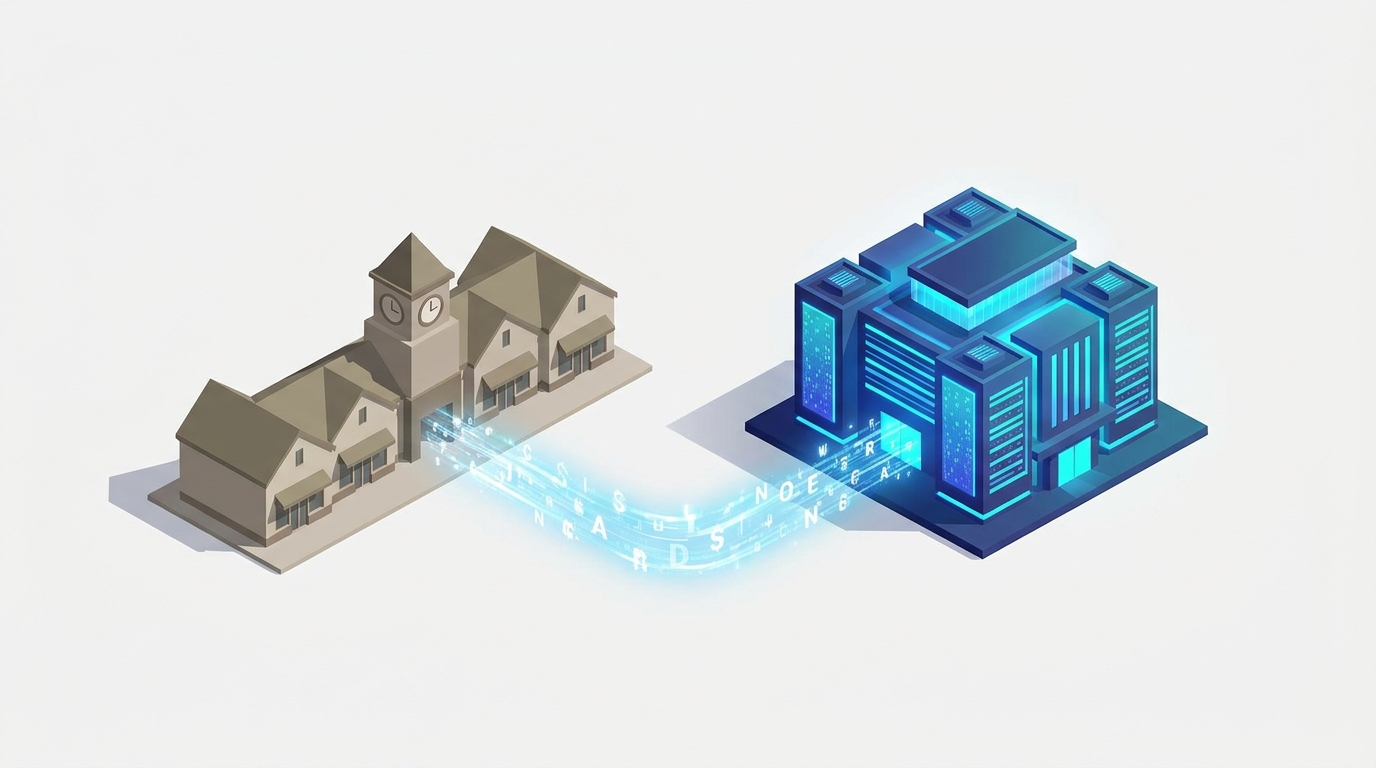
In contrast, corporate capital expenditures directed toward artificial intelligence infrastructure are expanding rapidly. This divergence suggests that economic resilience is increasingly supported by tech-driven industrial investments rather than consumer spending. The market is experiencing a repricing of real estate utility, where data-processing assets are replacing foot-traffic-dependent assets. For modern investors, understanding the mechanics of AI Infrastructure CRE is a key requirement of the current market cycle.
The Transmission Chain: From Hyperscaler Capex to Tier-2 Migration
To understand the structural changes in the commercial real estate market, investors must map the transmission chain connecting corporate technology budgets to localized real estate valuations. This chain begins with capital allocation, moves through physical constraints, and results in market shifts.
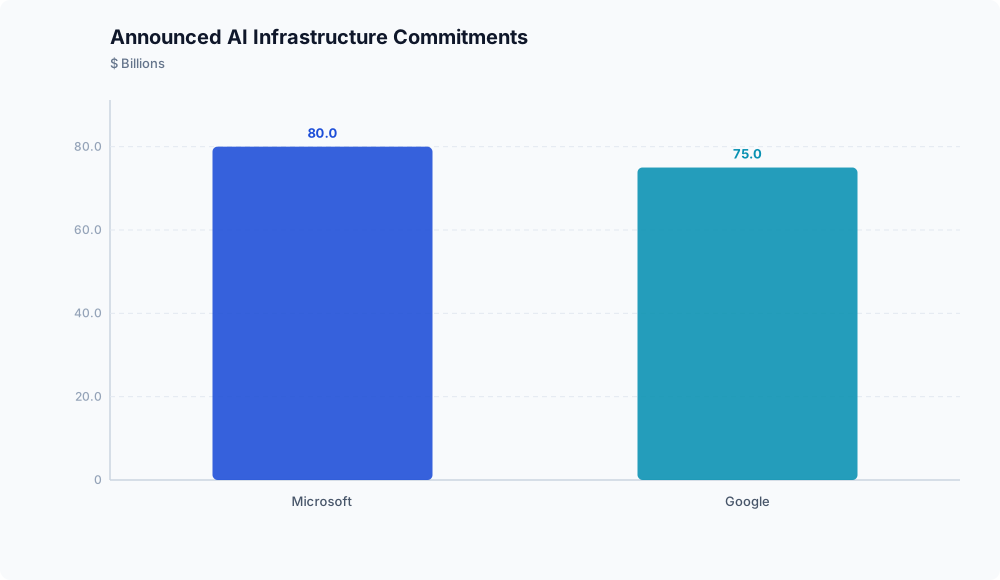
The Event: Hyperscaler Capital Expenditure The catalyst for this industrial absorption is a concentrated wave of capital expenditure from technology companies. Microsoft, Google, Meta, and Amazon have collectively committed over $300 billion in infrastructure spending across their 2025 and 2026 guidance, according to build.inc. Microsoft announced an $80 billion AI infrastructure investment in January 2024, with roughly half earmarked for domestic facilities, while Google committed $75 billion for 2025 (build.inc). This influx of capital influences the pace and scale of national commercial development, shifting market dynamics toward hyperscaler balance sheets.
The Mechanism: Grid Constraints and Power Bottlenecks This capital deployment intersects with the physical realities of land and power availability. In primary markets like Northern Virginiawhich previously accounted for over 35% of US colocation capacityelectrical grid constraints have pushed utility interconnection timelines to four to seven years (build.inc). The transmission mechanism reveals a shift in asset valuation: electrical power has become a primary underlying asset metric. Market participants are now underwriting grid capacity alongside traditional real estate metrics. The commercial real estate dynamic is increasingly defined by tenant demand and physical power limits.
The Market Effect: Rent Increases and Geographic Dispersion The immediate effect of this primary market constraint is twofold. First, lease rates in power-constrained primary hubs like Northern Virginia, Dallas, and Chicago have firmed above $200/kW/month. Existing facilities with secured power are functioning as high-value assets. Second, development capital is migrating into tier-2 markets. Developers are targeting cities like Columbus, Salt Lake City, San Antonio, and Indianapolis, which still possess available grid capacity. This migration flattens the historical geographic hierarchy of digital infrastructure, making secondary industrial zones critical nodes for hyperscale deployment.
Highest-Signal Evidence: The Metrics Defining the New Paradigm
The rotation of institutional capital into digital infrastructure reflects a shift in corporate priorities, as hyperscalers secure the physical footprint required for next-generation compute. The data from the past two years indicates a market experiencing high demand.
| Metric | 2023 Baseline | 2025 / Early 2026 Reality |
|---|---|---|
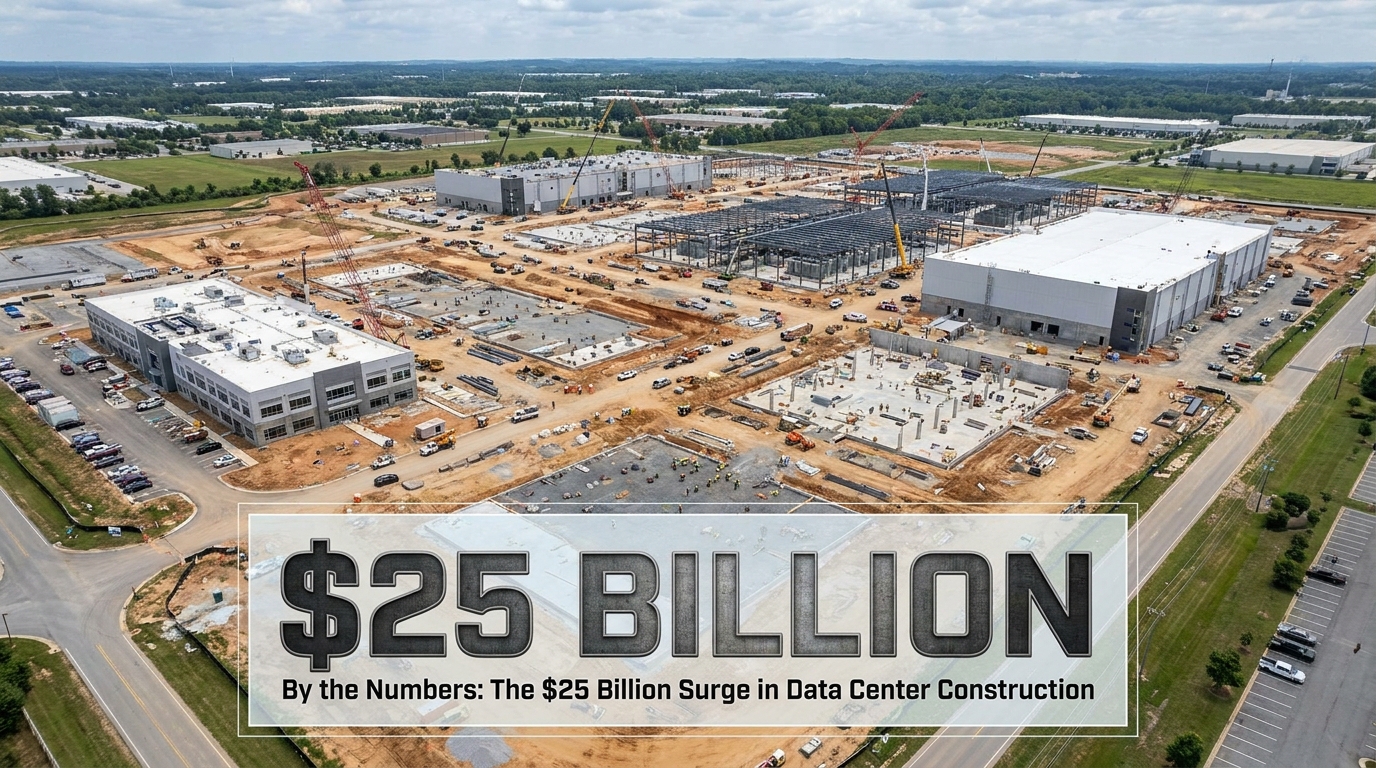
| US Construction Starts | $11 Billion | $25 Billion |
| Primary Market Vacancy | Historically Normalized | ~2.8% (Absorption outpacing deliveries) |
| Hyperscaler Capex | Pre-GenAI Baselines | >$300 Billion (2025-2026 Commitments) |
| Interconnection Timelines | Standard Utility Cycles | 4 to 7 Years in Constrained Markets |
Beneath these headline figures lie operational and competitive shifts that are redefining how real estate is acquired and developed in the United States.
The Sovereign Wealth Advantage As the asset class matures, the competitive landscape for acquiring and developing these sites is shifting. Sovereign wealth funds, including GIC, ADIA, Mubadala/MGX, CDPQ, and PIF, are deploying capital into digital infrastructure, according to build.inc. These sovereign-backed buyers bring a structural advantage: they can close transactions with a speed and certainty that domestic players, who often rely on complex debt syndication, struggle to match. This dynamic implies a crowding-out effect for local developers, potentially transferring a portion of US digital infrastructure ownership to foreign state-backed capital.
The Velocity of Modular Construction To counter extended development timelines and remain competitive, domestic operators are adopting modular construction methods. These tactical construction shifts have compressed data hall fit-out schedules from 18-24 months down to 9-12 months (build.inc). This compression implies that the premium in today’s market is on execution and operational deployment speed. While modular techniques can accelerate internal build-outs, they cannot bypass fundamental grid interconnection delays, making them effective only once power is secured.
Energy and Real Estate Convergence The scale of hyperscaler commitments requires dedicated, large-scale power generation. The need for reliable baseload power has led tech companies to execute unconventional energy strategies. This is evidenced by Microsoft’s agreement with Constellation Energy to restart the decommissioned Three Mile Island Unit 1 nuclear reactor, as reported by build.inc. This move is designed to secure dedicated, behind-the-meter nuclear power to bypass local utility constraints. The convergence between digital real estate and baseline energy infrastructure is increasingly evident.
Scenario Analysis: Underwriting the AI Infrastructure Boom
For commercial real estate investors rotating capital from traditional sectors into digital infrastructure, the dispersion of outcomes is widening. Success requires navigating supply-demand imbalances, operational efficiencies, and physical bottlenecks.
The Base Case: Reallocation and Tier-2 Yields The base case relies on a demand-driven shift underpinned by the $300 billion in hyperscaler commitments across 2025 and 2026 (build.inc). This provides a visible revenue floor for well-positioned developers. With primary data center markets exhibiting a vacancy rate of approximately 2.8% and absorption outpacing deliveries for five consecutive quarters, rent growth will likely remain steady (build.inc). Investors adapt their geographic mandates to tier-2 markets like Columbus, Salt Lake City, San Antonio, and Indianapolis. Because these secondary markets currently trade at a 30% to 40% discount compared to primary markets, they offer attractive yield-on-cost metrics (build.inc). Base-case yields depend on executing projects in these secondary nodes before the arbitrage window closes.
The Upside Scenario: Accelerated Deployment and Maximized IRR An upside scenario emerges from operational efficiencies that accelerate deployment timelines. By utilizing modular construction methods to compress data hall fit-out timelines from 18-24 months down to 9-12 months, developers can halve the final construction phase (build.inc). For US investors, bringing facilities online faster improves internal rates of return (IRR) and reduces carrying costs during the development phase. Deploying capacity rapidly allows operators to lock in currently elevated lease rates (above $200/kW/month) before broader market supply catches up with tech sector demand. In this scenario, execution speed compounds capital returns.
The Downside Scenario: Stranded Capital and Sovereign Competition The downside scenario is defined by power availability bottlenecks and foreign competition. Acquiring land without guaranteed, near-term utility interconnections exposes investors to duration risk. In markets where utility interconnection timelines stretch to four to seven years, miscalculating grid capacity could result in years of zero yield (build.inc). While tech companies are exploring alternative power solutions like the Three Mile Island nuclear restart, the timeframe for completing these projects remains uncertain (build.inc). Another downside risk involves the entry of sovereign wealth funds (GIC, ADIA, Mubadala/MGX, CDPQ, PIF). Their ability to execute transactions with speed threatens to compress acquisition cap rates and bid up land prices (build.inc). Consequently, domestic investors may be forced further out on the risk curve, taking on unentitled land or moving into tertiary markets to find viable margins.
What to Watch Next: Leading Indicators for Capital Deployment
The trajectory of U.S. digital infrastructure is moving faster than traditional real estate cycles. Forward-looking investors must monitor concrete indicators and operational triggers that signal where institutional capital will flow next.
- Tier-2 Utility Grid Capacity Approvals: Tracking municipal zoning boards and regional utility expansion plans in tier-2 cities (Columbus, Salt Lake City, San Antonio, and Indianapolis) will provide actionable signals. Development capital is migrating to municipalities with available capacity. Approvals for new substations or transmission lines in these areas are leading indicators of future asset appreciation (build.inc).
- Hyperscaler Regional Capex Deployment: The current 30% to 40% discount in tier-2 markets is an arbitrage window that may compress. Investors should monitor how hyperscalers allocate their budgets geographically. For instance, Meta is directing substantial portions of its $60 billion to $65 billion capex envelope toward the Midwest and Southeast (build.inc). Capital will follow these regional deployments.
- Sovereign Wealth Land Acquisitions and JVs: Watch the pace of large-scale land acquisitions by entities like GIC, ADIA, and Mubadala/MGX. As these funds acquire raw land, domestic REITs and private equity developers will likely need to pivot toward strategic joint ventures (build.inc). The formation of these partnerships will signal how domestic capital is adapting to the competitive landscape.
- Alternative Land Use and Retail Conversions: Industry observers have hypothesized that developers might target consumer retail assets to repurpose sites with existing utility infrastructure. While a 1.6% drop in Q1 consumer spending affects retail cash flows, current market data does not yet provide concrete evidence of widespread retail-to-data-center conversions. Investors should treat this as a speculative trigger until definitive data emerges.
Conclusion

The commercial real estate market is experiencing a shift where traditional macroeconomic indicators provide an incomplete picture. The steady 2% GDP masks a reallocation of institutional liquidity away from consumer-dependent retail properties and into power-dense industrial assets. Driven by over $300 billion in hyperscaler capital expenditures, U.S. data center construction starts have more than doubled, reordering real estate valuation.
The analytical takeaway for investors is that prioritizing geographic location and foot traffic is giving way to an era where electrical grid capacity is a primary economic moat. Success in AI Infrastructure CRE requires a paradigm shift: investors must act as energy procurers, master accelerated modular construction techniques to boost IRR, and prepare to compete or partner with global sovereign wealth. The next phase of commercial real estate will favor those who can successfully underwrite and deliver scalable baseload power.
Disclaimer: This analysis is for informational purposes only and does not constitute investment, financial, real estate, or legal advice. Always consult a licensed financial advisor before making investment decisions.
FAQ
Why is data center development capital shifting from primary to tier-2 markets? Capital is shifting due to electrical grid constraints in primary markets like Northern Virginia, where utility interconnection timelines have extended to four to seven years. Tier-2 markets like Columbus, Salt Lake City, San Antonio, and Indianapolis offer available grid capacity and trade at a 30% to 40% discount compared to primary hubs.
How does modular construction impact the ROI and deployment speed of AI real estate? Modular construction methods compress data hall fit-out schedules from a traditional 18-24 months down to 9-12 months. This accelerated time-to-market improves internal rates of return (IRR) by reducing carrying costs and allowing operators to secure lease rates faster.
What competitive advantages do sovereign wealth funds hold over domestic developers in acquiring data center sites? Sovereign wealth funds (such as GIC, ADIA, and Mubadala/MGX) possess pools of state-backed capital, allowing them to close transactions with speed and certainty. This allows them to bypass complex debt syndication processes that traditional private equity relies upon.
How does the slowdown in consumer spending directly impact traditional commercial real estate valuations? A slowdown in consumer spending, evidenced by a 1.6% drop in Q1, indicates a cooling in the traditional retail economy. This affects the cash flows of consumer-facing retail assets, prompting institutional liquidity to shift from these traditional properties toward tech-heavy industrial assets.