
August Payrolls Fed Hike Risk Grows After Jobs Surprise
Will the latest data force another Federal Reserve rate hike?
The risk of Federal Reserve tightening has increased, although another rate hike is not guaranteed. Persistent inflation, strong corporate demand in the second quarter, and an unexpected rebound in August payrolls have shifted market expectations toward another hike, challenging assumptions that monetary policy is ready to ease.
According to interest rate futures tracked after the August employment report, the probability of a 25-basis-point increase at the September 2026 Federal Open Market Committee (FOMC) meeting climbed from under 50% to 62.4%, as reported by The Motley Fool.
Labor market data shifts rate expectations
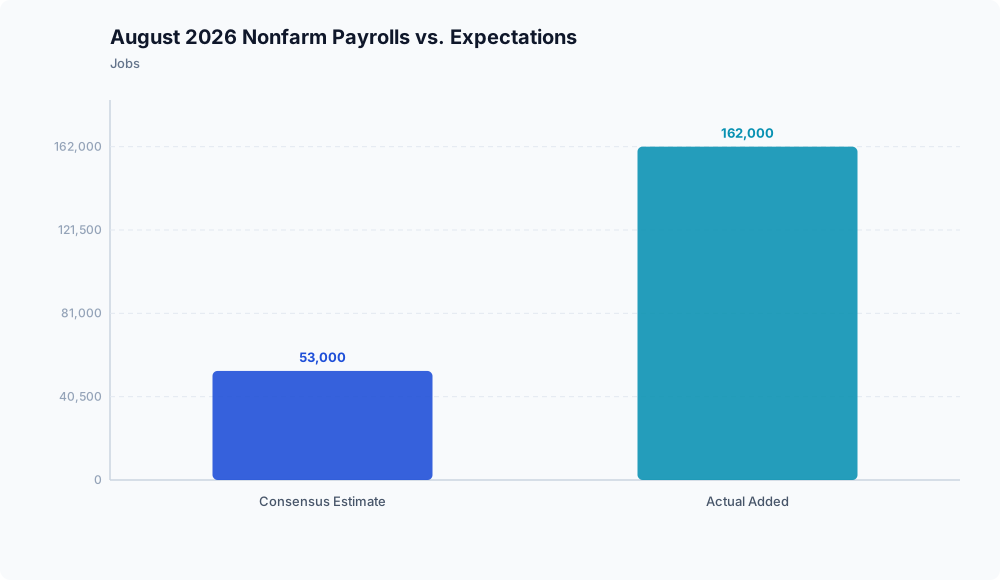
Seasonally adjusted U.S. nonfarm payrolls grew by 162,000 jobs in August 2026, well above the consensus estimate of 53,000, according to The Motley Fool. July payroll figures were also revised upward from an initial contraction of 23,000 to a gain of 21,000.
Data reported by CryptoDaily showed the unemployment rate held at 4.1%, while food services and drinking places added 59,000 jobs.
The steady hiring weakens arguments that the economy is cooling quickly. When job growth rebounds while unemployment holds steady, nominal demand tends to stay strong, raising the risk that wage and consumer spending will keep underlying inflation above target.
Inflation trends and corporate growth
The employment rebound arrived alongside stalled disinflation. Analysis from Clearstead shows that the headline Personal Consumption Expenditures (PCE) Index remained flat from June at 3.7% year-over-year in July 2026. At 3.7%, well above the central bank’s 2.0% objective, the headline rate leaves policymakers sensitive to demand-side strength.
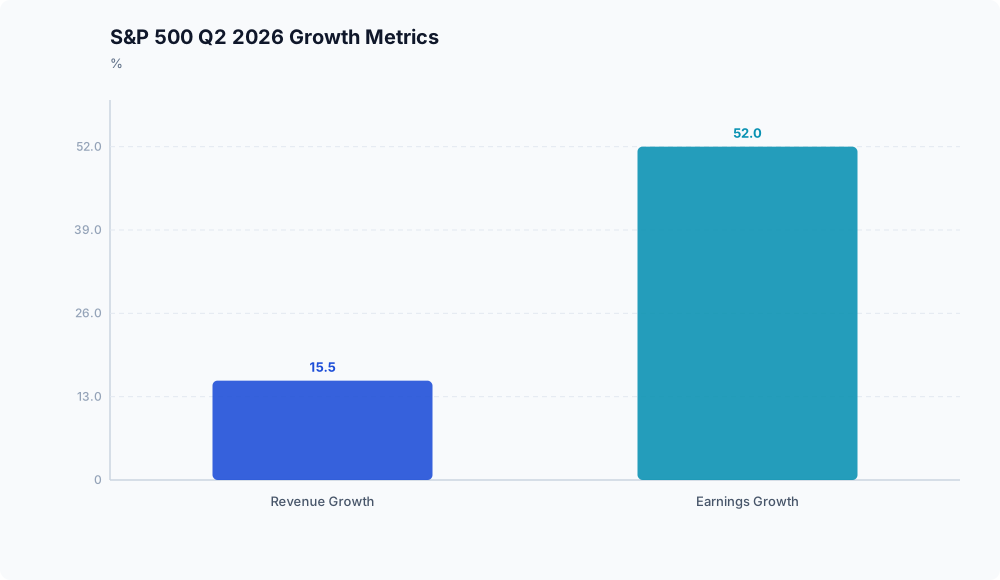
Corporate earnings also remained high. During the second quarter of 2026, S&P 500 earnings expanded by 52% year-over-year, while revenues rose 15.5%, according to Clearstead. Revenue growth combined with elevated consumer prices indicates that corporate purchasing and pricing power remain active, giving policymakers less reason to lower borrowing costs.
Bond yields and equity valuations
Fixed-income markets responded with sharp increases in yields. Market tracking by Clearstead documents that the 30-year U.S. Treasury yield touched 5.31% on August 17, 2026, its highest level since 2007, before the benchmark 10-year Treasury yield settled at 4.72% to end the month.
These moves show bond investors pricing in higher real interest rates and a prolonged restrictive stance. Elevated long-term yields affect asset valuations in two ways:
- Higher risk-free rates raise the discount rate applied to corporate cash flows.
- High-multiple growth equities and AI-related companies, whose valuations reflect anticipated earnings far into the future, face multiple compression when benchmark yields remain near multi-year highs.
Market implications

Markets are balancing strong corporate profitability against tighter financial conditions. While 52% corporate earnings growth demonstrates near-term business health, a 4.72% 10-year Treasury yield raises borrowing costs across the economy, according to Clearstead. With headline PCE holding at 3.7% (Clearstead) and payroll growth reaccelerating, the Federal Reserve faces pressure to keep policy restrictive. Strong economic and hiring data support corporate earnings, but they also maintain discount-rate pressure that limits valuation expansion.

Disclaimer: This analysis is for informational purposes only and does not constitute investment, financial, real estate, or legal advice. Always consult a licensed financial advisor before making investment decisions.
Frequently asked questions
Does the 162,000 payroll gain guarantee that the Federal Reserve will raise rates in September? No. Following the release, interest rate futures shifted to indicate a 62.4% probability of a 25-basis-point hike, up from under 50%. However, futures pricing reflects market expectations and does not commit the central bank to any policy action (The Motley Fool).
Why does a higher 10-year Treasury yield create valuation risks for growth and AI equities? The 10-year Treasury yield is a benchmark risk-free rate in discounted cash flow valuation models. When yields remain high, such as finishing August at 4.72% (Clearstead), the calculated present value of future corporate profits declines. This reduces the valuation multiples investors are willing to pay for long-duration earnings.