
September FOMC Rate Hike Repricing: Key Market Drivers
Why markets are repricing a September Fed rate hike
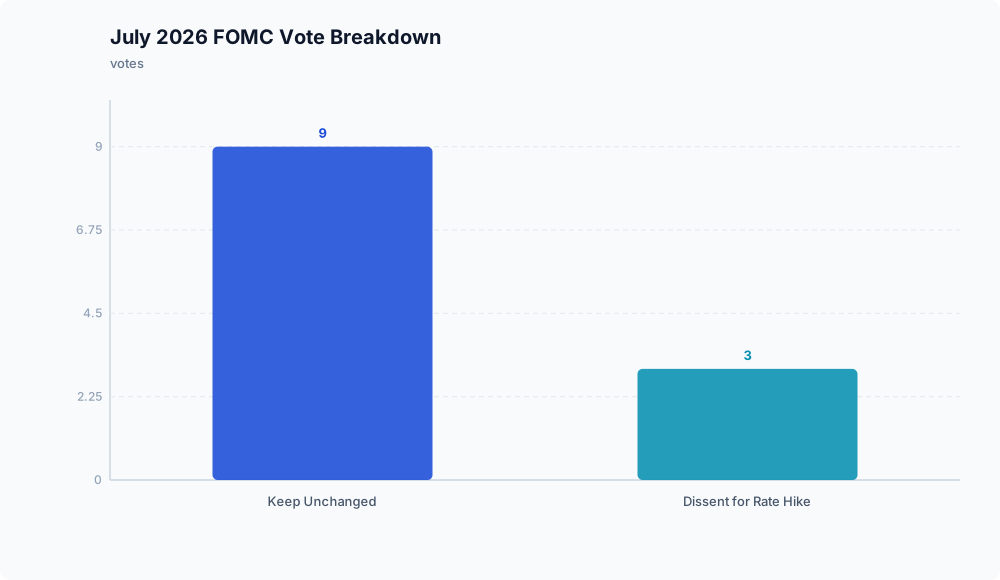
A rare voting split inside the Federal Reserve and persistent commodity prices have shifted financial market expectations toward a rate hike in September 2026. At its July 2026 meeting, the Federal Open Market Committee (FOMC) saw three members dissent in favor of an immediate rate increase, according to J.P. Morgan Wealth Management. With crude oil hovering near $80 per barrel as of August 3, 2026, interest rate futures moved in early August to price in an approximately 65% probability of a quarter-point rate hike in September, as reported by J.P. Morgan Wealth Management.
Catalysts: hawkish dissent and sticky energy prices
At the July 2026 FOMC meeting, policymakers voted 9–3 to keep the benchmark rate unchanged, according to J.P. Morgan Wealth Management. Three dissenting votes favoring an immediate 25-basis-point hike signaled that internal tolerance for waiting has diminished, lowering the hurdle for additional policy tightening.
External cost pressures have reinforced that division. As of August 3, 2026, oil traded around $80 per barrel, as reported by J.P. Morgan Wealth Management. Sustained energy prices near this level complicate disinflation trends, raising the risk that headline inflation could climb again or unseat longer-term inflation expectations.
The voting split and resilient energy prices prompted forecasters to adjust their projections. Strategists at J.P. Morgan Wealth Management revised their baseline expectation to project a 0.25-percentage-point increase at the September 2026 meeting, matching early August futures pricing that implied a roughly 65% likelihood of tightening.
Discount rates and balance sheet divergence
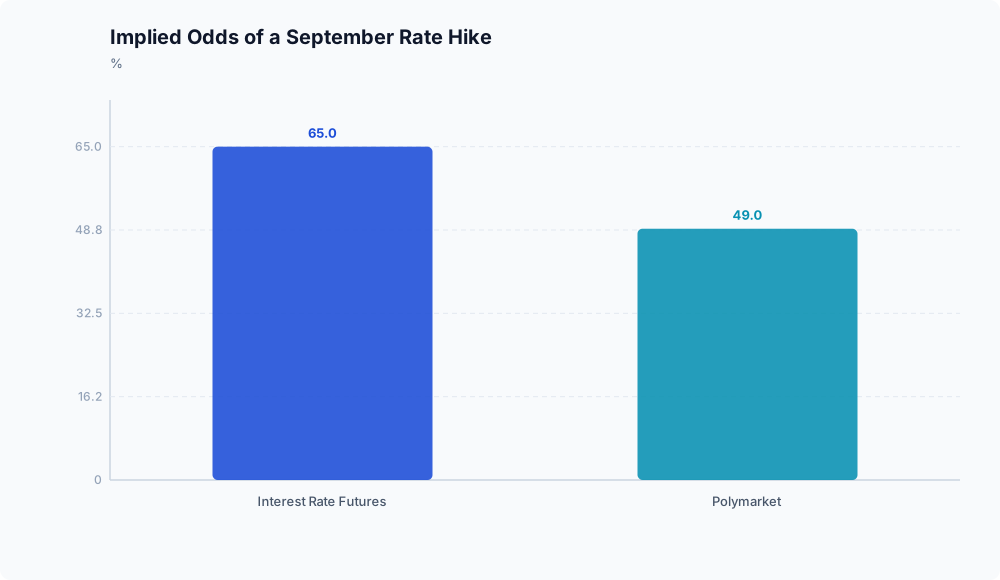
The comparison between futures pricing and prediction market odds reflects different observation windows across August. While interest rate futures indicated an approximate 65% probability of a September hike in early August per J.P. Morgan Wealth Management, pricing later shifted. By late August, fed funds futures showed a nearly 56% probability on the CME FedWatch tool, while Polymarket odds stood at 49%, according to CNBC.
Repricing the September FOMC decision shifts the discount rate framework across financial markets. When investors anticipate an imminent rate increase, benchmark yields adjust upward, raising the cost of capital and lowering the present value of future corporate cash flows.
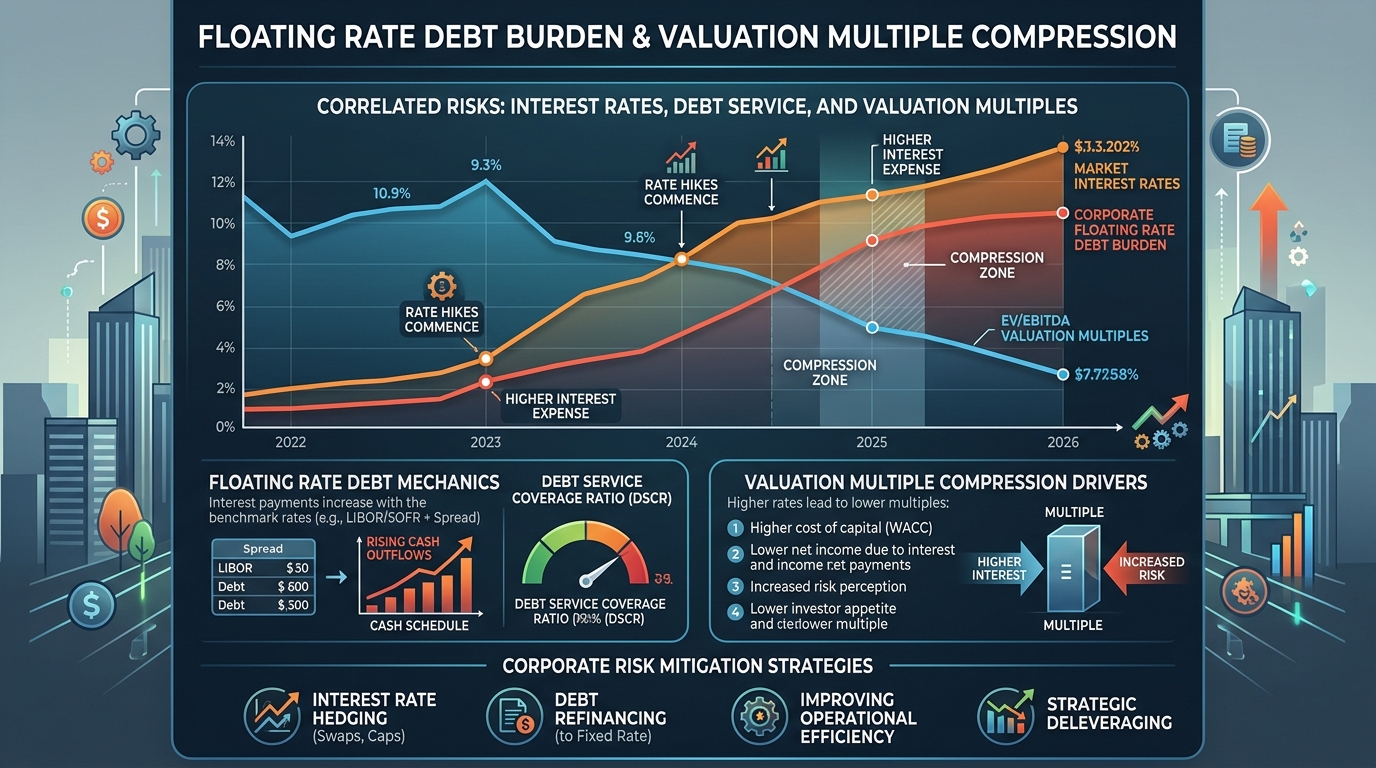
In corporate finance theory, higher discount rates affect corporate balance sheets unevenly. Borrowers reliant on floating-rate credit face immediate increases in debt-servicing costs, tightening operating margins and valuation multiples. By contrast, mega-cap firms with long-term fixed debt or substantial net cash reserves face little immediate refinancing pressure and can earn higher yields on short-term liquidity.
Available market evidence, however, is limited to macroeconomic figures and pricing expectations. Reported data confirms the FOMC’s 9–3 vote, the ~$80 oil price, and early August’s 65% futures pricing from J.P. Morgan Wealth Management, alongside late August updates from CNBC, but it does not provide granular empirical data on realized multiple compression or debt-structure breakdowns across equity groups. The balance-sheet divergence remains a deduction from standard financial theory rather than a measured empirical outcome in the current cycle.
Policy credibility and capital structure

A September 2026 rate hike would serve to defend central bank credibility and anchor inflation expectations against persistent energy costs, without necessarily marking the start of a prolonged tightening campaign. By adjusting baseline forecasts to include a 25-basis-point increase, markets and analysts project that the Fed may use an incremental move to keep expectations steady.
Capital structure becomes central in this environment. If the Fed raises rates, borrowing expenses will rise most sharply for capital-constrained borrowers, while broad market valuations will face ongoing pressure from elevated discount rates.
Disclaimer: This analysis is for informational purposes only and does not constitute investment, financial, real estate, or legal advice. Always consult a licensed financial advisor before making investment decisions.
Frequently asked questions
Why does a higher discount rate disproportionately affect small-cap equities compared to mega-cap equities?
Under corporate finance theory, smaller firms generally rely more on floating-rate debt and frequent refinancing, which raises interest expenses quickly as benchmark rates climb. Companies with cash flows weighted further into the future also experience steeper mathematical valuation compression when discount rates rise. Large firms more often carry long-term fixed-rate debt or net cash reserves that insulate earnings from immediate rate changes.
What economic data points could reverse the 65% futures pricing for a September hike?
Futures pricing would likely soften if incoming inflation reports show faster cooling or if crude oil prices drop well below the early August level of roughly $80 per barrel. Slower consumer spending or labor market softening would also reduce pressure on the FOMC majority to side with the hawkish dissenters.