
How the 10-Year Yield Drives Mortgage Rates and Housing Slowdown
How rising benchmark yields impact mortgage rates and the housing market
When long-term U.S. Treasury yields climb, mortgage rates rise alongside them. The Federal Reserve sets short-term policy rates, but residential 30-year fixed mortgages price at a spread above the benchmark 10-year Treasury yield. As benchmark yields rise, lenders pass higher capital costs to borrowers. That tightens debt-to-income limits, reduces purchasing power, and slows sales and homebuilding.
The macro driver: sticky inflation lifts benchmark yields
The benchmark 10-year U.S. Treasury yield climbed sharply through late summer, closing August 2026 near 4.75%, its highest level since early 2025, according to MRA Advisory Group. Yields rose as investors recognized that persistent inflation gave the central bank little room for near-term monetary easing.
Mid-summer inflation readings well above the Federal Reserve’s 2% annual target drove the increase. July Consumer Price Index (CPI) metrics rose 0.1% month over month and 3.4% year over year, as reported by MRA Advisory Group. During the same period, the Fed’s preferred inflation gauge, the Personal Consumption Expenditures (PCE) price index, increased 0.2% monthly and 3.7% from a year earlier, according to MRA Advisory Group.
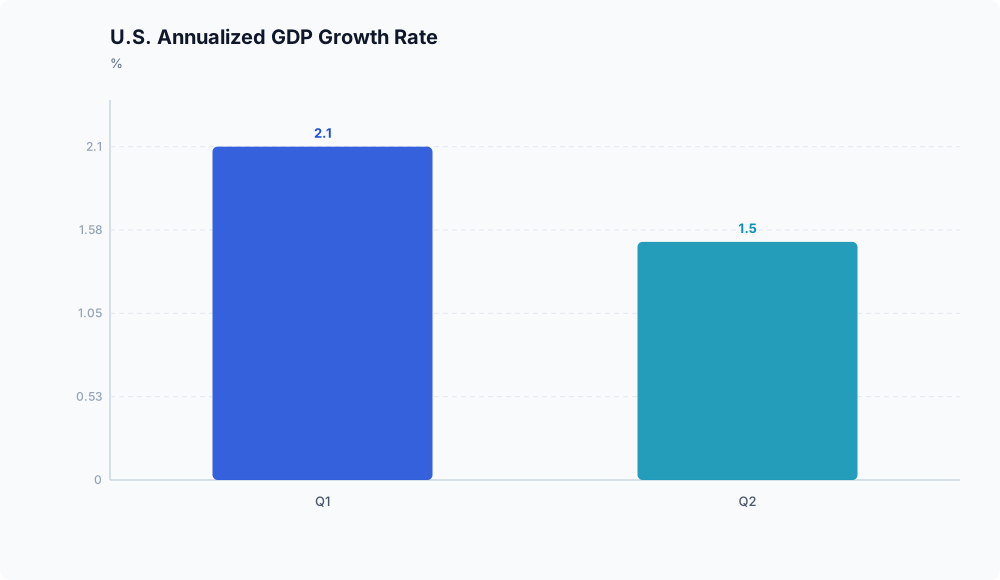
Growth slowed over the same period. The second estimate of second-quarter 2026 U.S. GDP showed annualized growth slowing to 1.5%, down from 2.1% in the first quarter, according to MRA Advisory Group. Slower growth often puts downward pressure on interest rates, but bond markets focused on inflation instead. Investors demanded higher long-term yields to protect against the loss of real returns over time.
The transmission mechanism: from Treasuries to mortgages
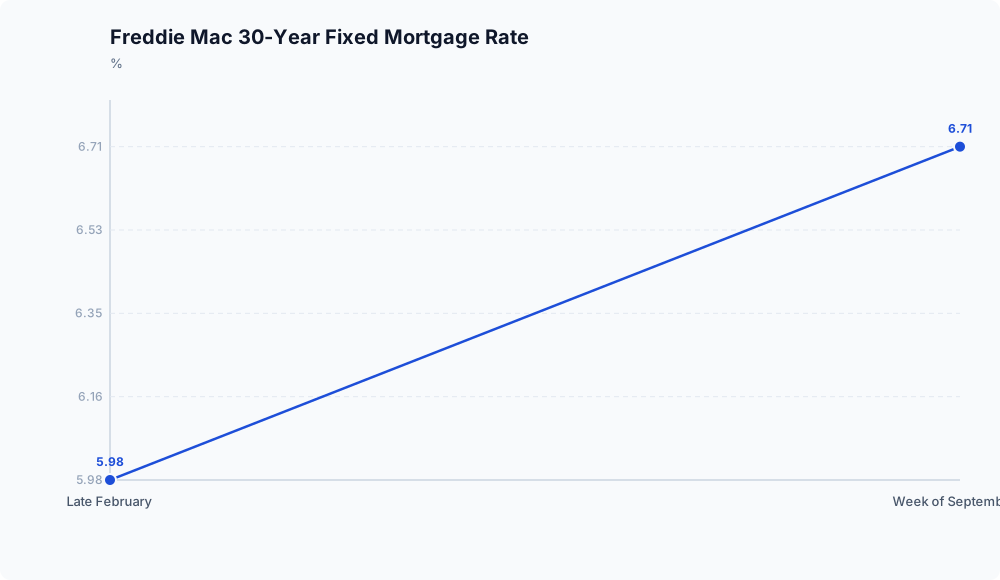
Freddie Mac’s 30-year fixed mortgage rates followed benchmark yields higher, rising from 5.98% in late February to 6.71% in the week of September 3, according to Nevada Real Estate Group. Because mortgages carry prepayment, extension, and default risks, mortgage-backed securities and individual home loans trade at a spread over the risk-free 10-year Treasury. With the benchmark yield ending August near 4.75%, any move toward 5% establishes a higher pricing floor across primary lending markets before lenders add origination costs and credit spreads.
This baseline directly tightens borrowing constraints. When lenders evaluate applicants against debt-to-income (DTI) ceilings, higher note rates push a larger share of each monthly payment toward interest rather than principal amortization. That mechanically reduces the maximum mortgage balance a household can qualify for at a given income level.
As noted by MRA Advisory Group, sustained borrowing costs continue to restrain both home sales transactions and new residential construction. High borrowing rates also reinforce a mortgage lock-in effect, as existing homeowners with lower legacy rates decline to sell, while concurrently increasing financing expenses for developers.
Because broad macroeconomic data does not track local housing dynamics, the available data cannot measure the exact impact on inventory lock-in, builder balance sheets, or mortgage spreads over the 10-year Treasury.
Key takeaway

Housing remains a primary channel through which tight monetary policy affects the economy. As long as annual inflation metrics hover near 3.4% to 3.7%, fixed-income markets are unlikely to allow benchmark yields to drop significantly. For prospective buyers and builders, financing conditions will likely remain restrictive until sustained disinflation allows benchmark yields to decline.
Disclaimer: This analysis is for informational purposes only and does not constitute investment, financial, real estate, or legal advice. Always consult a licensed financial advisor before making investment decisions.
Frequently asked questions
How closely do 30-year mortgage rates track the 10-year Treasury yield? Mortgage rates track the 10-year Treasury closely because investors view the 10-year bond as the benchmark baseline for long-term residential borrowing. Lenders price 30-year fixed home loans at a spread above this risk-free yield to account for credit, prepayment, and extension risks.
Will a 5% 10-year Treasury yield trigger an outright drop in national home prices? The available macroeconomic data does not confirm an outright national price decline. While higher benchmark yields increase borrowing costs, reduce buyer purchasing capacity, and dampen overall transaction volumes and construction, specific home price indices and local supply-demand balances are not detailed in the current dataset.