
The Fed Agency MBS Runoff Pivot and Balance Sheet Shift
Understanding the Fed agency MBS runoff pivot
The Federal Reserve’s decision to reinvest agency principal payments into Treasury bills ends its role as an ongoing, price-insensitive buyer of agency debt and mortgage-backed securities (MBS). By redirecting 100 percent of agency principal distributions into short-term Treasury bills, the central bank reduces its agency portfolio and shortens the average duration of its balance sheet, leaving private, price-sensitive investors to absorb the secondary mortgage supply.
The policy directive and rate adjustments
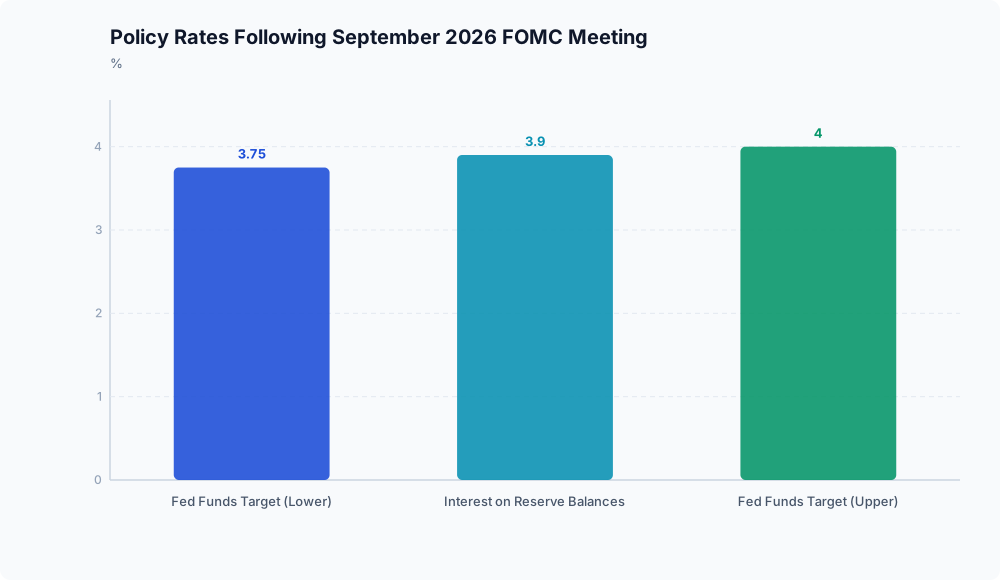
Following its September 16, 2026 meeting, the Federal Open Market Committee (FOMC) raised the target range for the federal funds rate by 1/4 percentage point to 3-3/4 to 4 percent (Federal Reserve). To support this stance within its administered rate framework, the Board of Governors also raised the interest rate paid on reserve balances to 3.90 percent, effective September 17, 2026 (Federal Reserve).
Alongside these rate changes, the FOMC issued operational instructions to the Open Market Desk at the Federal Reserve Bank of New York. Effective September 17, 2026, the Desk was directed to reinvest all principal payments from the central bank’s holdings of agency securities directly into Treasury bills rather than repurchasing agency debt or mortgage-backed paper (Federal Reserve).
Mechanics of the balance sheet rotation
This instruction changes the asset composition of the System Open Market Account (SOMA). Rather than shrinking the balance sheet overall by ending reinvestment entirely or deploying paydowns back into longer-dated paper, the central bank is reallocating assets across maturities.
Directing agency runoff into Treasury bills allows the Federal Reserve’s agency portfolio to amortize through regular principal payments and prepayments without forced asset sales (Federal Reserve). Shifting those proceeds into short-term government debt also lowers the average duration of the central bank’s total holdings.
Private absorption and mortgage market impacts

Halting agency reinvestments removes a steady anchor buyer from the secondary mortgage market. When the central bank routinely rolled over maturing agency debt and mortgage prepayments, it bought securities without regard to relative yield.
Without that buyer, private market participants, including commercial banks, institutional asset managers, and insurance funds, must absorb new mortgage originations and secondary float. Because these investors are price sensitive, they require yields that compensate for duration risk, prepayment variability, and alternative market yields.
In theory, the loss of direct central bank reinvestment demand can reduce secondary market liquidity and widen the spread between agency mortgage-backed securities and benchmark Treasury yields. Because mortgage originators set consumer rates based on secondary yields, wider spreads typically lead to higher borrowing costs on retail 30-year fixed mortgages, reducing purchasing power under standard debt-to-income underwriting limits.
Data limitations and analytical synthesis

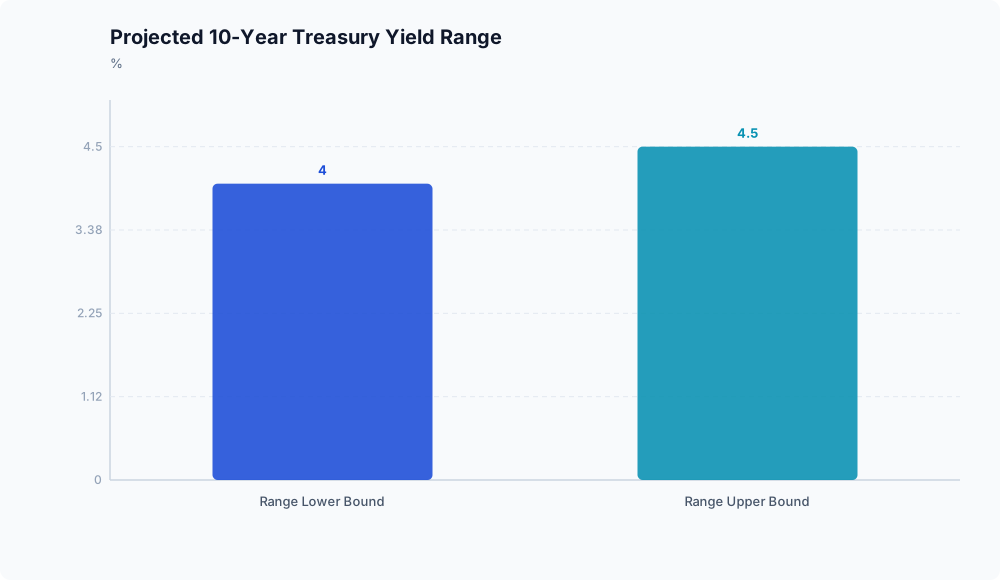
While the directional mechanism is clear, the exact financial impact cannot be calculated from policy announcements alone. The FOMC directive confirms the structural reinvestment shift into Treasury bills but provides no projections for monthly runoff volumes, prepayment speeds, benchmark Treasury yields, or specific mortgage spread targets (Federal Reserve).
Because those details are absent, the scale of the pressure on secondary mortgage liquidity and retail mortgage rates remains conditional. The policy ensures that the central bank’s agency portfolio will run off over time in favor of short-term government debt, but the actual cost to prospective homebuyers depends on how private capital prices and absorbs the unanchored secondary mortgage supply.
Disclaimer: This analysis is for informational purposes only and does not constitute investment, financial, real estate, or legal advice. Always consult a licensed financial advisor before making investment decisions.