
FOMC SEP 2027 Terminal Rate Signals Sustained Restraint
What does the September 2026 FOMC meeting signal for borrowing costs and market valuations?
The Federal Open Market Committee’s (FOMC) September 2026 policy decision indicated that benchmark interest rates will stay higher for longer. According to J.P. Morgan Asset Management, the Committee unanimously raised the federal funds target range to 3.75%–4.00%, lifted the projected longer-run policy rate to 3.2%, and removed projected rate cuts for 2027, maintaining a restrictive stance in response to persistent economic growth and inflation above target.
Macro revisions and the elimination of 2027 easing
The FOMC raised the federal funds target range by 25 basis points to 3.75%–4.00% based on sustained economic momentum, as reported by J.P. Morgan Asset Management. Alongside the decision, the Committee’s updated Summary of Economic Projections (SEP) raised macroeconomic forecasts for both output and price pressures.
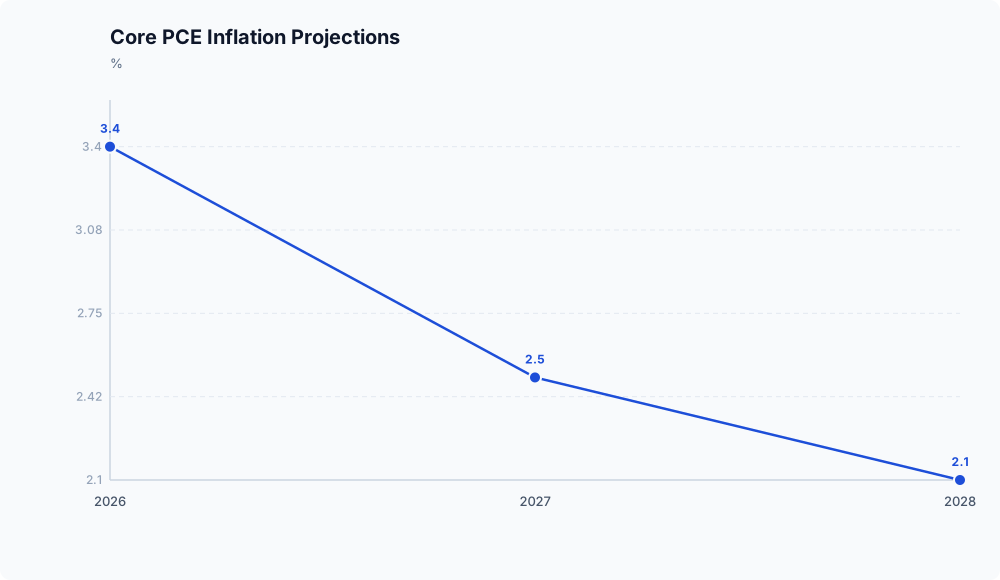
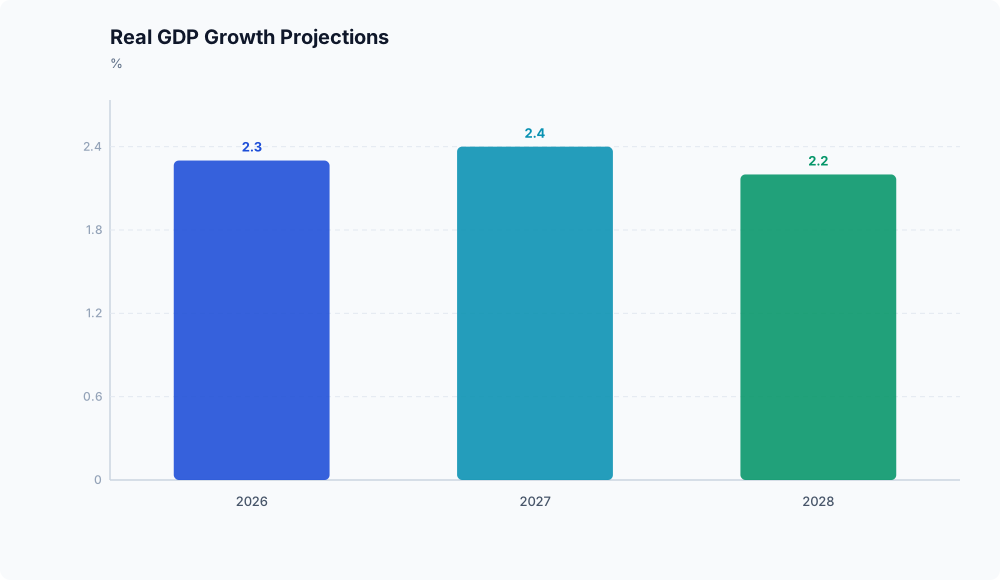
According to J.P. Morgan Asset Management, policymakers adjusted the projections as follows: real GDP growth projections increased by 0.1% to 2.3% for 2026 and 2.4% for 2027, with the 2028 estimate remaining at 2.2%; core PCE inflation forecasts rose by 0.1% to 3.4% for 2026, while remaining at 2.5% for 2027 and 2.1% for 2028.
These upward revisions explain why the Committee removed previously expected easing for 2027. With output projected to stay above 2% and core inflation projected to stay above the 2.0% target through 2027, policymakers determined that benchmark borrowing costs must remain restrictive to bring inflation back to target.
Federal Reserve Chair Warsh did not submit dot plot estimates or economic projections for the second consecutive SEP (J.P. Morgan Asset Management). While the published SEP reflects the consensus of the remaining participants, the absence of the Chair’s submissions leaves uncertainty over whether central bank leadership fully shares this specific rate trajectory.
Terminal discount rates and valuation sensitivity
The SEP also showed the median projection for the longer-run policy rate rising to 3.2%, as reported by J.P. Morgan Asset Management.
The longer-run policy rate serves as a proxy for the nominal neutral rate ($R^*$), anchoring the terminal discount rate applied in discounted cash flow (DCF) models. Raising this neutral baseline to 3.2% sets a higher floor for long-term bond yields, raising the discount rate applied to perpetual cash flows.
Higher Longer-Run Rate (3.2%)
│
▼
Elevated Terminal Discount Rate Floor
│
▼
Compressed Present Value of Distant Cash Flows (High-Duration Growth Equities)
High-multiple growth equities derive a large share of their enterprise value from earnings expected further into the future, giving them higher cash-flow duration. An upward shift in the discount rate reduces the present value of those distant cash flows more than it does for near-term receipts. If equity multiples do not adjust downward to reflect this higher floor, the equity risk premium (ERP) narrows, leaving equity valuations exposed to further discount-rate volatility.
Because Chair Warsh did not submit individual dots for the second straight meeting (J.P. Morgan Asset Management), investors cannot interpret the 3.2% terminal rate as an institutional consensus endorsed by Fed leadership.
Balance sheet pressures and the 2026–2027 refinancing window
The updated rate outlook directly affects corporate balance sheets approaching debt maturities. With the benchmark range set at 3.75%–4.00% and rate cuts removed from the 2027 baseline, companies refinancing debt must accept higher debt-service costs (J.P. Morgan Asset Management).
Corporate borrowers rolling over low-coupon paper issued during earlier easing cycles must absorb both the higher benchmark rate and prevailing credit spreads. Upward revisions to GDP growth (2.3% in 2026 and 2.4% in 2027) may help support revenues and margins, but the reported projections do not include specific data on corporate maturity schedules, interest coverage ratios, or credit rating distributions. While higher debt costs create headwinds across sectors, the actual refinancing strain depends on individual balance-sheet health.
Conclusion: Navigating a higher equilibrium

The September 2026 FOMC framework points to an extended restrictive policy environment. By pairing a 3.75%–4.00% policy range with a 3.2% longer-run neutral rate and no projected easing in 2027 (J.P. Morgan Asset Management), the Federal Reserve has raised the baseline cost of capital. For investors, this environment calls for higher earnings yields to maintain risk premia, alongside closer examination of corporate debt maturing under these higher rates. Meanwhile, Chair Warsh’s continued abstention from the SEP means policy continuity will need to be evaluated against future statements from central bank leadership.
Disclaimer: This analysis is for informational purposes only and does not constitute investment, financial, real estate, or legal advice. Always consult a licensed financial advisor before making investment decisions.
Frequently asked questions
Why does raising the estimated neutral rate to 3.2% reduce the present valuation of growth equities more than value stocks?
The longer-run policy rate anchors the terminal discount rate applied to future earnings. Because growth equities derive a larger share of their value from earnings projected years into the future, their cash flows have higher duration. Compounding a higher discount rate over longer periods lowers the present value of those distant flows more substantially than it does for companies with nearer-term cash generation.
How do revised 2026–2027 core PCE projections limit the Federal Reserve’s scope for policy accommodation?
According to J.P. Morgan Asset Management, the FOMC raised its core PCE forecast to 3.4% for 2026 and projects it at 2.5% in 2027. Because both figures sit above the 2.0% target while GDP growth remains above 2%, policymakers had little economic justification to lower rates, leading to the removal of projected cuts for 2027.